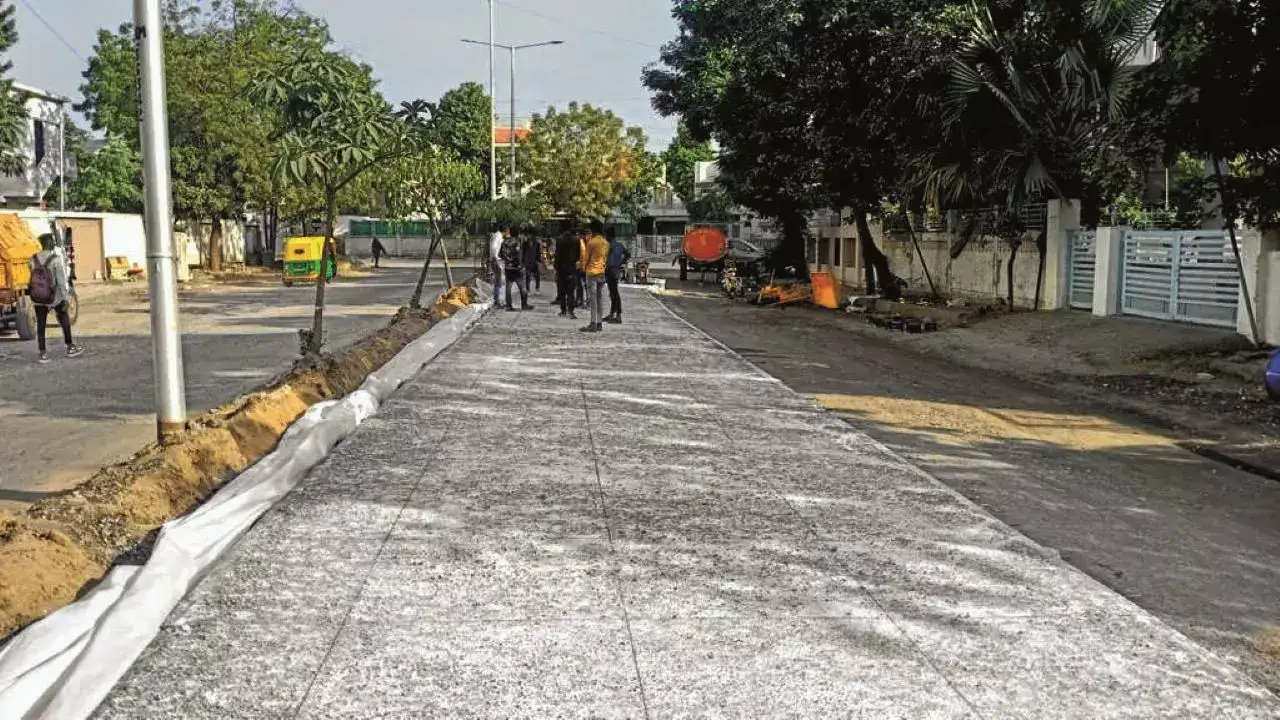
Ahmedabad Costly White-Topped Roads Spark Opposition
Fresh white-topped road proposals by Ahmedabad’s municipal body have come under fire from the opposition, who flagged cost inflation, tender irregularities, and long-standing concerns over poor road quality. Three projects amounting to ₹167 crore are proposed in key western neighbourhoods, sparking criticism over single-tender approvals and potential post-construction issues like waterlogging and raised road levels affecting nearby residential areas.
Three major white-topped road projects in Ahmedabad’s western zones—including Nava Vadaj, Sabarmati, and Chandkheda—are now the subject of heated debate within the municipal corporation. Critics argue that the projects, pegged at ₹167.48 crore, are being handed to a single company at a significantly inflated cost. This figure overshoots the original estimate of ₹129.86 crore by nearly ₹38 crore, raising questions about the transparency of the bidding process.
Opposition voices have expressed concerns not only over the financial discrepancies but also over awarding all contracts to one firm under single tender agreements. According to officials, such practices raise red flags about favouritism, lack of competition, and limited scope for price control. Local representatives are now calling for the tenders to be reissued, citing a lack of public trust and previous unsatisfactory road construction outcomes in the city.
Beyond financial scrutiny, there are urban planning concerns associated with white-topping. In many areas, residents have reported that newly white-topped roads have led to raised street levels. This change has triggered flooding in adjacent housing societies during monsoons, as drainage systems remain unadapted to the new road elevations. These unintended consequences have fuelled further resistance to expanding white-topping without careful assessment.
Officials defending the project argue that white-topping increases the durability of roads and reduces long-term maintenance costs. However, experts insist that the immediate issues—such as flawed planning, water stagnation, and poor material quality in past projects—need resolution before further expansions are sanctioned. As the proposals head to committee review, public sentiment leans heavily toward caution, accountability, and infrastructural foresight.
Ahmedabad’s white-topping road proposals are facing strong resistance due to inflated project costs, tender concerns, and unresolved civic challenges like waterlogging. With rising pressure from both experts and citizens, the municipal body is urged to prioritise transparency and infrastructure sustainability. As the debate unfolds, the future of road development in the city hinges on addressing public grievances and ensuring long-term urban planning outcomes.