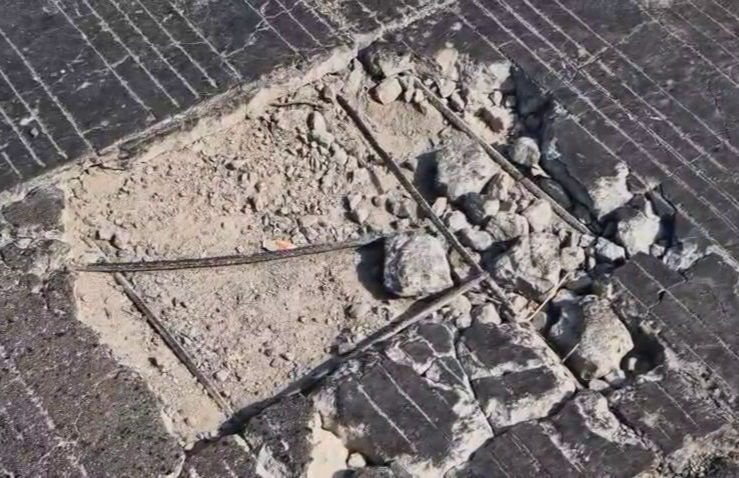
Ahmedabad’s latest municipal budget has placed road building costs under public scrutiny, with per kilometre expenditure ranging from under ₹5 crore to nearly ₹24 crore across select corridors. The sharp variation in Ahmedabad road construction costs has prompted debate over planning efficiency, coordination and long-term value for taxpayers in one of India’s fastest-growing urban centres.
Budget allocations for 2025–26 show ₹250 crore earmarked for eight high-profile road corridors categorised as “iconic”. In some stretches, the per kilometre cost approaches ₹24 crore substantially higher than the city’s reported average road construction cost of approximately ₹5.5 crore per kilometre during the current financial year. Civic data indicates that nearly 387 kilometres of roads were constructed this year, involving large volumes of hot-mix material and total expenditure exceeding ₹2,100 crore. While municipal authorities argue that flagship corridors involve enhanced design elements, utility integration and higher-quality surfacing, urban finance experts say transparency around cost benchmarks is essential when capital spending scales up.
The broader allocation for road-related works now exceeds ₹1,500 crore, including theme-based corridors, white-topping initiatives, canal-side development, north–south connectivity upgrades and improvements along SG Highway. These projects are positioned as part of Ahmedabad’s long-term urban transformation strategy, supported by state and central funding streams. However, residents and planning professionals have raised concerns about repeated excavation of newly laid surfaces. Roads are frequently reopened for drainage lines, water pipelines, fibre-optic cables and other utilities, often within months of completion. This cycle not only erodes public confidence but also inflates lifecycle costs.
The issue points to a larger governance challenge. Transport planners argue that integrated infrastructure mapping and coordinated scheduling between departments can significantly reduce duplication. Without synchronised execution, high Ahmedabad road construction costs may not translate into durability or climate resilience. There is also an environmental dimension. Road building and resurfacing consume energy-intensive materials and generate emissions. Repeated reconstruction magnifies the carbon footprint of urban expansion. Experts suggest that adopting trenchless technology, pre-planned utility ducts and climate-resilient materials could help reduce long-term environmental impact.
From an economic standpoint, efficient road infrastructure is central to supporting Ahmedabad’s industrial and real estate growth. Corridors linking commercial hubs, residential zones and ring roads play a key role in mobility and land value appreciation. Yet, rising capital outlay demands equally strong accountability mechanisms. Municipal officials maintain that enhanced corridors incorporate aesthetic and structural improvements designed for higher load capacity and longevity.
Still, urban policy analysts say cost disclosure must be accompanied by performance audits, ensuring that premium investments deliver measurable durability and service life. As Ahmedabad accelerates its infrastructure agenda, the conversation around Ahmedabad road construction costs is likely to shape future procurement models. Balancing ambition with fiscal prudence and coordinated planning will determine whether the city’s expanding road network strengthens mobility while upholding principles of sustainable and responsible urban development.
Ahmedabad Civic Budget Flags Rising Road Costs