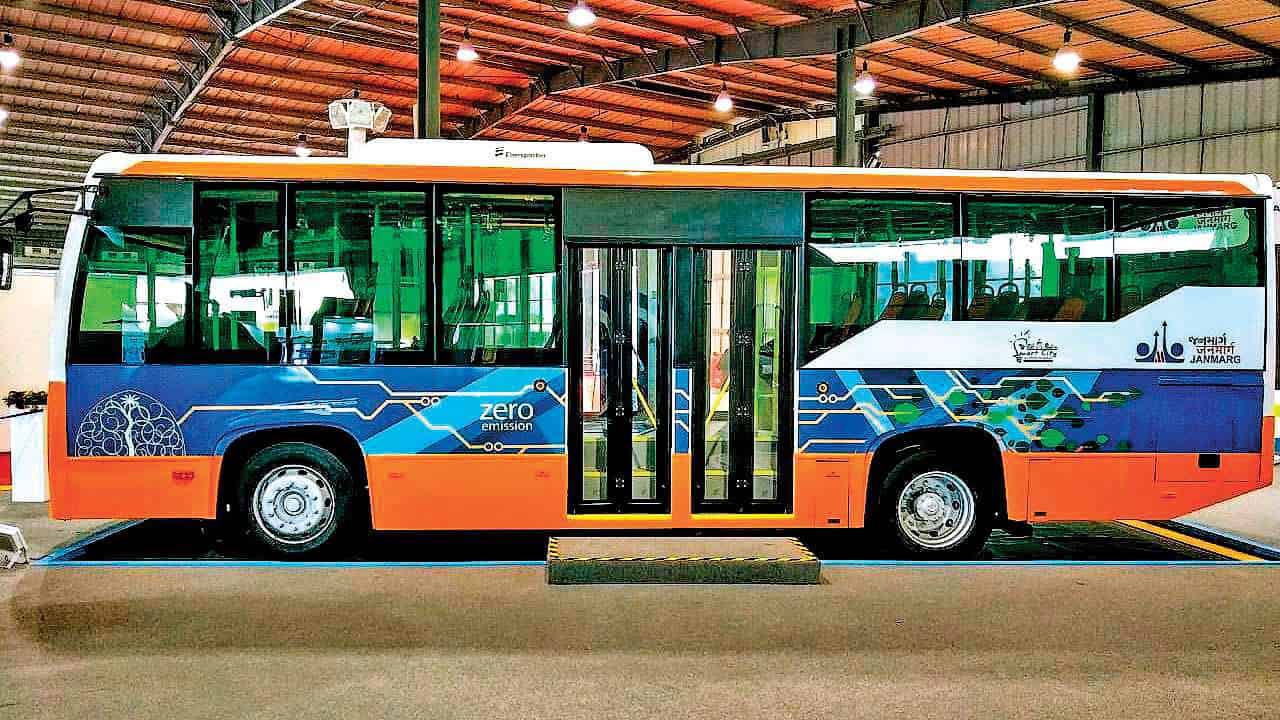
As Ahmedabad advances its bid to host the 2030 Commonwealth Games, the city’s transport planners are fast-tracking a shift towards a fully electric Bus Rapid Transit System (BRTS), positioning public mobility at the centre of its urban transformation. The move signals more than event preparedness; it reflects a broader effort to align growth with climate responsibility and commuter safety. The Ahmedabad BRTS network currently spans around 160 kilometres, carrying over two lakh passengers each day. Of its fleet of nearly 380 buses, roughly 150 are electric. According to senior officials at Ahmedabad Janmarg Limited (AJL), the operating agency, the target is to transition the entire BRTS fleet to electric operations within the next few years, potentially making it among the first large-scale corridors in India to achieve complete electrification.
Urban mobility experts note that this transition comes at a crucial moment. With transport accounting for a significant share of urban emissions, electrifying high-capacity bus systems can substantially lower particulate pollution and carbon output. For a rapidly expanding city like Ahmedabad, the electrification of the Ahmedabad BRTS offers a scalable template for reducing dependence on fossil-fuel-based mobility while meeting rising travel demand. Safety infrastructure has also been expanded in parallel. A centralised command and control facility now monitors buses and stations round the clock through integrated CCTV systems. Transport officials say real-time tracking allows operational teams to respond quickly to disruptions, manage passenger flow and strengthen security oversight, particularly during peak hours and late-night services.
Daily commuters report visible improvements. Cleaner interiors, quieter rides and heightened surveillance have improved confidence in public transport, especially among women and vulnerable users. Urban planners argue that perceived safety is as critical as infrastructure expansion in driving modal shift away from private vehicles. The city’s transport investments also carry economic implications. Large sporting events require reliable, high-frequency transit systems capable of moving athletes, visitors and residents efficiently. Strengthening the Ahmedabad BRTS network ahead of 2030 not only supports event logistics but enhances long-term property values and commercial activity along transit corridors. Transit-oriented development around BRTS routes is expected to gain further traction as reliability and service standards improve.
However, full electrification will demand parallel investments in charging infrastructure, grid stability and depot upgrades. Industry observers caution that sustained policy backing and financial planning will be necessary to ensure operational viability without burdening municipal finances. As Ahmedabad prepares for global visibility, its public transport strategy underscores a wider shift in Indian cities from car-centric expansion towards cleaner, safer, and technology-enabled mobility systems. If executed effectively, the Ahmedabad BRTS transformation could emerge as a benchmark for climate-aligned urban transport planning in the decade ahead.