


After Rs 700 Crore Loss, Maharashtra Revises Sand Mining Policy, Invites Public Input
In a major policy shift, the Maharashtra government has officially rolled back its sand depot policy, introduced in 2023, after it failed to generate the expected revenue and created operational setbacks. The Mahayuti government is now seeking public suggestions and objections to draft a more robust sand mining framework, with submissions open until February 7.
The sand depot policy, designed to streamline sand mining and curb illegal activities, turned out to be a costly misstep. Government sources revealed that while the previous auction-based sand pit policy contributed around ₹3,000 crore annually to the state treasury, the depot model failed to generate any revenue. Instead, it drained over ₹700 crore from state coffers, exacerbating fiscal pressures. A key flaw in the sand depot policy was its contradiction with the Mines and Minerals Development and Regulation (MMDR) Act, 2014, which mandates auctioning for minor minerals like sand. The policy’s framework clashed with the limited powers granted to state governments under the Act, which allows them to make specific rules but not override central regulations.
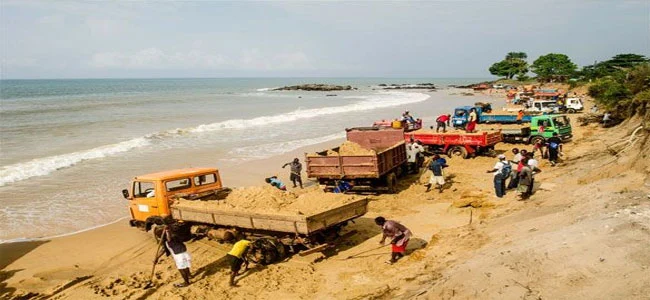
Sand mining has long been mired in controversy across Maharashtra, plagued by illegal operations and the proliferation of local mafias. The sector has also been accused of fostering political-criminal nexuses. Notably, in Beed district, BJP MLA Suresh Dhas publicly alleged deep-rooted mafia involvement in illegal sand extraction, highlighting the policy’s failure to curb such malpractices. In an attempt to regain control and ensure transparency, the government now plans to reintroduce the auction system. Under the proposed policy, successful bidders will secure sand mining rights for three years, a move aimed at stabilising operations, reducing illegal mining, and enhancing revenue generation.
Recognising the environmental impact of excessive natural sand mining, the government also plans to promote artificial sand as an alternative. The new framework proposes making it mandatory for state departments, including the Public Works Department (PWD) and Water Resources Department (WRD), to use at least 20% artificial sand in construction projects. This shift is expected to reduce dependency on natural sand, help in conserving river ecosystems, and encourage sustainable construction practices. In a commendable move towards inclusive governance, the state has opened the floor for public opinions. Citizens, environmentalists, industry stakeholders, and experts are encouraged to provide their views, suggestions, and objections regarding the new sand mining policy.
Submissions can be made until February 7 via:
Website: https://mahakhanij.maharashtra.gov.in
Email: deskkha1-sandpolicy@mah.gov.in
This participatory approach is expected to bring diverse perspectives to the table, ensuring the new policy is both economically viable and environmentally sustainable.
With construction demands soaring in Maharashtra—particularly in urban hubs like Mumbai, Pune, and Nagpur—sand remains a critical resource. The state’s ability to regulate this sector effectively will not only impact its revenue but also influence environmental conservation efforts and curb the influence of illegal sand mafias. As Maharashtra navigates this policy reset, the success of the new framework will hinge on how well it balances economic interests, environmental sustainability, and governance reforms.
