Nagpur Regulatory Failure On Fire Safety Imperils City
Nagpur — A city experiencing robust industrial growth is facing a parallel crisis in fire safety oversight as major enforcement gaps leave hundreds of high-risk facilities operating with minimal compliance and limited deterrence against violations.
Official data shows that Nagpur’s fire safety regime is struggling to translate statutory powers into effective action, raising concerns among urban planners, industry safety specialists and workers about systemic vulnerability and the potential for catastrophic industrial fires. Figures published by the Nagpur Municipal Corporation’s (NMC) fire and emergency services department indicate that 437 industrial buildings are functioning on only temporary fire clearances — intended as short-term permits — with many never obtaining full compliance certifications under mandatory safety norms. Of these, just 43 have been formally verified for fire prevention measures, meaning the vast majority remain uncertified against statutory safety requirements under the Maharashtra Fire Prevention and Life Safety Measures Act, 2006.
Under the law, fire officials have broad powers to rectify hazards, restrict occupancy, or evacuate and seal unsafe premises. However, enforcement beyond issuing notices has been narrow: while 119 rectification notices were issued under Section 8(1), far fewer cases have moved into decisive corrective action, such as direct hazard removal, premises entry or emergency intervention authorised under Sections 8(2) and 8(3). Perhaps most troubling to safety advocates is the near-absence of penal actions against industrial owners or senior management. Only three prosecutions have been initiated under Section 36 of the Act, which allows fines and imprisonment for non-compliance, and there have been no cases under Section 40, the strongest provision targeting management-level accountability. This lack of punitive follow-through, experts suggest, undermines deterrence and inadvertently encourages continued non-adherence to fire safety norms.
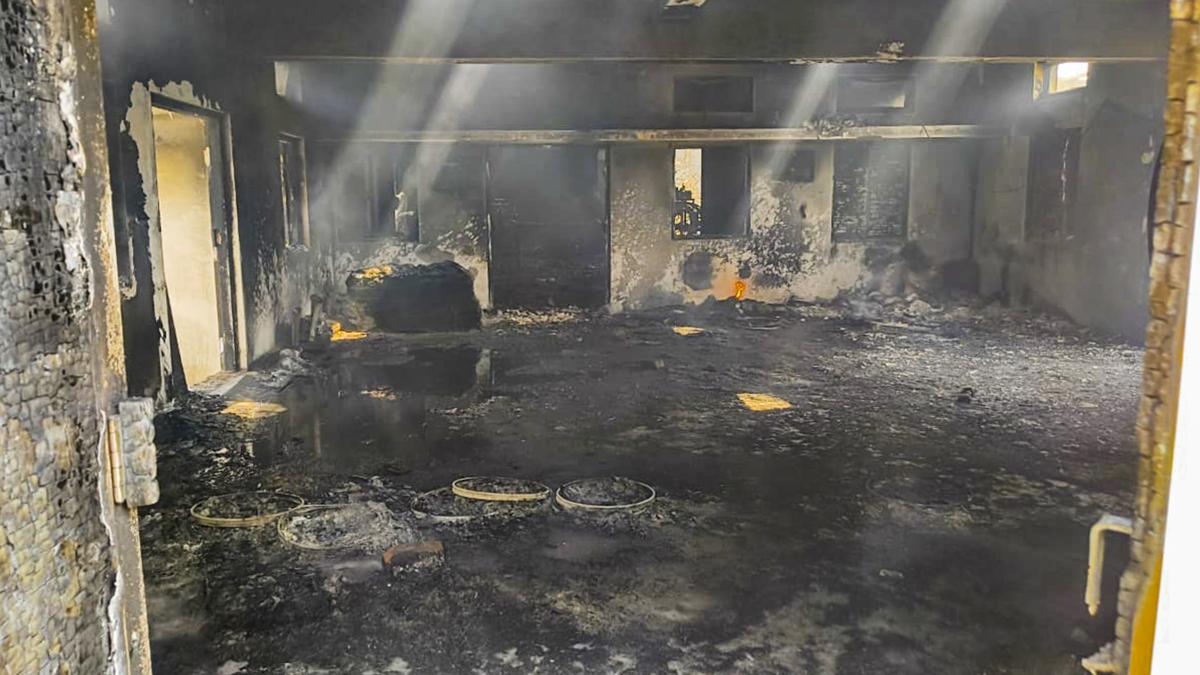
“These temporary clearances were never meant to become permanent shields,” a senior fire official acknowledged, underscoring a deeper issue: regulatory powers remain largely paper-bound rather than embedded in proactive, risk-based enforcement. The implications extend beyond compliance checklists. In a nearby industrial fringe area, a recent blaze at a paper laminating unit illustrated how inadequate on-site safeguards — including the absence of water storage and firefighting systems — can turn routine materials storage into a high-hazard environment. Although no casualties occurred, this incident highlighted how gaps in inspection and regulation can elevate risk across industrial clusters. Urban safety analysts emphasise that effective fire prevention is an integral part of sustainable industrial policy, particularly as cities like Nagpur expand manufacturing clusters, logistics parks and export-oriented units.
Without robust enforcement frameworks that integrate regular inspections, punitive measures and capacity building for compliance, rapid economic expansion can inadvertently multiply vulnerability to fire disasters. Independent assessments point to the need for risk-mapping, data-driven inspection protocols and transparent public reporting on safety status across industrial estates. For workers, residents and business owners, these gaps represent not only compliance shortcomings but tangible threats to lives and livelihoods. Fire safety is a foundational element of resilience in dense urban regions; its absence weakens community trust, deters investment in compliant facilities and threatens health outcomes.
Going forward, experts advocate a recalibration of enforcement priorities: integrating technology for real-time compliance tracking, empowering fire authorities to invoke closure powers readily, and applying management-level accountability under existing laws could transform Nagpur’s fire safety landscape from symbolic oversight to effective risk mitigation.