


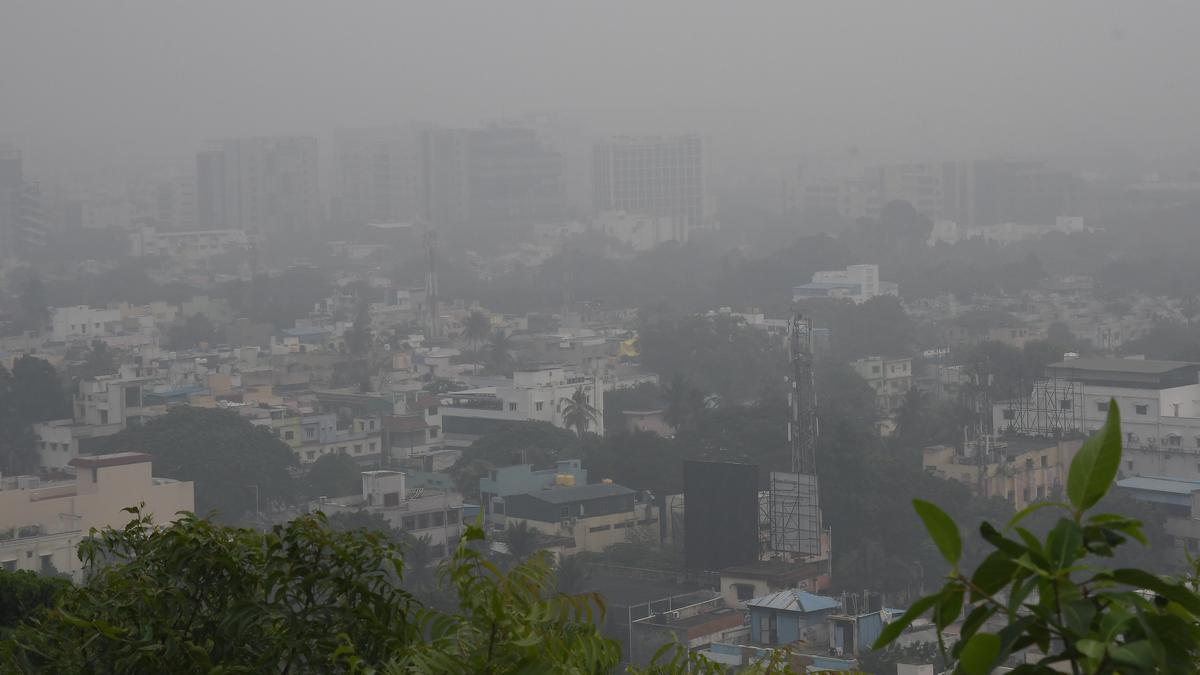
An art-led public exhibition in Chennai has turned the city’s air into evidence, spotlighting stark air pollution inequality between industrial neighbourhoods in the north and more affluent southern zones. By using pollutant-collecting “smog plates” installed across multiple locations, organisers have attempted to visualise what official data often reduces to averages: that exposure varies sharply by geography, income and social identity.
The installation mapped particulate deposits collected over weeks from residential terraces, shops and streets. Plates from neighbourhoods near thermal power stations, ports and heavy industries darkened significantly, indicating high levels of suspended pollutants such as fly ash and industrial emissions. In contrast, plates placed in central and southern localities showed lighter accumulation, though residents there also reported visible dust and respiratory discomfort.Environmental researchers say such contrasts underscore how air pollution inequality shapes lived experience. North Chennai, home to clusters of red-category industries, major waste handling facilities and port infrastructure, carries a disproportionate environmental burden. Urban planners note that zoning decisions over decades concentrated polluting activity in working-class and historically marginalised communities, embedding environmental risk into the city’s spatial fabric.
Public health practitioners point out that exposure is not uniform even within households. Women who remain indoors for longer durations in high-pollution zones may face continuous exposure, while informal workers and children are vulnerable to chronic respiratory stress. Local community representatives describe recurring illness, rising healthcare costs and lost incomes linked to poor air quality.The exhibition arrives at a time when the municipal corporation has announced the installation of additional air quality monitors and public display boards across the city. Civic officials argue that expanding monitoring will improve transparency and enable targeted interventions. However, environmental advocates caution that data collection alone does not guarantee emission reduction. They stress the need for stricter enforcement of industrial standards, decentralised waste management and cleaner energy transitions.
Chennai’s air quality is frequently compared with that of Delhi to suggest relative advantage. Urban policy experts say such comparisons obscure intra-city disparities. “Citywide averages conceal neighbourhood-level exposure,” noted one environmental planner familiar with monitoring data. For residents living beside ash ponds or petrochemical facilities, improvement in headline indices offers little relief.From a built-environment perspective, the debate highlights the importance of climate-resilient and low-emission urban growth. Integrating buffer zones between industry and housing, investing in electrified freight movement and accelerating renewable energy adoption are seen as structural solutions. Real estate expansion in peripheral zones, if not aligned with environmental safeguards, risks perpetuating unequal exposure.
The exhibition’s central message is that air quality is not only an environmental metric but also a question of equity. As Chennai expands, balancing industrial productivity with public health will determine whether growth translates into inclusive prosperity.For policymakers, the challenge ahead is clear: move beyond monitoring to measurable reduction, ensuring that clean air is not a privilege of postcode but a baseline urban right.
Also Read:Pune Infrastructure Push Eases Chakan Talegaon Congestion
