


Hyderabad is entering a new administrative era as the state government reorganises its metropolitan footprint into multiple municipal corporations and aligned police jurisdictions — a move officials say will sharpen governance but which also raises questions about service delivery and urban cohesion. The latest phase of Hyderabad Urban Restructuring is being positioned as a foundation for long-term economic expansion under a 2047 growth roadmap.
The restructuring divides the former Greater Hyderabad Municipal Corporation area into three separate civic bodies, while a new future-focused urban development authority is being advanced beyond the Outer Ring Road. Parallel police commissionerates now mirror municipal boundaries, reflecting a tighter integration between civic management and law enforcement.Urban planners describe the shift as an attempt to manage scale. Hyderabad’s population growth, driven by IT services, global capability centres, logistics, and advanced manufacturing, has steadily expanded development far beyond the historic twin-city core. Administrative realignment, officials argue, could enable faster decision-making on infrastructure approvals, sanitation, mobility planning and real estate regulation.
Yet governance experts caution that fragmentation can complicate metropolitan coordination. Solid waste management, drainage networks, public transport and air quality do not conform to municipal borders. Without a strong metropolitan-level framework, climate resilience and flood mitigation efforts risk becoming uneven across jurisdictions.The restructuring sits within a broader spatial strategy that segments the region into core urban, peri-urban and rural economic zones. The Inner Ring and Outer Ring Road corridors remain central to real estate activity, particularly in western IT clusters and emerging residential districts in the north-east. Market analysts say investors will closely watch how building permissions, property taxation and development control regulations evolve under the new corporations.
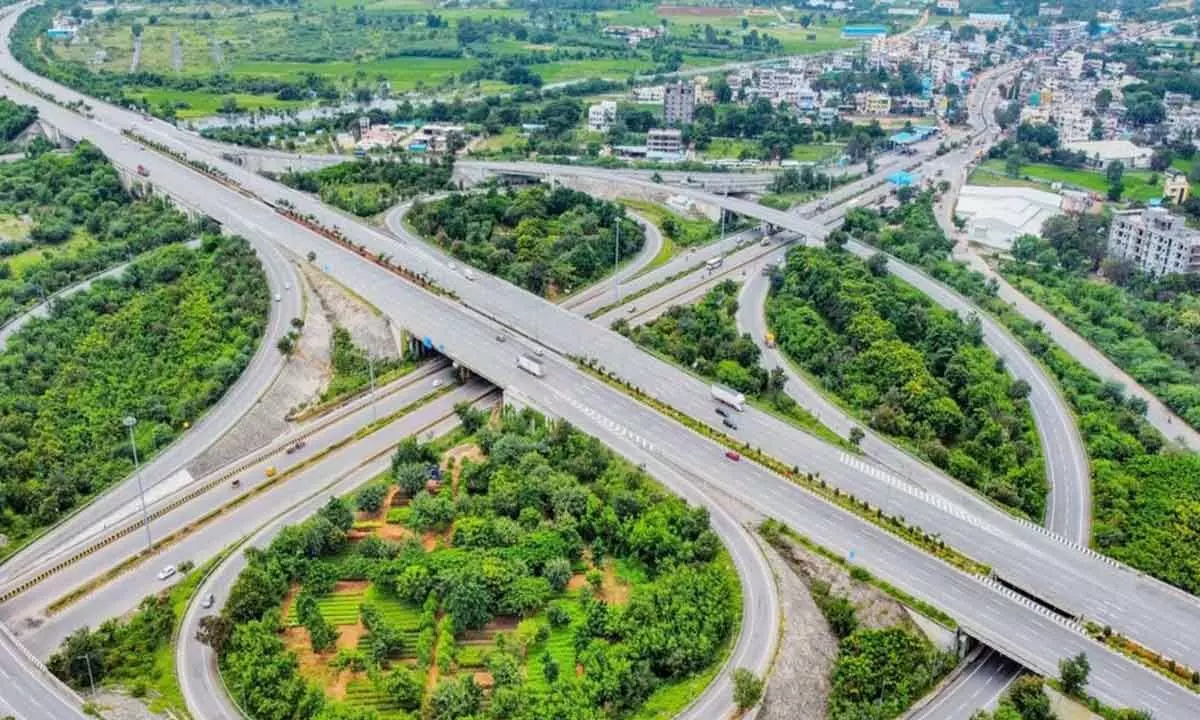
Hyderabad’s transformation has been iterative. Since the mid-20th century, municipal boundaries have expanded, merged and reconfigured to accommodate suburban growth. The formation of development authorities in the 1970s, the creation of peripheral municipalities in the 1980s, and the consolidation into a larger municipal corporation in the mid-2000s each marked inflection points in the city’s urban governance.Infrastructure has followed these shifts. The international airport, metro rail corridors, expressways and the 167-km Outer Ring Road reoriented growth patterns. Global technology firms and Fortune 500 companies established major campuses, reinforcing Hyderabad’s position in the national urban economy.
The new phase of Hyderabad Urban Restructuring seeks to build on that momentum by proposing a technology-driven “future city” district aimed at advanced education, sports infrastructure and innovation-led development. Officials suggest the model could attract further global investment and diversify economic activity.For residents, however, the immediate measure of success will be more practical: cleaner streets, reliable water supply, safer public spaces and better traffic management. As governance boundaries shift again, the challenge will be ensuring that administrative change translates into tangible urban improvement — not just on paper, but across every neighbourhood.
Also Read:Ahmedabad Municipal Budget 2026 Eyes Clean Safer City
