


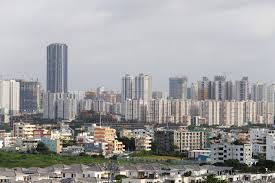
Mahindra Lifespace Developers has entered into a joint venture with Japan’s Mitsui Fudosan to develop a 730-unit premium residential project in Bengaluru, marking the Japanese developer’s formal entry into India’s housing market.
The project, branded as Mahindra Blossom, is expected to generate an estimated gross development value of around Rs 1,900 crore. It will be the first residential collaboration between the two firms and signals growing foreign institutional confidence in India’s urban housing demand, particularly in technology-driven cities such as Bengaluru. For Mahindra Lifespace, the partnership strengthens its strategy of scaling premium and sustainable housing through capital partnerships. For Mitsui Fudosan one of Japan’s largest real estate developers the move expands its India exposure beyond commercial assets into residential development. Industry experts note that Bengaluru remains a magnet for global capital due to its strong employment base, relatively transparent regulatory environment and sustained end-user demand. The city’s residential market has seen consistent absorption across mid-income and premium segments, supported by infrastructure upgrades, metro expansion and a deep technology workforce.
Foreign participation in Indian real estate has largely focused on office assets and logistics platforms over the past decade. However, analysts say that residential real estate is increasingly drawing attention as developers seek structured partnerships to manage capital intensity and execution risk. Joint ventures allow global investors to leverage local land banks and regulatory expertise while applying international design, construction and sustainability standards. Urban planners argue that such collaborations could raise benchmarks in areas such as energy efficiency, water management and community design aspects that are becoming central to future-ready city building. Bengaluru’s rapid outward growth has heightened the need for integrated developments that balance density with liveability. Mitsui Fudosan had previously invested in India’s commercial property market through a large-scale office development platform. Its entry into housing reflects confidence in long-term demographic drivers, including rising household formation, urban migration and improving mortgage penetration. The Rs 1,900 crore Bengaluru project comes at a time when listed developers are consolidating market share and increasingly aligning with global capital to fund expansion. Structured equity partnerships reduce reliance on high-cost debt and help manage cyclical volatility in property markets. Market observers say that cross-border residential ventures may become more common as Indian cities move toward higher design standards and sustainability-linked development frameworks. With land costs rising and homebuyer expectations evolving, capital-backed partnerships could shape the next phase of organised housing growth.
As Bengaluru continues to attract multinational employers and skilled professionals, the city’s residential sector remains a focal point for both domestic and international developers seeking long-term exposure to India’s urban expansion story.
Also Read: Bengaluru premium homes outpace incomes
Bengaluru premium housing attracts Japanese capital
