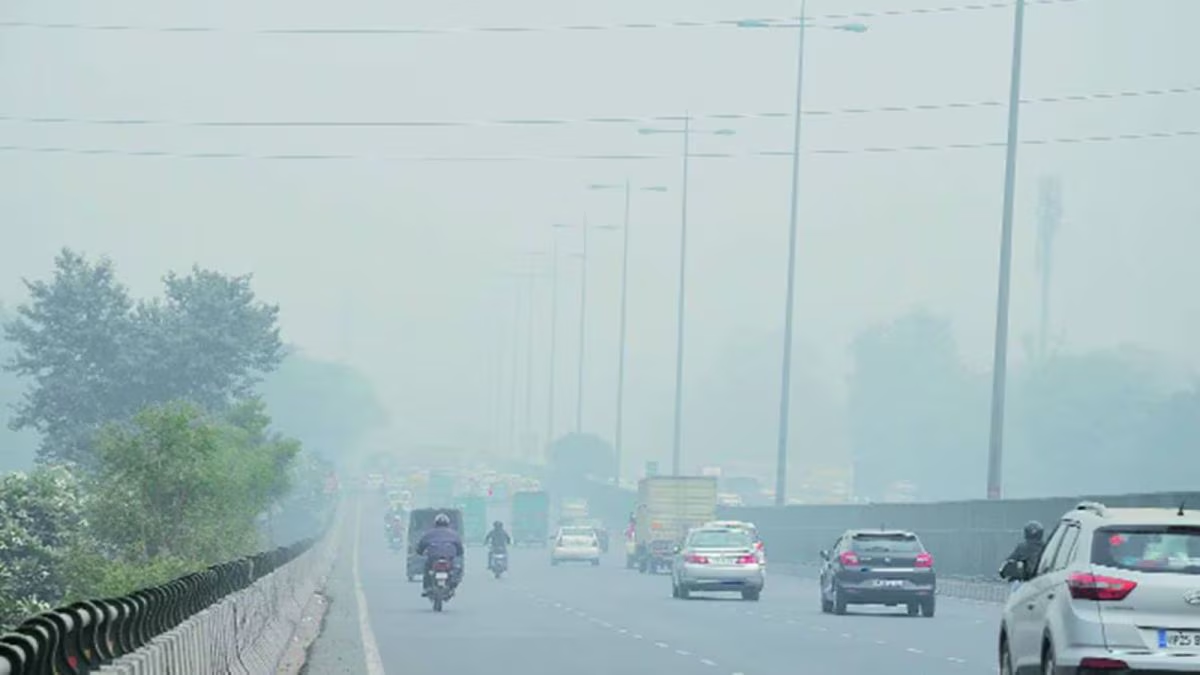
Delhi is preparing for one of its largest road infrastructure upgrades in recent years, with more than one-fifth of its network identified for reconstruction or resurfacing under a ₹7,207 crore programme. The proposal, reviewed at a high-level meeting on air quality, covers 3,298 km of roads across the capital and is being positioned as both a mobility intervention and an anti-pollution measure.
Officials involved in the Road Redevelopment Action Plan say the exercise targets deteriorating stretches that contribute to dust pollution, congestion and unsafe travel conditions. Out of Delhi’s total 15,598 km road network, nearly 21 per cent has been marked for urgent attention based on surface distress, traffic intensity and neighbourhood impact. A significant portion of the proposed works lies within residential clusters. Of the 10,099 km of roads located in authorised colonies, 2,298 km are slated for redevelopment. In unauthorised colonies, where civic infrastructure gaps have historically been sharper, about 1,000 km have been prioritised. Urban planners note that poor road surfaces in such areas not only affect commute times but also intensify particulate matter levels due to loose dust and fragmented asphalt.
The Delhi road redevelopment plan is expected to roll out in phases, with multiple civic and engineering agencies coordinating implementation. A senior infrastructure official indicated that mechanised resurfacing, improved drainage systems and stricter contractor oversight will form part of the execution strategy to ensure durability. Environmental experts argue that smoother, well-maintained roads can reduce vehicular emissions by improving fuel efficiency and limiting stop-start traffic. However, they caution that construction activity itself must be managed carefully to prevent short-term dust spikes. The integration of dust suppression systems, covered material transport and real-time monitoring is likely to be critical.
The economic implications are equally substantial. Large-scale resurfacing contracts could stimulate local construction employment and demand for building materials. Real estate analysts say upgraded road networks often enhance property values and improve access to markets, schools and healthcare facilities—particularly in peripheral colonies that have seen rapid population growth.
Yet financing and governance will determine long-term impact. At ₹7,207 crore, the programme represents a significant public investment. Industry observers emphasise the need for transparent tendering, lifecycle cost assessment and maintenance planning to prevent recurring deterioration.
Mobility researchers add that road quality must be aligned with broader transport reforms. Dedicated bus lanes, pedestrian-friendly footpaths and cycling tracks could be integrated during redevelopment to support low-carbon commuting. Without such design upgrades, resurfacing alone may not deliver sustained congestion relief. As Delhi grapples with chronic air pollution and expanding urban boundaries, the Delhi road redevelopment plan offers an opportunity to modernise essential infrastructure. The next phase will hinge on execution timelines, environmental safeguards and the ability to translate capital expenditure into measurable improvements in air quality and everyday mobility.
Delhi road redevelopment plan targets 3298 km