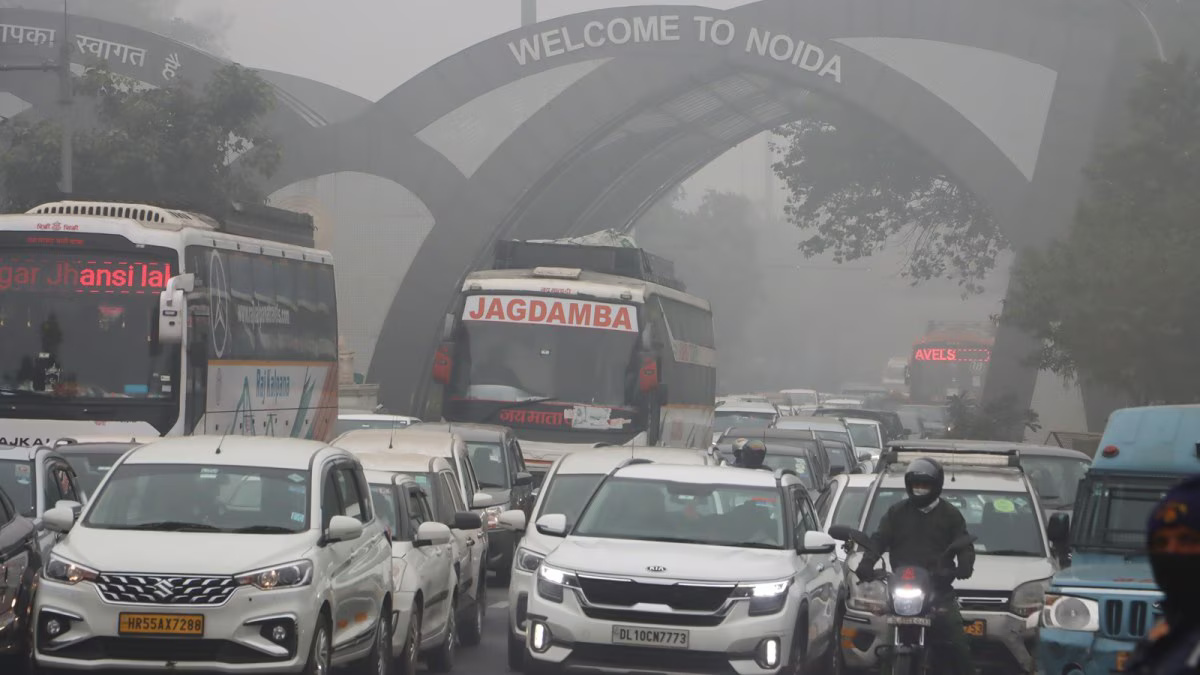
Noida RWAs Highlight Urban Safety and Congestion Issues
Noida’s urban governance landscape has come under fresh pressure as resident welfare associations (RWAs) across sectors raised a constellation of land-use, traffic management and safety concerns associated with unauthorised banquet halls and related civic bottlenecks.
The complaints — brought before police and civic authorities — illuminate wider frictions between rapid event-driven commercial growth and foundational needs for orderly urban mobility and infrastructure compliance. In recent weeks, federations representing residents in multiple sectors — including Sector 51 and surrounding clusters — have reported that events and celebrations at banquet halls and function venues are spilling over into public roads, causing persistent traffic backups, noise disturbance and ad-hoc parking that encroaches onto service lanes. Residents say the problem is compounded by impromptu roadside parking and vendors, which together diminish safe access for both daily commuters and emergency services.
Community leaders also flagged weak enforcement of land-use clearances, asserting that several banquet halls in established residential belts lack up-to-date approvals or requisite fire-safety certifications — infrastructure prerequisites that are central to equitable, people-first urban development. RWAs contended that soundproofing, designated parking and certified fire exits should be mandated as part of any commercial hospitality operation within residential catchments. Traffic planners say these concerns aren’t isolated to social events alone but stem from broader challenges in transportation network planning. In fast-expanding cities like Noida, where new residential sectors and mixed-use hubs have accelerated in tandem, road geometry, U-turn placements and diversion points have a material impact on daily traffic flows. Poorly configured road intersections and ad-hoc diversions around venues with high transient volumes can trigger congestion that radiates outward into arterial corridors, diluting overall network efficiency.
Public safety also emerged as a significant dimension of the discourse. Noise pollution — especially from loud music and late-night events — was raised as a pressing issue affecting elderly residents, students during exam periods, and families in densifying neighbourhoods. With municipal noise regulations offering specific decibel and time limits, RWAs are pushing for enhanced enforcement and real-time monitoring to align event programming with community well-being standards. Policing officials acknowledged the multifaceted nature of the complaints, indicating that solutions require cross-agency coordination between traffic management, planning authorities and law enforcement. Senior traffic officials said suggestions for improved signalling, enforcement around metro station junctions, and regulatory checks on temporary event parking are being reviewed for possible pilot interventions. Urban planning analysts observing Noida’s growth highlight that such friction points are common where rapid hospitality and social event economies intersect with residential expansion without proportionate infrastructural scaffolding. They suggest a formalised framework for event space approvals, integrated with traffic management protocols and safety compliance audits, could help mitigate bottlenecks while preserving community amenity values.
As Noida continues to deepen its role as both a residential magnet and social-economy hub, how authorities balance commercial vibrancy with civic order, traffic fluidity and resident quality of life will be a key test of equitable and climate-aligned urban governance.