


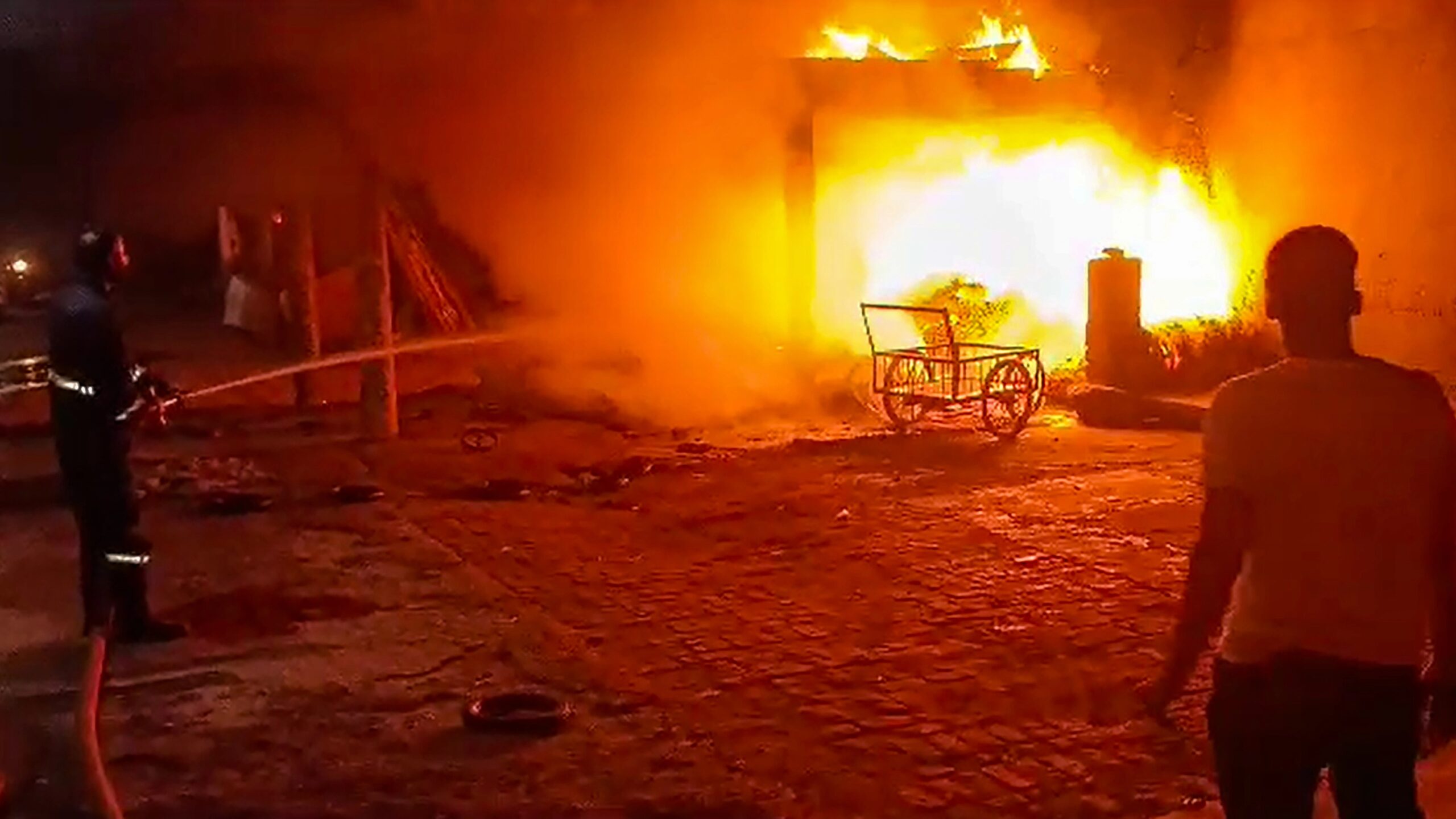
Nagpur’s firefighting units battled a major blaze at a paper processing facility in the Uppawadi area near Kamptee in the early hours of Tuesday, bringing the fire under control after more than seven hours of sustained operations, officials said.
There were no reported injuries among workers or emergency responders despite the intensity of the inferno. The fire erupted at around 1:30 am, prompting multiple fire tenders and rescue crews to converge on the industrial site within the MIDC-adjacent zone, a prominent manufacturing cluster on the city’s northeastern periphery. Thick smoke and towering flames drove emergency strategies focused on containment and protecting neighboring facilities.
Fire control officials described the incident as one of the more challenging industrial fires in recent months for Nagpur’s brigade teams, noting fluctuating wind conditions and dense stacks of paper and raw materials that fuelled the flames. Swift coordination between municipal fire services and district disaster response units helped ensure that there were no casualties or injuries among mill staff evacuated before the blaze grew. Industrial fires in paper and related processing facilities are not uncommon in India’s manufacturing belts, due to the highly combustible nature of paper stock and pulping residues. These materials can accelerate fire intensity, requiring specialized foam and water application tactics to prevent rapid spread and secondary ignition sources.
In recent years, Nagpur has also recorded other significant fire incidents across industrial and commercial sectors, which have together highlighted gaps in fire safety protocols and compliance enforcement. For instance, widespread fires at warehouses storing flammable goods have demanded large volumes of water and coordination across multiple fire stations, revealing strain points in equipment and resource readiness. Fire safety experts stress that rigorous adherence to facility-specific firefighting measures, regular inspections and emergency drills are essential to mitigate risks in heavy industrial areas like MIDC, where dense clustering of factories and supply chains elevates hazard exposure for workers and surrounding communities. Local industry associations and civic officials are expected to review the causes once formal investigations conclude, assessing whether electrical faults, storage practices or preventive maintenance lapses contributed to the eruption. Such reviews typically inform updated compliance frameworks aimed at limiting property loss and safeguarding human life.
For Nagpur’s urban and industrial governance ecosystem, this episode underscores the importance of integrated safety planning, stricter enforcement of building and fire codes, and expanded investment in advanced firefighting equipment — all integral to bolstering the city’s resilience as its manufacturing footprint grows.
Also Read: Nagpur Solar Tender Seeks Rooftop Power for Dairy Plant
