


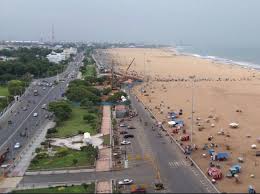
Chennai’s long-running effort to reposition Marina Beach as a globally benchmarked urban coastline is approaching a critical milestone, with the second phase of its Blue Flag-aligned redevelopment nearing completion. Civic authorities indicate that most physical works on the upgraded stretch are finished, setting the stage for public access later this month and marking a broader shift in how Indian cities manage high-footfall natural assets.
Marina Beach, one of the world’s longest urban beaches, has historically functioned as both a civic commons and a pressure point for sanitation, safety, and ecological stress. The ongoing Marina Blue Flag initiative seeks to reconcile these competing demands by restructuring public access, amenities, and environmental management across multiple phases, rather than relying on cosmetic upgrades.The project is being executed in four segments to comply with the internationally recognised Blue Flag framework, which evaluates beaches on water quality, environmental education, waste management, safety infrastructure, and inclusive access. Urban planners view this phased approach as significant, allowing authorities to test crowd response, maintenance systems, and operational capacity before scaling interventions along the coastline.
The first completed segment, developed near an existing recreational zone, demonstrated the latent demand for well-managed public waterfronts. Officials tracking footfall data observed sustained daily visitor numbers far higher than historical averages, underscoring the economic and social value of investing in public realm infrastructure rather than restricting access.Building on this response, the second phase focuses on a prominent central stretch of Marina, with investments directed towards low-impact materials, modular public furniture, safety oversight, and diversified use zones. Industry experts note that the use of renewable materials and non-permanent structures reflects a growing preference for climate-adaptive coastal design, especially in erosion-prone and cyclone-exposed regions like Chennai.
Equally notable is the emphasis on inclusivity. The redesigned beachfront incorporates universally accessible sanitation facilities, gender-neutral planning considerations, and defined spaces catering to children, students, and informal visitors. Urban policy specialists point out that such design choices are increasingly shaping how cities measure “success” — not merely through aesthetics, but through who can safely and comfortably use public spaces.Beyond Marina, the initiative has wider implications for Tamil Nadu’s coastal management strategy. With only one beach in the state currently holding Blue Flag certification, authorities are pursuing similar upgrades across multiple districts. Analysts see this as part of a broader attempt to link tourism, urban resilience, and environmental compliance without over-commercialising sensitive ecosystems.
As Chennai prepares to open the next upgraded stretch, attention will shift from construction timelines to long-term maintenance, enforcement, and public behaviour. The durability of the Marina Blue Flag project will ultimately depend on whether environmental standards are sustained once crowds return — a test that many Indian urban waterfronts have struggled to pass.
Also Read:Maharashtra Gets Major Solar Capacity Boost From Bondada
Chennai Marina Blue Flag Project Enters Final Stage
