


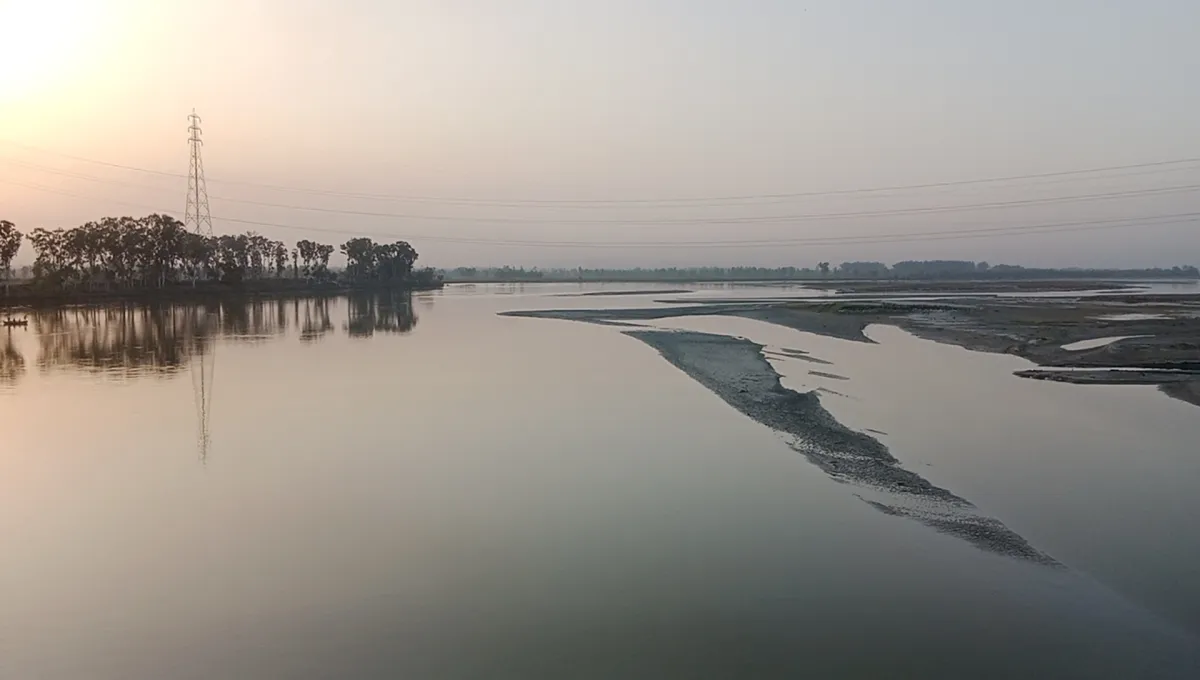
Large parts of Hyderabad are facing a prolonged drinking water interruption this week, underscoring the growing strain on the city’s ageing water infrastructure even before peak summer demand sets in. Emergency repair work on a major transmission pipeline supplying the city has forced a near-total shutdown of water flow to several western and north-western neighbourhoods, affecting households, businesses and essential services.
The disruption stems from structural failures detected along a key bulk water conduit that draws supplies from the Manjeera system, one of Hyderabad’s principal surface water sources. Officials overseeing the network identified multiple leak points along high-pressure stretches of the pipeline, resulting in substantial water loss and reduced delivery to downstream areas. Engineers involved in the operation say continued pumping without repairs risked more extensive damage and longer-term service instability.Water supply has been suspended for close to two days to allow for welding and reinforcement work on the large-diameter pipeline. During this period, pumping operations have been completely halted to ensure worker safety and technical accuracy. Supply is expected to resume in phases once pressure testing and system stabilisation are completed.
The interruption affects several densely populated residential and mixed-use zones, including large apartment clusters, commercial hubs and older neighbourhoods that rely almost entirely on municipal water. For many residents, the timing has heightened concern, as February is typically not associated with acute shortages. Urban planners note that early disruptions often signal deeper vulnerabilities ahead of the summer months, when daily demand rises sharply and storage buffers shrink.From an economic perspective, such shutdowns carry hidden costs. Small businesses, food establishments and service providers dependent on regular water access face operational disruptions, while households increasingly turn to private tanker supplies at higher prices. Real estate consultants say frequent supply interruptions can also influence housing preferences, pushing demand towards developments with independent storage and recycling systems.
The episode highlights the challenges of managing an expanded metropolitan water network that serves a rapidly growing urban footprint. As Hyderabad’s built-up area has extended outward, transmission lines have lengthened and aged simultaneously, increasing exposure to leaks and pressure-related failures. Climate variability, including longer dry spells, further amplifies the stress on bulk supply infrastructure.Sustainability experts argue that repeated emergency repairs point to the need for predictive maintenance, network mapping and phased pipeline replacement rather than reactive fixes. Integrating smart sensors to detect pressure drops, alongside decentralised water reuse and rainwater harvesting at the neighbourhood level, could reduce dependence on long-distance bulk supply systems.
For now, civic authorities have advised residents in affected areas to manage stored water carefully until normal supply resumes. Looking ahead, the disruption serves as a reminder that water security is as much an infrastructure and governance challenge as it is a resource issue. As Hyderabad prepares for another summer, ensuring resilient, equitable and climate-ready water systems will remain central to the city’s long-term urban sustainability.
Also Read:Kolkata Municipal Climate Training Advances Urban Resilience
Hyderabad Water Supply Halt Exposes Network Fragility
