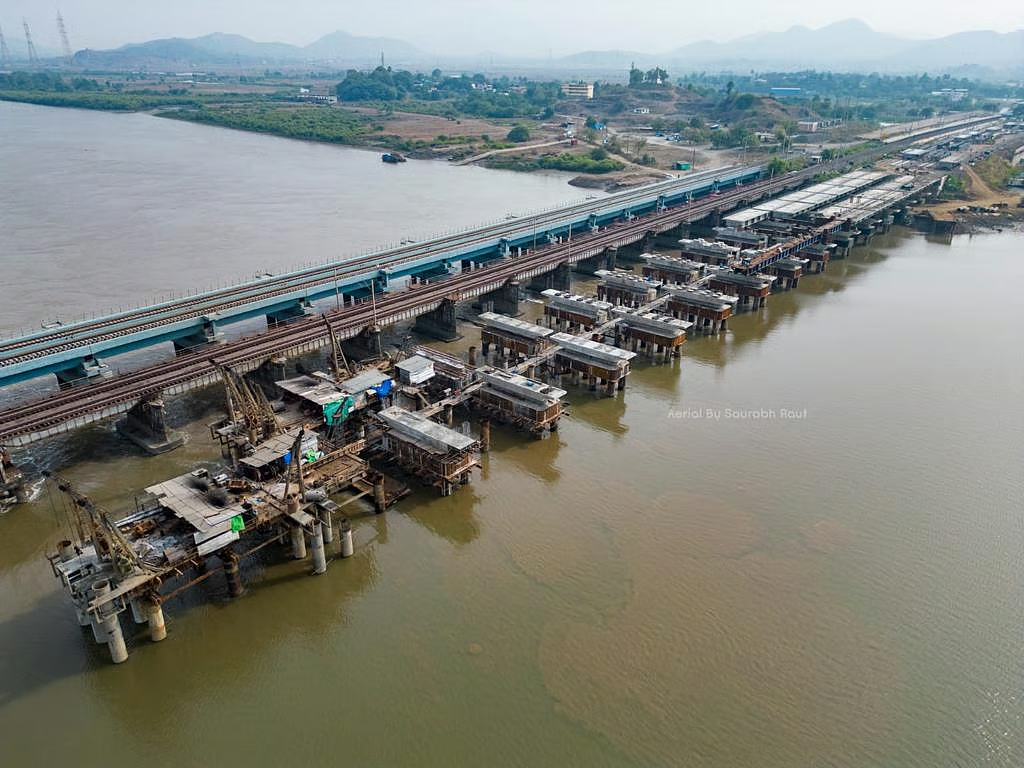
MRVC Builds New Vaitarna Rail Bridges To Ease Congestion
In a strategic infrastructure upgrade designed to relieve chronic congestion on one of India’s busiest suburban rail corridors, the Mumbai Railway Vikas Corporation (MRVC) is advancing construction of two new railway bridges across the Vaitarna River between Virar and Dahanu Road. These structures form a critical element of the broader Virar-Dahanu Road quadrupling project, an initiative that will expand the existing double-track Western Railway line into a four-track corridor to separate suburban and long-distance services and improve operational reliability.
The first of the new structures, Bridge 92 — about 628 metres long — is nearing completion and expected to open within weeks, offering immediate capacity relief along this strategically important stretch north of Mumbai. The second structure, Bridge 93 (515 metres), remains under construction and is scheduled to be operational by March 2027. Together, these builds will support a wider four-track configuration engineered for higher axle loads and more frequent services.Rail infrastructure experts describe the Vaitarna bridges as a linchpin in enhancing commuter experience on the extended suburban network. Separating long-distance and local trains through dedicated tracks is expected to reduce delays, improve punctuality and expand capacity for both segments, a prerequisite for accommodating surging travel demand in the northern reaches of the Mumbai Metropolitan Region (MMR).
The Virar-Dahanu quadrupling initiative, executed by MRVC under the Mumbai Urban Transport Project Phase-3, spans roughly 64 km and encompasses extensive civil works including earthworks, station upgrades and multiple bridge installations. Recent reports indicate nearly half of the physical construction has been completed, with major clearances and land acquisitions secured, despite earlier delays linked to environmental clearance processes and resource constraints.For daily commuters along the Virar-Dahanu corridor — one of western India’s most trafficked suburban rail axes — the new bridges represent more than engineering milestones. They signal a shift toward capacity scaling and service resilience, which are essential as population and economic linkages intensify between peripheral towns and core urban hubs. Expanding track capacity is particularly relevant for managing peak hour congestion that frequently disrupts travel rhythms for tens of thousands of commuters.
However, the project’s scale has also stirred debates around environmental stewardship and sustainable planning. Past clearances for the quadrupling project included legal approval to modify mangrove areas to widen alignments — a contentious point among conservation advocates — highlighting the tension between infrastructure expansion and ecosystem preservation in coastal Maharashtra corridors.Urban planners emphasise that the success of such large rail projects is not only measured in steel and concrete milestones, but also in how well they integrate last-mile connectivity, transit accessibility and climate resilience into broader urban mobility ecosystems. Effective integration with local buses, active transport routes and station area improvements will be key to translating increased track capacity into real commuter benefits. Experts also point to the importance of ongoing communication with communities and stakeholders to sustain trust and ensure inclusive outcomes.
As Virar-Dahanu’s rail upgrades proceed toward the targeted 2027 completion of the second Vaitarna bridge, stakeholders will be watching how these engineering advancements contribute to a more resilient, efficient and equitable suburban rail network — a backbone of Maharashtra’s long-term transportation strategy.