


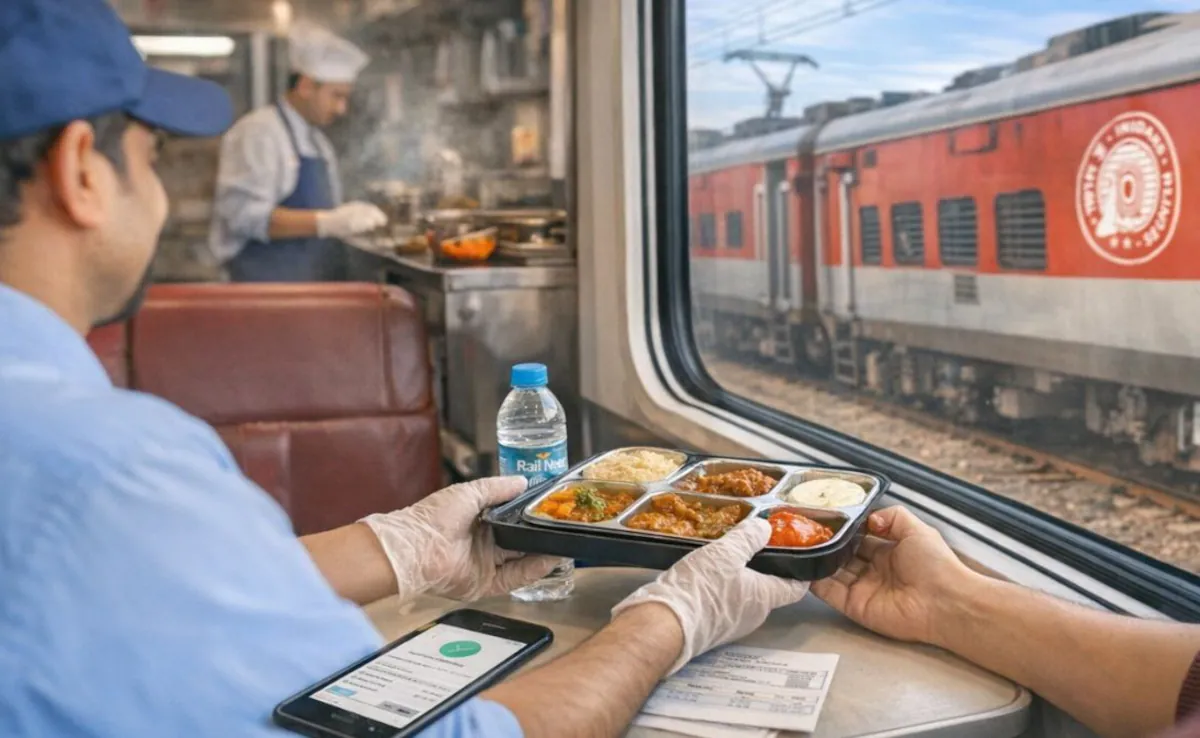
Indian Railways has introduced an online meal booking system across 25 long-distance trains, aiming to improve passenger convenience while modernising service delivery. Officials highlight that the move aligns with broader digitalisation and urban mobility strategies, integrating transport services with technology to streamline travel experiences and reduce operational inefficiencies. The initiative also has implications for sustainable urban transport and passenger-centric infrastructure development.
The system allows passengers to pre-order meals via a dedicated digital platform, linked to their journey details, enabling more precise inventory management and minimising food wastage. Industry experts note that digital ordering in rail travel can reduce congestion at onboard kitchens and station vendors, while promoting contactless service, an important consideration in post-pandemic urban transit planning. Urban planners emphasise that efficient meal logistics in trains contribute to broader mobility resilience. Pre-booked meals reduce stopover delays at major stations, easing crowd management and improving punctuality across heavily trafficked rail corridors. A senior transport official indicated that integrating online food services with existing e-ticketing platforms can also improve transparency in service delivery, while opening avenues for small-scale vendors to participate in formal supply chains, enhancing equitable economic opportunities. From an environmental perspective, analysts argue that digitising meal ordering helps optimise supply chains, potentially lowering emissions associated with last-minute delivery or excess production. Implementing centralised meal preparation and digital tracking aligns with climate-resilient transport strategies, ensuring that high-volume passenger services can operate efficiently without unnecessary resource strain.
The move also reflects a broader trend in Indian cities and transit hubs, where digital solutions are increasingly applied to enhance passenger convenience and operational efficiency. Experts predict that this step may expand to additional trains and stations, fostering greater integration of urban transit networks with technology-driven service models. Looking forward, successful adoption will depend on user awareness, seamless app functionality, and collaboration between railway authorities and approved food suppliers. If executed effectively, the system can serve as a model for combining digital infrastructure with urban mobility, delivering convenience, sustainability, and inclusive service in public transportation networks.
Also Read: Pune Mumbai Nagpur Rail Links Get Temporary Boost
Indian Railways Launches Online Meal Booking Facility
