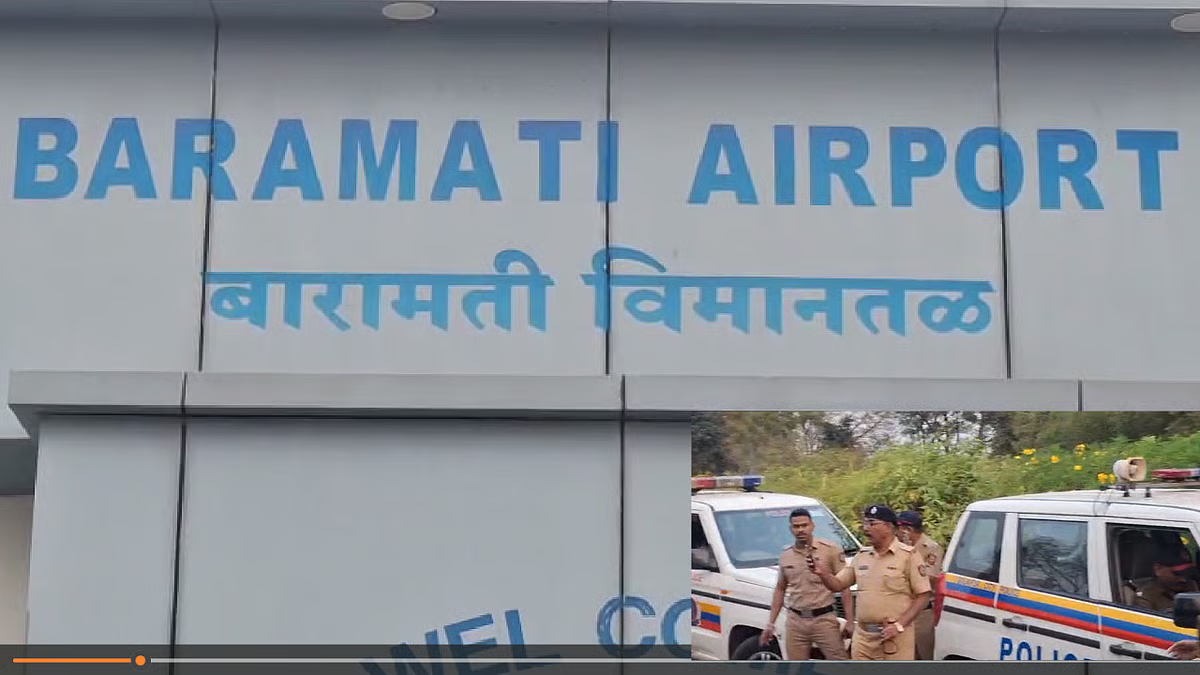
The Maharashtra government has directed a comprehensive infrastructure upgrade for the Baramati airport in Pune district, positioning the facility as a safer and more connected node in the state’s evolving regional aviation network. The decision follows heightened scrutiny of airstrip capabilities after a fatal aircraft incident near the site earlier this year, prompting authorities to accelerate plans to align smaller regional airports with standard aviation operations and safety expectations.
Baramati airport, currently operating primarily under visual flight rules (VFR) with limited navigational support and no permanent air traffic control tower, will see coordinated interventions to strengthen its runway, install modern navigation systems and enhance air traffic monitoring mechanisms. These upgrades are being steered by the Maharashtra Airport Development Company Limited (MADC), the state-owned entity tasked with boosting regional airport infrastructure as part of wider efforts to improve connectivity across Maharashtra.Urban infrastructure experts describe the Baramati initiative as part of a larger shift towards inclusive regional connectivity planning. While major international and metro airports receive significant investment and regulatory attention, smaller airfields like Baramati have traditionally remained on the periphery of mainstream aviation development. Upgrading such facilities can strengthen logistical linkages for business, tourism, and emergency services — a key aspect of balanced urban and economic growth beyond metropolitan cores.
For local communities and businesses in western Maharashtra, improved airport infrastructure could reduce reliance on larger hubs and attract new economic opportunities. Baramati, recognised for its industrial clusters and educational institutions, stands to benefit from better access to air transport, which can shorten travel times and support more equitable distribution of commercial activities across the region. Industry analysts also see a potential boost for regional flight operations under schemes such as the government’s UDAN (Regional Connectivity Scheme), if facilities meet regulatory and safety benchmarks.However, the initiative also highlights enduring gaps in planning and regulatory oversight for smaller airports. Aviation safety professionals have cautioned that without rigorous audits, strengthened air traffic control infrastructure and robust oversight by regulators such as the Directorate General of Civil Aviation (DGCA), upgrades may fall short of driving sustained improvements in operational safety. The recent tragedy involving state leaders underscored these systemic vulnerabilities and has shaped political will to prioritise structural enhancements at Baramati.
From a sustainability perspective, the project presents both opportunities and challenges. Integrating climate resilience measures and land-efficient planning into airport upgrades can help minimise environmental footprint, particularly in peri-urban settings where land use pressures and ecological sensitivity intersect. Planners and civil society groups advocate for inclusive engagement with local stakeholders to ensure development does not come at the expense of surrounding agricultural or natural landscapes.
Looking ahead, authorities will need to publish detailed project timelines, financing strategies and community consultation mechanisms. Clear articulation of how Baramati’s upgrades align with regional air connectivity goals and broader transport planning — including ground access and public mobility links — will determine whether the airport plays a meaningful role in Maharashtra’s balanced urban and economic future.