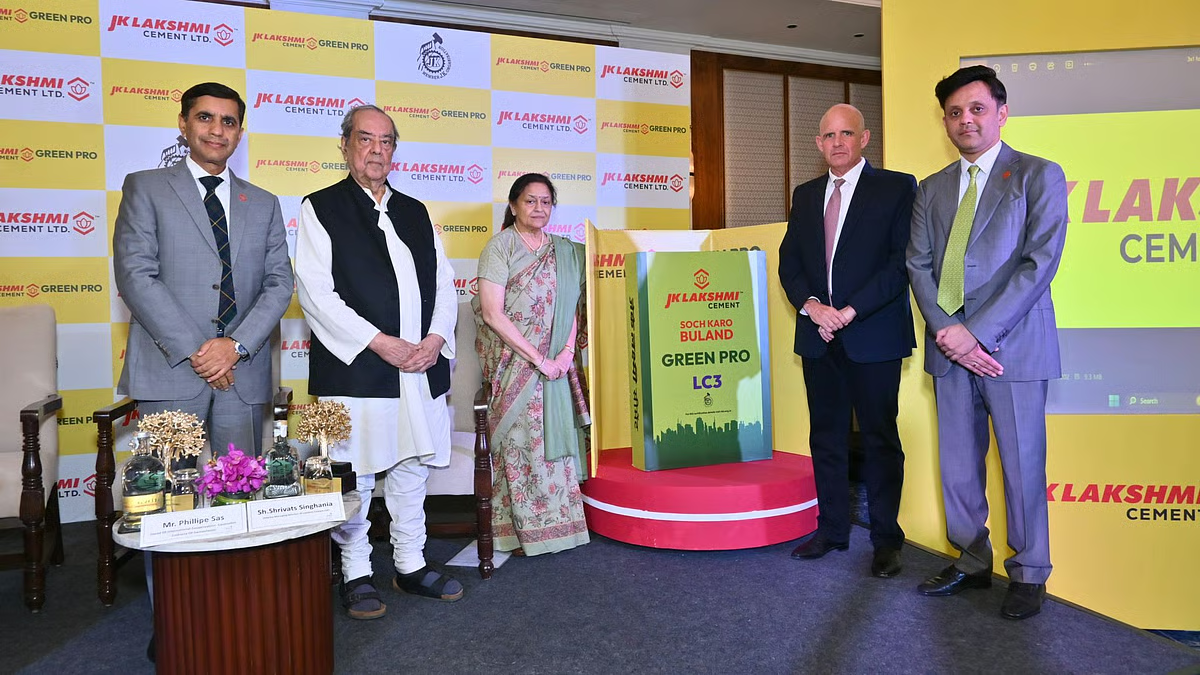
JK Lakshmi Cement Launches India First Green PRO LC3 Cement
In a landmark step for sustainable construction in India, JK Lakshmi Cement has rolled out Green PRO LC3, among the country’s first commercially available low-carbon limestone calcined clay cement (LC3) offerings, signalling a shift in building material technology toward climate-aligned urban development. The debut, anchored at the company’s integrated facility in Sirohi, Rajasthan, aims to reduce the embodied carbon footprint of concrete and expand choices for developers seeking greener infrastructure solutions.
LC3 is an emerging class of cement that blends clinker with calcined clay and limestone, lowering carbon dioxide emissions by up to approximately 40 per cent compared with traditional Ordinary Portland Cement — the dominant binder in concrete production and a major contributor to global industrial emissions. This innovation arrives as India intensifies focus on low-carbon infrastructure to meet climate commitments and support resilient urban growth.The commercial launch prioritises institutional and large project demand across northern and western markets, with initial dispatching from late January 2026. Company sources note that Green PRO LC3 is engineered for durability and enhanced performance, particularly in mass-concrete elements where thermal control and structural endurance matter for public works, transport corridors and high-exposure environments.
Urban planners and sustainability experts regard this development as a key enabler for climate-sensitive construction practices. Reducing production emissions from cement not only aligns with India’s broader climate goals — such as the Intended Nationally Determined Contributions under the Paris Agreement — but also addresses growing demand for eco-efficient materials in housing and infrastructure. Experts highlight that materials with lower embodied carbon can substantially affect lifecycle impacts of built assets as cities pursue net-zero and resilience targets.JK Lakshmi Cement’s initiative dovetails with industry momentum toward greener cement alternatives; analogous efforts have seen other producers introduce LC3 at scale for structural applications, and real estate firms deploying low-carbon concrete in roads and urban infrastructure. Moreover, the product expansion aligns with the company’s ongoing sustainability commitments, which have previously included renewable energy adoption and lower carbon logistics strategies.
Market responses indicate a growing premium segment within construction materials, where builders and developers favour performance and sustainability alongside cost competitiveness. Although Green PRO LC3 may carry a modest price premium over standard offerings, its potential to reduce long-term carbon liabilities and improve durability positions it favourably for project specifications that prioritise environmental and structural outcomes.For urban areas experiencing rapid expansion, the availability of low-carbon cement supplies could accelerate incorporation of greener practices into mainstream construction. As India’s cities scale infrastructure and housing to accommodate demographic growth, innovations like LC3 provide both environmental benefit and market differentiation — marking a notable pivot in how foundational materials contribute to sustainable urbanisation.