


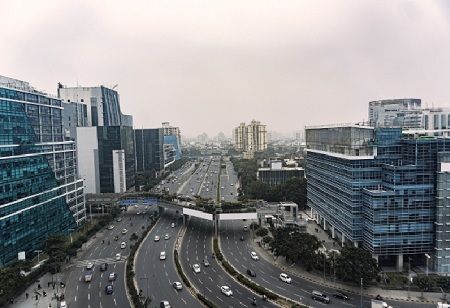
Once defined by factory sheds and industrial activity, Wagle Estate in Thane is undergoing a decisive transformation into a mixed-use urban district that could reshape the city’s economic and residential geography. Long regarded as a legacy industrial estate, the precinct is now evolving into a dense commercial and lifestyle hub, reflecting broader shifts in how satellite cities within the Mumbai Metropolitan Region are growing.
Established in the early 1960s as one of Maharashtra’s earliest industrial estates, Wagle Estate historically housed manufacturing units and MSMEs that powered Thane’s economy for decades. Today, that industrial legacy is giving way to a new urban form driven by infrastructure upgrades, redevelopment of ageing plots, and a changing employment base. The result is a precinct increasingly compared to Mumbai’s established business districts though its trajectory is distinctly shaped by Thane’s scale and demographics. A major driver of this shift has been connectivity. Proximity to Thane railway station, arterial highways, and upcoming metro links has repositioned Wagle Estate as a central node rather than a peripheral workplace. Improved access across the Mumbai Metropolitan Region has reduced commute times, making the area attractive not just for offices but also for residential development tied closely to employment hubs. Commercially, the skyline has been steadily changing. Older factories are being replaced by Grade-A office buildings designed for contemporary business needs, including flexible floor plates, shared amenities, and energy-efficient systems. This has drawn a diverse tenant base, ranging from technology and financial services firms to logistics and professional consultancies, many of which are seeking alternatives to Mumbai’s high-cost core districts.
What sets the current phase apart is the parallel growth of residential and lifestyle infrastructure. Developers are increasingly integrating housing with retail, dining, fitness, and wellness spaces, shifting Wagle Estate from a daytime business zone into an all-hours neighbourhood. Urban planners note that such integration supports safer streets, better land utilisation, and reduced travel demand key elements of climate-resilient city planning. Residential demand has followed this commercial momentum. Professionals working in and around the precinct are opting to live closer to their workplaces, embracing a live-near-work model that reduces commuting stress and carbon intensity. This has spurred interest across mid-income and premium housing segments, supported by access to schools, healthcare, and everyday services within short distances. The area has also gained traction as an office ownership market, particularly for small enterprises and professionals priced out of traditional central business districts. Ownership, rather than leasing, offers cost stability and long-term value, reinforcing Wagle Estate’s role as a self-sustaining economic cluster.
While comparisons with Mumbai’s flagship business districts are inevitable, Wagle Estate’s evolution is less about replication and more about adaptation. Its growth reflects a pragmatic urban model compact, connected, and mixed-use aligned with Thane’s emergence as a self-sufficient city. As redevelopment continues, the challenge will be to balance density with liveability, ensuring infrastructure, public spaces, and environmental resilience keep pace with rising demand.
Also Read: Mumbai residential construction gathers early momentum
Thane Wagle Estate emerges as new urban core
