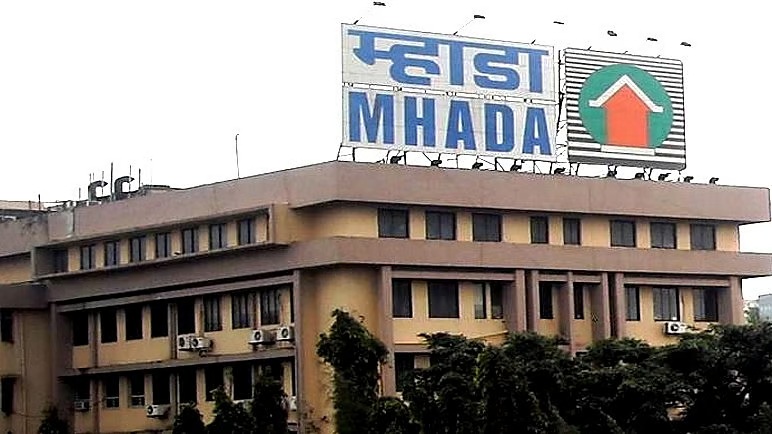
Pune MHADA Lottery Signals Shift In Housing Policy
Pune’s public housing landscape reached a critical milestone on Wednesday as the state housing authority prepared to declare the outcome of its largest residential allocation exercise for the region this year. The Pune board lottery, covering thousands of subsidised homes across the metropolitan area, has drawn unprecedented interest, underscoring the widening gap between urban incomes and formal housing supply. More than 4,000 dwelling units were offered across Pune, Pimpri-Chinchwad and adjoining development authority limits, with applications exceeding two lakh. Urban planners say the scale of participation reflects both sustained population growth and a sharp contraction in affordable private-sector housing launches over the past three years. For many households, public lotteries remain the only viable entry point into regulated homeownership.
The housing stock on offer was distributed primarily under two planning frameworks designed to integrate lower-income residents within mainstream urban developments. A majority of homes were carved out through mandatory inclusionary norms, while the remainder were allocated under social housing provisions. Together, these mechanisms are intended to reduce spatial segregation and support shorter commutes, a key factor in lowering household transport emissions and improving work-life balance. The draw is being conducted at a public auditorium with digital access for applicants, reflecting the authority’s push towards transparency and real-time monitoring. Senior officials overseeing the process have indicated that the use of live-streamed draws and digitised records is aimed at restoring public confidence after years of criticism around opacity in housing allocations.
Beyond Pune, the announcement carries wider implications for Maharashtra’s urban housing pipeline. The state authority is preparing to release a fresh tranche of around 5,000 homes in the Mumbai region in the coming months, including redevelopment-linked inventory in established western suburbs. Market analysts note that these releases are increasingly important as land-constrained cities struggle to balance redevelopment, rental demand and ownership affordability. Recent attempts to liquidate older, unsold housing stock through first-come, first-served channels in Mumbai further illustrate shifting demand patterns. While premium units in central locations continue to command multi-crore prices, smaller homes in peripheral and mid-city areas are seeing slower uptake, pointing to a mismatch between pricing, location and household budgets.
For urban economists, the Pune MHADA lottery serves as a barometer of housing stress in India’s second-tier metros. High application volumes suggest unmet demand remains deep, even as infrastructure investments expand city boundaries. Experts argue that without sustained public-sector intervention paired with climate-sensitive planning, efficient transit integration and mixed-income zoning urban affordability will continue to erode. As cities like Pune evolve into denser economic hubs, the challenge ahead lies not just in building more homes, but in ensuring that housing policy aligns with environmental resilience, social inclusion and long-term urban productivity.