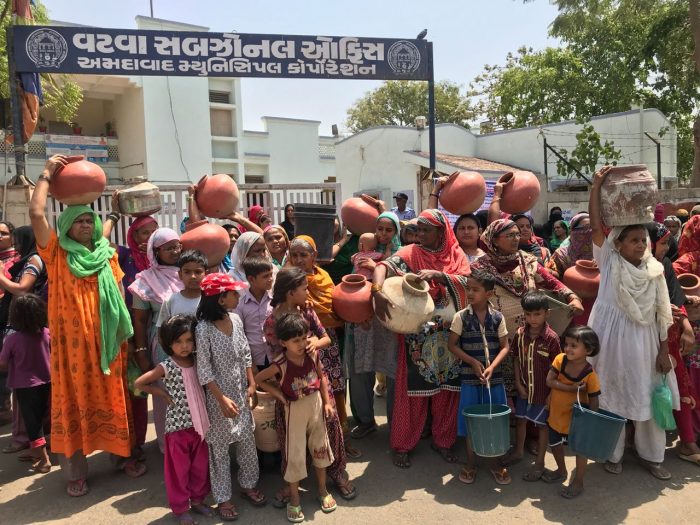
Ahmedabad Water Supply Crisis Triggers Civic Protest
A civic protest over unsafe drinking water has reignited concerns about ageing urban infrastructure in eastern Ahmedabad, raising wider questions about service delivery, public health, and municipal accountability in one of India’s fastest-growing cities. Residents from a dense residential cluster in the Odhav industrial belt gathered outside the city’s civic headquarters this week, alleging prolonged contamination of the municipal water supply with untreated sewage.
The Ahmedabad water supply crisis has persisted for several months, according to residents, who claim that repeated complaints to local authorities failed to trigger corrective action. The protest, supported by opposition representatives and community groups, disrupted routine operations at the municipal office before officials agreed to formally accept a written grievance. While civic authorities assured interim tanker supply, residents expressed concern about continued exposure to unsafe water even for short durations. Urban planners say such incidents highlight structural stress within older water distribution networks, particularly in mixed-use zones where residential areas coexist with industrial infrastructure. Odhav, like many legacy neighbourhoods across Indian cities, relies on underground pipelines laid decades ago, often without systematic upgrades or real-time monitoring. Leakage points, experts note, allow sewage ingress during pressure drops, especially when water supply is intermittent.
From a public health perspective, prolonged exposure to contaminated water can significantly increase the risk of waterborne diseases, disproportionately affecting children, elderly residents, and informal workers who lack access to packaged alternatives. Health economists point out that the indirect cost of unsafe water lost productivity, medical expenses, and school absenteeism often outweighs the capital cost of preventive infrastructure upgrades. The Ahmedabad water supply crisis also has broader implications for urban growth and real estate confidence. Access to reliable, safe utilities remains a critical factor influencing housing demand, rental values, and neighbourhood resilience. Developers and housing associations increasingly factor water security into project viability, particularly as climate stress and groundwater depletion intensify across western India.
Municipal officials privately acknowledge that stop-gap solutions such as water tankers are neither scalable nor sustainable. Infrastructure specialists argue that cities like Ahmedabad must accelerate investment in pipeline rehabilitation, decentralised wastewater treatment, and pressure-management systems. Digital leak detection, already piloted in parts of India, could help prevent cross-contamination while reducing non-revenue water losses. As cities pursue climate-resilient and inclusive urbanisation, safe drinking water remains a non-negotiable foundation. The situation in Odhav underscores the need for transparent grievance redressal mechanisms and proactive maintenance, rather than reactive crisis management. How quickly and decisively authorities respond may shape public trust not only in service delivery, but in the broader promise of equitable urban development.