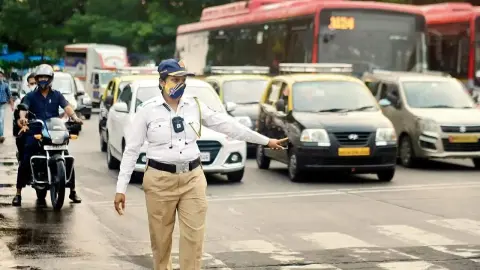
Mumbai Traffic Police To Deploy Advanced Body Cameras
The Mumbai Traffic Police are preparing to upgrade their body-worn camera systems, replacing a fleet of unreliable devices that frequently shut down mid-shift and undermined real-time monitoring and enforcement efforts on city roads. The move affects nearly 3,000 traffic personnel who rely on wearable cameras to document violations, enhance transparency and support lawful operations amid rising urban mobility demands.
Current devices — deployed incrementally over recent years — have been criticised within the force for poor battery performance, with many shutting down after just 15–20 minutes despite claims of longer battery life. This gap in operational reliability has created accountability challenges for officers tasked with managing one of India’s busiest metropolitan road networks and enforcing traffic discipline in a city with high vehicle density.Senior officials have now cleared a proposal to procure next-generation body cameras with improved battery backup and advanced features such as consistent recording throughout duty hours and easier connectivity with control rooms. The upgrade aims to strengthen procedural integrity during interactions with motorists, lower disputes over sightings and ensure that digital evidence is available when needed for enforcement or adjudication.
Experts in urban governance and public safety say this enhancement aligns with broader trends in smart traffic management, where digital tools support civic services and accountability. In major global cities, body-worn cameras have been credited with reducing complaints and providing clearer evidence in disputed incidents — an outcome that Mumbai’s traffic authorities are keen to replicate as enforcement pressures rise.Beyond battery life and reliability, the envisioned devices are expected to incorporate enhanced connectivity features that facilitate real-time transmission of footage to traffic control centres, enabling supervisors to monitor live conditions and coordinate responses during peak hours and special events. These capabilities could also support wider traffic technology integrations, such as synchronising enforcement data with intelligent traffic systems that adjust signal timings or flag violations automatically.
For daily commuters and road users, more dependable recording equipment could improve perceptions of fairness and accountability in roadside enforcement, potentially reducing conflicts and enhancing compliance with traffic regulations. Transparency in law enforcement processes is increasingly viewed as foundational to citizen trust and effective urban governance, especially in dense metropolitan contexts where interactions between officers and the public are frequent.Yet, technological upgrades alone are not a panacea. Urban planners and transport policy analysts emphasise that investments in digital enforcement tools must be accompanied by systematic improvements in traffic management — from upgraded signal systems and adaptive congestion control to public education and pedestrian-centric street design. Such integrative approaches are essential to ensure that enforcement technologies contribute meaningfully to sustainable, safe and inclusive mobility outcomes.
As the procurement process unfolds, authorities will need to clarify timelines, interoperability with existing systems and training protocols for officers. Clear guidelines on data privacy, storage and usage will also be critical to maintain public confidence and safeguard civil liberties as digital surveillance tools expand in public space.In the coming months, residents and road users can expect to see a gradual rollout of the new body-worn cameras, marking a step toward more accountable and technologically informed traffic enforcement across the Mumbai metropolitan region.