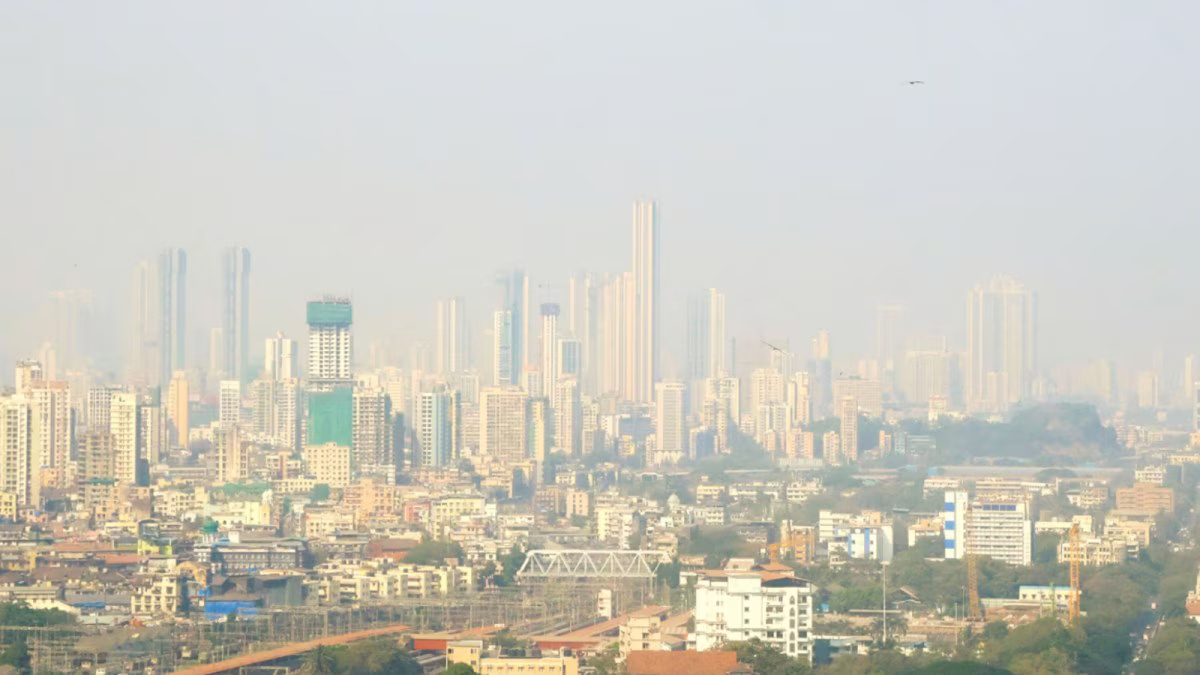
Air quality in India’s largest metropolitan region reached its best levels so far this month on Sunday, offering residents a temporary reprieve from airborne pollution, even as temperatures climbed significantly above seasonal norms. The improvement — reflected in a citywide Air Quality Index (AQI) in the moderate range — highlights the complex interplay between environmental conditions, urban emissions and public health in a densely populated coastal megacity.
Data from monitoring stations across the city showed that several suburbs recorded near-“satisfactory” air quality levels, with lower particulate concentrations than typical winter peaks. Outlying satellite cities such as Thane and Navi Mumbai also registered moderate AQI figures, while pockets of central Mumbai continued to experience relatively poorer conditions.Public health and climate analysts emphasise that moderate AQI readings indicate fewer acute health risks for most residents, but they also underline that intermittent improvements do not signal long-term relief from pollution challenges. Fine particulate matter (PM2.5 and PM10) and vehicle emissions remain persistent contributors to Mumbai’s air quality profile, shaped by transport density, construction activity and limited wind dispersion during calm, warm spells.
Urban planners point out that the surge in temperatures — with maximum heat significantly above average across multiple monitoring points — can paradoxically affect air quality in two ways. On one hand, higher solar radiation often helps disperse surface pollutants; on the other, heat can trigger atmospheric conditions that trap emissions closer to ground level in the absence of strong winds, especially in coastal zones where sea breezes vary diurnally.For citizens, the practical impact of these shifts is nuanced. “Moderate” AQI generally means outdoor activities are less likely to cause immediate irritation for healthy individuals, though sensitive groups — including children, elderly residents and people with respiratory conditions — are still advised to monitor exposure on days with localised pollution spikes.
Economists and sustainability experts note that improved air indicators, even temporarily, can have positive short-term effects on urban life, from increased footfall in outdoor spaces to enhanced worker productivity. Yet they caution against interpreting brief dips in AQI as systemic progress. The city’s broader air quality trends — shaped by vehicle emissions, industrial output and construction dust — require integrated policy action, including stricter emissions norms, cleaner transport incentives and expanded green buffers.Longitudinal data from environmental organisations show that sustained improvements in air quality typically coincide with coordinated meteorological events, such as consistent rainfall or strong coastal winds, which help clear particulate matter more effectively than isolated temperature fluctuations.
For Mumbai, which balances intense urban density with heavy commuter traffic and ongoing infrastructure expansion, the challenge remains systemic. The recent uptick in moderate air quality offers a short-lived respite, but city planners and public health officials stress that long-term resilience hinges on cross-sector strategies — from electrified mass transit and cleaner fuels to emissions monitoring and community engagement on pollution control.As the city transitions into warmer months, the focus will need to shift from episodic relief to sustained environmental management, ensuring that cleaner air becomes a consistent outcome rather than a fleeting anomaly.