


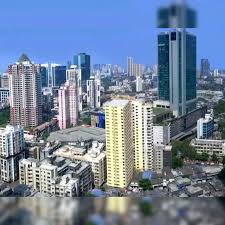
Mumbai’s real estate market began 2026 with a notable divergence between transaction volumes and transaction value, highlighting a structural recalibration underway in the city’s housing economy. While the number of property registrations declined compared to last year, government revenues from stamp duty touched their highest-ever level for a January, signalling growing demand for higher-value homes and a market increasingly driven by end-user confidence rather than speculative churn.
Official registration data shows that just over 11,200 properties were registered during the month, marking a year-on-year contraction in volumes. Despite this moderation, stamp duty collections crossed Rs 1,012 crore, exceeding last year’s January tally and setting a new benchmark for the period. Urban economists note that this pattern reflects a shift in buyer composition, with premium and upper mid-segment housing accounting for a larger share of market activity. Residential transactions continued to dominate Mumbai’s property landscape, comprising roughly four-fifths of all registrations. Smaller apartments remained the most actively traded, with homes under 1,000 sq ft forming the backbone of demand. This preference underscores the continued importance of compact, efficiently planned housing in a dense and transit-constrained metropolis, where proximity to jobs and public transport often outweighs sheer size. However, within this space-efficient demand profile, prices are clearly moving upward. Homes priced above Rs 5 crore accounted for a larger share of registrations than a year earlier, while the Rs 1–2 crore segment also expanded its presence. In contrast, lower-priced homes saw their share shrink, reflecting mounting affordability pressures linked to rising land values, redevelopment costs, and construction inflation.
Housing policy specialists caution that this trend could widen access gaps unless complemented by renewed focus on affordable and rental housing supply. Geographically, the suburban markets continued to anchor Mumbai’s real estate activity. The western suburbs accounted for the largest share of registrations, followed by the central suburbs, together forming the core of the city’s housing transactions. These areas benefit from a combination of metro connectivity, redevelopment-led supply, and relative affordability compared to the island city. South Mumbai and central island precincts remained niche markets, constrained by limited new inventory and significantly higher entry prices. Industry observers attribute the resilience in stamp duty collections to sustained infrastructure investment across the Mumbai Metropolitan Region, including metro corridors, road upgrades, and transit-oriented redevelopment. Improved connectivity has expanded the range of viable residential locations, encouraging buyers to prioritise long-term liveability and commute efficiency over short-term price considerations.
Looking ahead, planners suggest that Mumbai’s real estate trajectory points towards a more value-driven market, where quality, connectivity, and resilience increasingly shape purchasing decisions. The challenge for policymakers will be to ensure that this premium-led growth is balanced with inclusive housing strategies, climate-sensitive urban planning, and diversified supply that serves the full spectrum of the city’s residents.
Also Read: Mumbai Real Estate Signals Shift Amid Slower Registrations
Mumbai Real Estate Revenues Rise Despite Fewer Deals
