


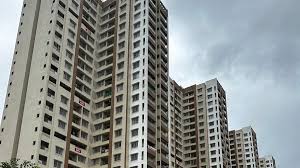
The scale of unmet housing demand across the Pune region will come into sharp focus this week as the state housing authority conducts a computerised lottery for over 4,000 homes spread across multiple urban and semi-urban jurisdictions. The draw, scheduled for February 10, covers projects located within Pune, Pimpri-Chinchwad, the Pune Metropolitan Region Development Authority (PMRDA) limits, and select districts in western Maharashtra.
According to official data, the lottery has attracted an exceptionally high volume of applications, with more than two lakh applicants qualifying for the final draw after completing mandatory payments. The response far exceeds the number of units on offer, underlining the persistent affordability gap in one of Maharashtra’s fastest-growing urban regions. Urban housing experts say the demand reflects both demographic pressures and structural constraints in Pune’s housing market. Rapid employment growth in manufacturing, information technology, education, and services has expanded the city’s population footprint well beyond municipal boundaries. However, formal supply of affordable and socially earmarked housing has struggled to keep pace, particularly for lower- and middle-income households. The homes being allocated through the lottery fall under two key public housing frameworks inclusive housing and social housing which require a proportion of residential stock in urban areas to be reserved for economically weaker and lower-income groups. These units are typically priced below prevailing market rates, making them one of the few viable ownership pathways for households otherwise priced out of private developments.
The geographic spread of the scheme is also significant. By extending beyond core Pune into Pimpri-Chinchwad, PMRDA areas, and neighbouring districts, the housing authority is attempting to align residential development with the broader metropolitan region. Planners note that such dispersal is essential to reduce pressure on central city infrastructure, provided it is accompanied by transport connectivity, employment access, and civic services. At the same time, the overwhelming application numbers raise questions about long-term housing strategy. With only a fraction of applicants likely to secure allotments, many households will continue to depend on informal rental markets or peripheral locations lacking adequate infrastructure. Urban policy analysts argue that lottery-based allocation, while transparent, highlights the need for larger-scale, continuous public housing delivery rather than episodic schemes. From a governance perspective, the use of computerised draws and public venues for allocation is intended to reinforce transparency and trust in the system. However, experts caution that allocation is only the first step. Timely construction, quality control, and integration with transport, water, and social infrastructure will ultimately determine whether such housing contributes to sustainable urban growth.
As Pune continues to evolve into a multi-nodal metropolitan region, the lottery underscores a fundamental challenge facing Indian cities: ensuring that economic expansion is matched by equitable access to secure housing. The outcome of this draw may offer short-term relief to a limited number of families, but it also serves as a reminder of the scale of public housing investment still required.
Also Read: India Real Estate Firms Enter AI Infrastructure
Pune Region Sees Strong MHADA Housing Response
