


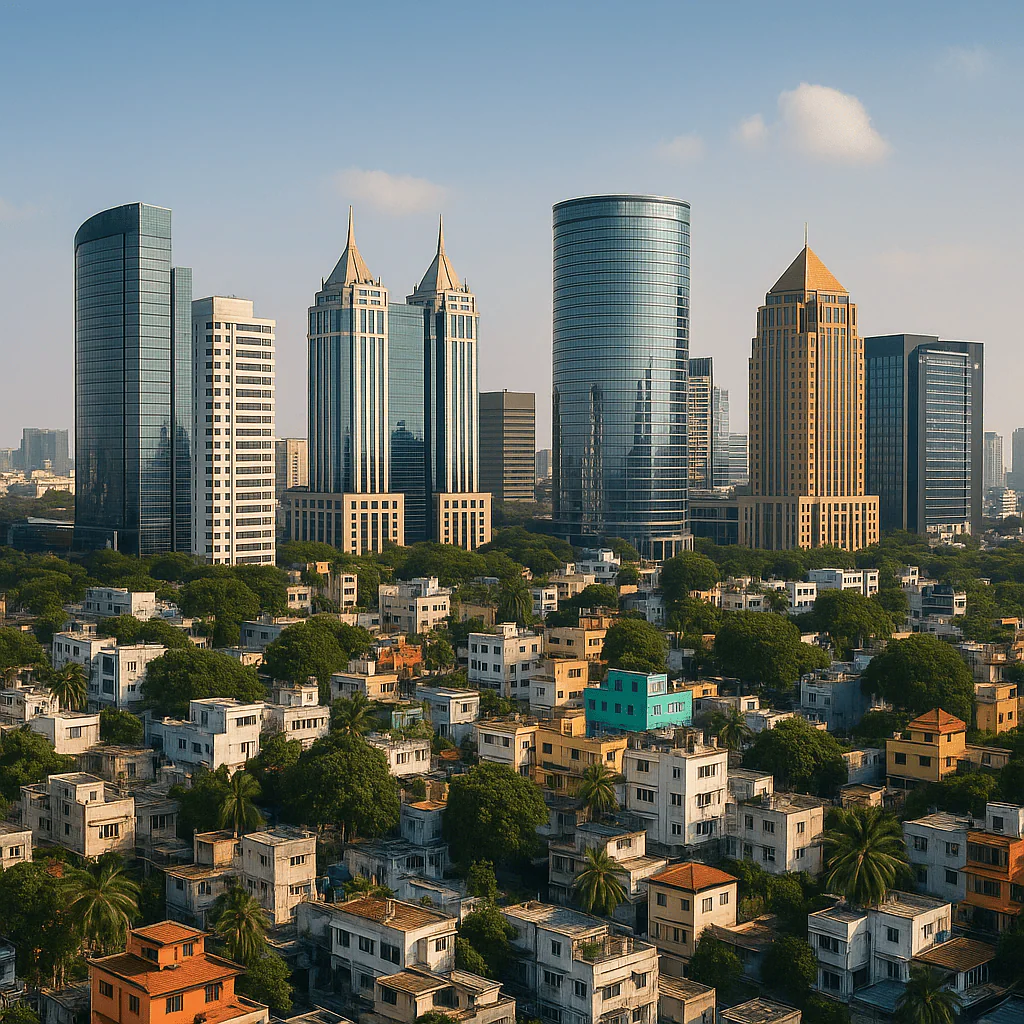
Bengaluru’s real estate market, long fuelled by the city’s software-driven growth engine, is confronting a new source of uncertainty: the potential disruption of technology jobs by artificial intelligence. While no immediate slowdown is visible on the ground, conversations emerging across professional and digital forums point to growing unease over how shifts in employment patterns could reshape housing demand in India’s technology capital.
The city’s residential market has historically moved in tandem with IT hiring cycles, salary growth, and the steady inflow of global capital linked to overseas employment. Urban economists note that even incremental changes in these drivers can have outsized effects on housing sentiment in a market where a significant share of buyers depend on dollar-linked incomes or multinational employers. Concerns centre on the pace at which artificial intelligence is automating routine coding and software development tasks. While experts caution against alarmist predictions, there is acknowledgement that job roles are evolving rapidly. For Bengaluru, where future growth projections are closely tied to technology parks, innovation districts, and surrounding residential clusters, any prolonged hiring moderation could influence absorption rates, particularly in mid-range housing segments. At the same time, planners and housing analysts stress that Bengaluru’s property market is unlikely to experience a sudden correction. Instead, the more probable outcome is a rebalancing. Over the past decade, the city’s housing supply has been shaped around a steady influx of technology professionals, resulting in large volumes of commodity housing priced within narrow affordability bands. A slowdown in income growth could temper price appreciation, potentially improving access for locally employed households who have struggled to keep pace with rising values.
Data from recent years suggests that Bengaluru’s sharp post-pandemic price increases were less speculative than often assumed. Residential values had remained largely flat for several years prior, even as household incomes and expectations evolved. The recent upswing reflected delayed purchase decisions and a structural correction rather than an overheated boom. As a result, analysts argue that the market has some cushion against near-term shocks. However, a more uneven housing landscape may emerge. Demand could increasingly diverge between stable, well-connected neighbourhoods near employment hubs and peripheral areas reliant on continuous job creation. Larger homes and premium projects may attract a narrower buyer base with higher income security, while mass-market housing could see slower price growth aligned closer to inflation. From an urban development perspective, the debate underscores a larger challenge for Bengaluru: reducing its dependence on a single economic engine. City planners have repeatedly flagged the need to diversify employment, strengthen public transport, and align housing growth with sustainable mobility and climate resilience. A more balanced urban economy could help insulate both jobs and housing from technological disruption.
For now, Bengaluru’s real estate story remains one of adjustment rather than decline. As artificial intelligence reshapes the nature of work, the city’s housing market will likely mirror that transition uneven, adaptive, and increasingly selective.
Also Read: Mumbai Property Market Shows Revenue Strength
Bengaluru Real Estate Weighs Tech Job Shifts
