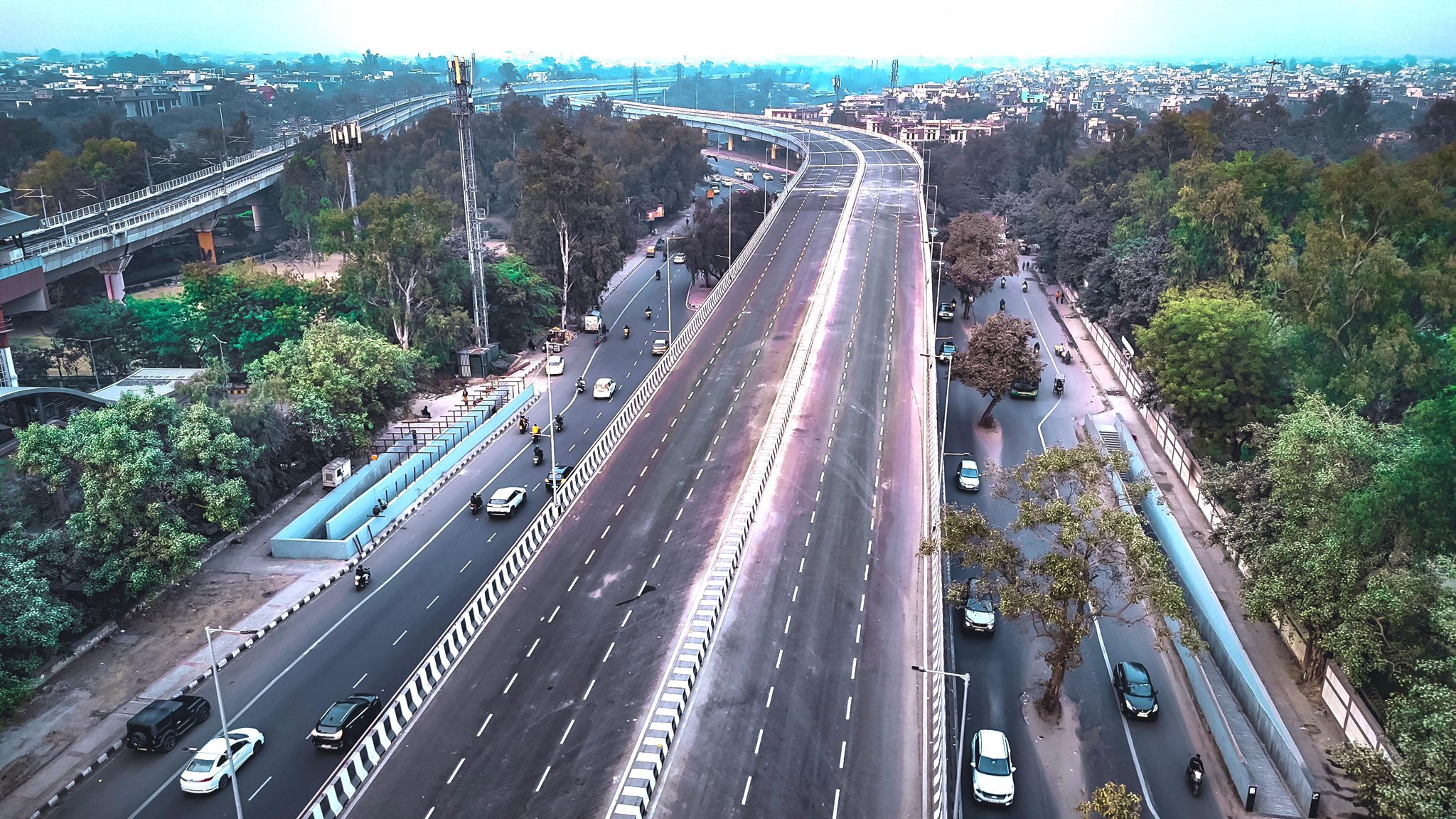
Delhi’s urban development agenda entered a new phase this week as the state government outlined infrastructure investments valued at nearly ₹10,000 crore, coinciding with the completion of its first year in office. The announcement, covering transport, public spaces, and neighbourhood-level upgrades, signals an effort to align capital spending with sustainability goals while addressing long-standing gaps in civic infrastructure across the capital.
According to officials, projects worth approximately ₹250 crore have already been executed or are underway, while larger initiatives spanning mobility, public amenities, and urban renewal are in various stages of planning and tendering. The focus reflects a broader shift towards visible, decentralised improvements alongside city-scale investments that influence real estate markets, commute patterns, and environmental outcomes. Public space renewal has emerged as an early priority. District-level parks and green areas managed by multiple civic agencies are undergoing phased redevelopment, including pedestrian pathways, water features, sanitation facilities, boundary upgrades, and access improvements. Urban planners note that such investments, though modest in scale, play an outsized role in improving liveability, property values, and microclimate resilience in dense neighbourhoods.
Parallel to local upgrades, the government has placed transport electrification at the centre of its infrastructure strategy. With the rollout of hundreds of new electric buses, Delhi is positioning itself to operate one of the country’s largest zero-emission urban bus fleets. Transport experts say the expansion could significantly reduce operating emissions, improve air quality along high-density corridors, and stabilise public transport costs over the long term, provided charging infrastructure and depot planning keep pace. Inter-state connectivity has also been flagged as a growth lever. The planned expansion of bus services linking Delhi with key regional corridors is expected to ease commuter pressure on roads while supporting labour mobility between emerging industrial clusters and the capital’s residential zones.
From a business and real estate perspective, the scale of announced Delhi infrastructure projects has implications beyond public services. Construction demand, last-mile contracting, and allied supply chains are likely to see short-term activity, while improved transport and public realm investments tend to influence residential absorption and commercial location decisions over time.
However, urban economists caution that delivery will be as important as announcement value. Delhi’s fragmented governance structure spread across state departments, municipal bodies, and central agencies has historically slowed execution.
Coordinated timelines, transparent procurement, and maintenance planning will determine whether the current infrastructure push translates into durable urban gains. As the government moves into its second year, the challenge will be to integrate climate resilience, inclusive access, and fiscal discipline into project execution. If aligned effectively, the current wave of Delhi infrastructure projects could strengthen the city’s transition towards cleaner mobility, healthier neighbourhoods, and more balanced urban growth outcomes that matter not just politically, but economically and environmentally.
Delhi Infrastructure Push Marks Government Year One