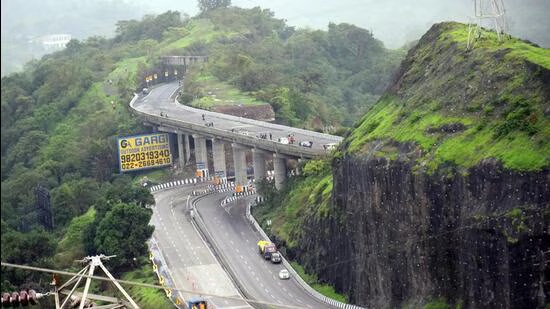
Pune Mumbai Expressway Eyes Permanent Emergency Hub
A permanent emergency response centre is being planned along the Borghat ghat section of the Pune–Mumbai Expressway, marking a critical shift in how authorities approach safety on one of India’s busiest intercity corridors. The proposal follows a recent hazardous cargo accident that paralysed traffic for more than a day, underlining structural gaps in emergency preparedness on terrain where response delays can have cascading economic and civic consequences.
The Borghat stretch, carved through steep gradients and tunnels, carries a high volume of freight vehicles transporting fuel, chemicals, and industrial gases between the Mumbai Metropolitan Region and Pune’s manufacturing clusters. When an inflammable gas tanker overturned near a tunnel earlier this week, emergency teams faced severe logistical challenges in accessing the site, safely transferring the cargo, and restoring traffic flow. The incident stalled movement for nearly 32 hours, disrupting supply chains, commuter travel, and logistics schedules across western Maharashtra. According to officials involved in expressway operations, the proposed facility is envisioned as a fully equipped emergency base rather than a temporary outpost. Planned infrastructure includes heavy-duty cranes capable of clearing overturned trucks, specialised fire-fighting and gas-handling equipment, ambulances, patrol vehicles, and a centralised command room to coordinate highway patrols, disaster response units, and expressway operators. The objective is to compress response times and reduce the duration of closures on a corridor that supports thousands of crores in daily economic activity.
Urban planners and transport safety experts note that the Pune Mumbai Expressway safety framework has not kept pace with the scale and risk profile of present-day traffic. While the expressway was a landmark project when commissioned, freight intensity, hazardous cargo movement, and climate-related risks such as heavy rainfall and landslides have increased significantly. In ghat sections like Borghat, even minor incidents can escalate rapidly without on-site heavy equipment and trained responders. Beyond traffic management, the move has implications for climate resilience and public safety. Prolonged vehicle standstills in tunnels and steep inclines increase emissions, fuel wastage, and exposure risks for stranded passengers. A locally stationed emergency hub can help prevent secondary accidents, manage hazardous leaks more efficiently, and reduce environmental damage during clean-up operations.
Officials indicate that land parcels are currently being evaluated for a permanent facility, with inter-agency consultations underway to finalise location and specifications. The recent accident is being treated as a stress test for future preparedness, rather than an isolated disruption. As urban regions grow more interconnected, the Pune Mumbai Expressway safety upgrade reflects a broader recognition that infrastructure must be supported by robust, people-first emergency systems. The effectiveness of the proposed centre will ultimately be measured by how quickly normalcy can be restored when the next incident occurs not whether it can be prevented entirely.