Pune’s rapidly expanding manufacturing belt is set for a significant mobility reset as the state’s industrial infrastructure agency rolls out a ₹368 crore road modernisation programme across Chakan. Spread across all five phases of the industrial area, the works are designed to unclog one of western India’s most critical production corridors, where daily traffic delays have become a drag on productivity, safety and investor confidence. Chakan sits at the heart of Pune district’s automobile and engineering ecosystem, hosting large global and domestic manufacturers. Over the past decade, industrial expansion has far outpaced road capacity, leaving thousands of workers and freight operators stuck in long queues each day. Urban planners say the congestion has also pushed emissions higher, as idling heavy vehicles dominate narrow carriageways never designed for today’s volumes.
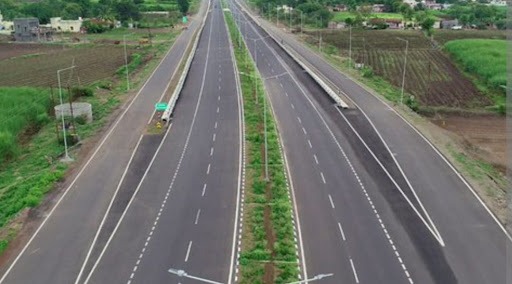
The current intervention focuses on building wider, more durable concrete roads that can handle sustained industrial loads. Two new six-lane stretches, together covering around 3.5 km, are being developed to create a faster link between the Talegaon industrial belt and Chakan, while bypassing village roads that had become accidental freight routes. These links are expected to improve movement between the Mumbai–Pune corridor and the Nashik highway, two arteries critical to regional logistics. In parallel, a key four-lane road connecting a major automobile plant to Alandi Phata is being rebuilt in concrete over nearly 6 km, with strengthened shoulders to separate heavy trucks from local traffic. Across earlier development phases, close to 15 km of internal roads are being upgraded, while a new four-lane stretch is planned in the newest phase to support future industrial plots.
Officials overseeing the programme indicate that a portion of the works will be ready before the upcoming monsoon, with the majority targeted for completion by mid-2027. From a planning perspective, the use of concrete surfaces reflects a shift toward longer-life infrastructure that reduces frequent maintenance closures an important factor in lowering lifecycle emissions and public disruption. For the estimated 1.5 million workers who commute daily into Chakan, the implications go beyond shorter travel times. Industry representatives point to unpredictable commutes that routinely stretch beyond two hours during peak shifts, affecting attendance, shift changes and even emergency response times. The mix of heavy freight vehicles with two-wheelers and private cars has also contributed to a higher accident risk, raising concerns around road safety and workforce well-being.
Urban mobility experts note that while road widening alone cannot solve congestion, Chakan road upgrades are a necessary corrective after years of underinvestment. They argue the next phase must integrate public transport links, last-mile connectivity and freight management to ensure that improved roads translate into cleaner, safer and more inclusive industrial growth. As Pune positions itself as a globally competitive manufacturing and logistics hub, the success of these upgrades will be closely watched not just for how quickly traffic moves, but for how sustainably the city manages its next wave of economic expansion.