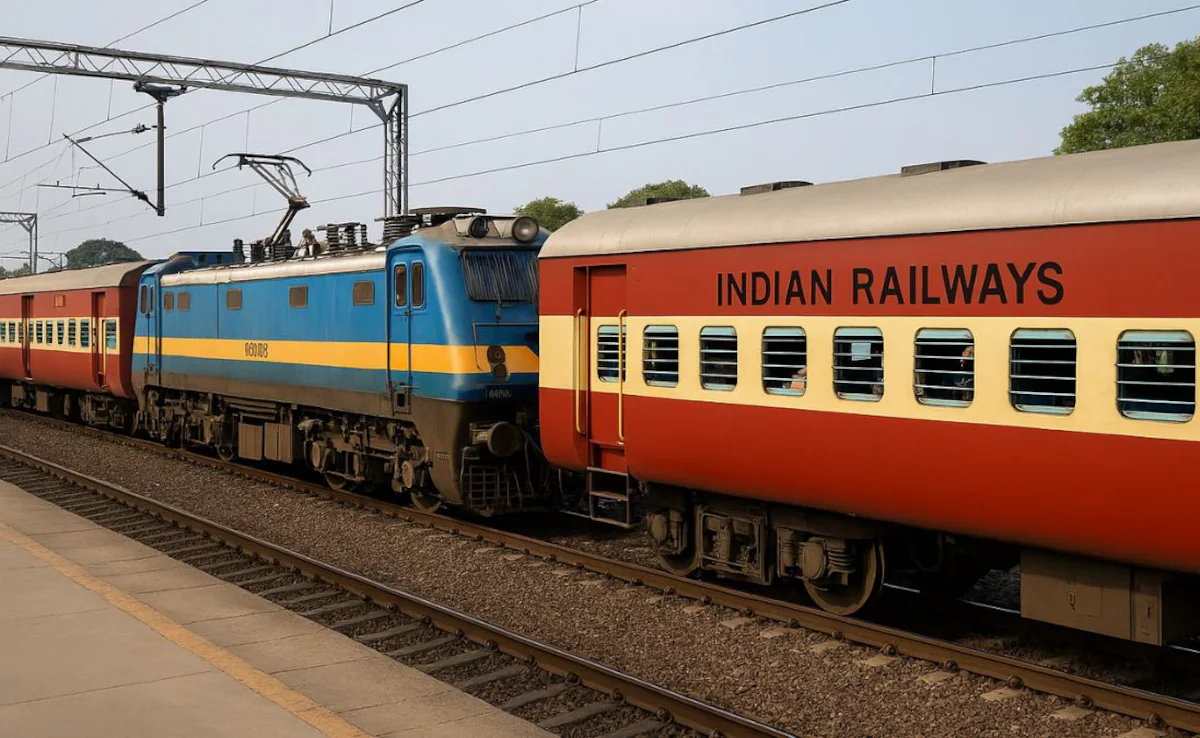
Indian Railways has significantly expanded its festive travel operations this year by scheduling an unprecedented number of special train services for the Holi season, responding to a sharp rise in intercity and long-distance travel demand across the country. The move is aimed at easing congestion, improving passenger experience and ensuring smoother mobility during one of India’s most travel-intensive periods.
Railway authorities have confirmed that more than 1,400 Holi-specific services will be operated nationwide, with the final count expected to reach around 1,500 trains. These services are being deployed primarily through March, a month that traditionally sees heavy passenger movement as families travel between urban employment centres and hometowns in smaller cities and rural regions. Transport planners note that festival-driven travel surges often test the limits of India’s rail infrastructure, particularly on trunk routes connecting northern, western and eastern states. The scale of additional services this year reflects a shift towards demand-led planning, where capacity augmentation is aligned more closely with predictable mobility patterns rather than reactive last-minute interventions.
Zone-wise deployment highlights regional travel pressures. The East Central Railway zone is scheduled to operate the highest number of special services, underscoring sustained demand across Bihar, Jharkhand and adjoining regions with high outbound migrant populations. Western and Central Railway zones are also running a substantial number of additional trains, reflecting strong intercity movement between major economic hubs and their hinterlands. Southern and northern zones have similarly scaled up operations to maintain network balance during peak days. From an urban mobility perspective, the increase in special trains carries broader implications. Large-scale rail deployment during festivals helps reduce dependence on road transport, easing pressure on highways, lowering accident risks and curbing emissions linked to long-distance bus and private vehicle travel. Rail experts say this aligns with the railways’ growing role as a low-carbon backbone for national mobility, especially during peak seasonal demand.
Operationally, the expansion requires tight coordination across signalling, rolling stock availability, crew deployment and station management. Officials say additional services are being slotted to optimise existing infrastructure without disrupting regular passenger and freight schedules—an increasingly complex task as the network handles higher baseline volumes year-round. Economists also point to the wider economic ripple effects. Improved festive connectivity supports labour mobility, sustains informal economies dependent on seasonal travel, and enables smoother flow of consumer spending across regions during major cultural events.
As travel demand continues to rise alongside urbanisation and workforce migration, the scale of this year’s Holi operations may offer a blueprint for managing future festival peaks. The challenge ahead will be sustaining such responsiveness while continuing long-term investments in capacity expansion, electrification and station modernisation—ensuring that India’s rail network remains resilient, inclusive and environmentally efficient.
Indian Railways Boosts Holiday Mobility Across Regions