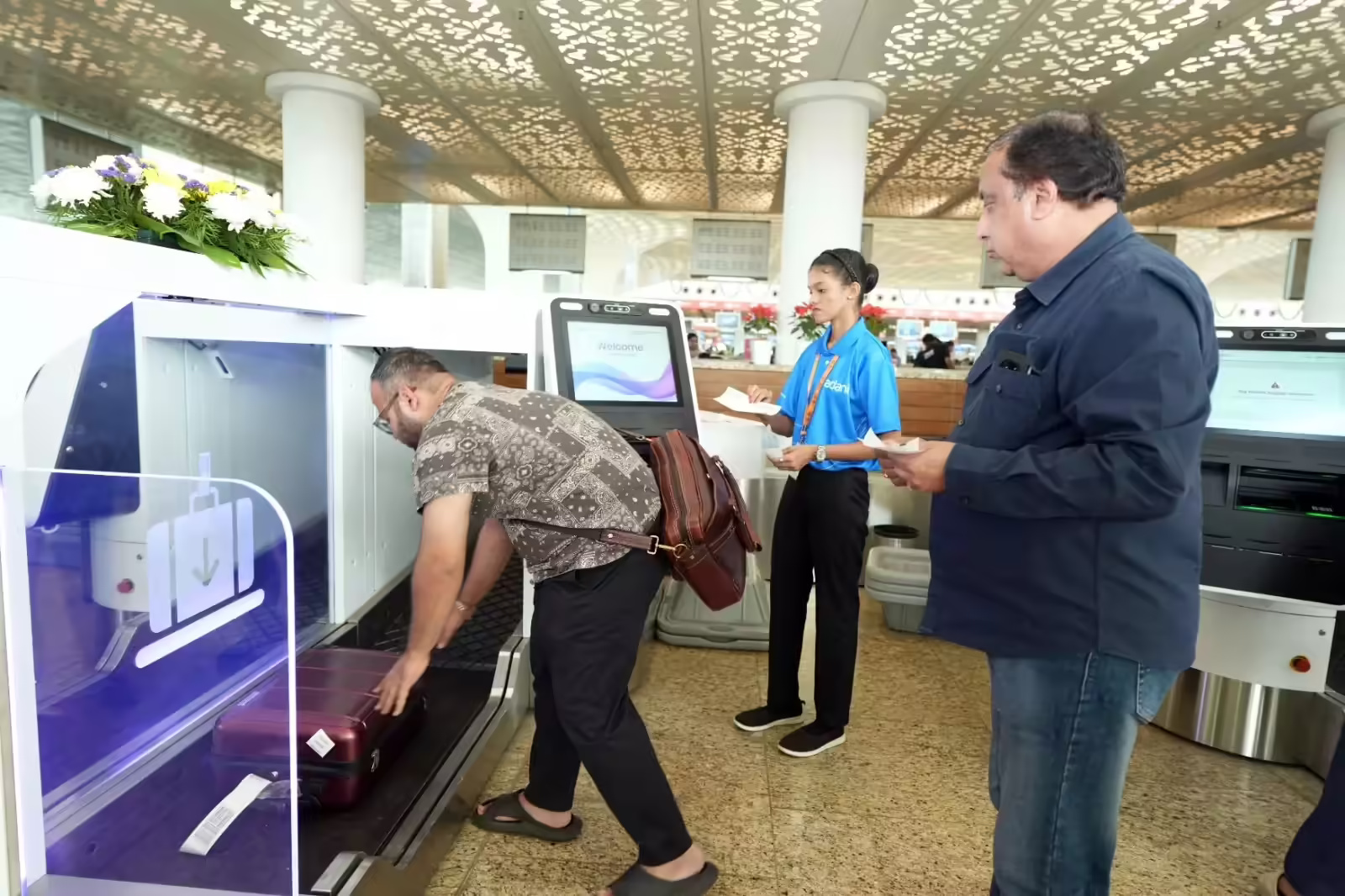
Mumbai’s primary international airport has begun expanding technology-led baggage processing at its flagship terminal, signalling a wider shift towards automation-driven passenger handling as air travel demand continues to rise. The introduction of new hybrid baggage drop facilities at the airport’s main departure terminal is aimed at easing congestion, improving turnaround times, and optimising the use of limited terminal space in one of India’s busiest aviation hubs.
Airport authorities have operationalised a new set of hybrid self-service baggage drop counters at the international terminal, allowing passengers to complete check-in and baggage formalities through a single integrated process. The move forms part of a long-term infrastructure strategy to gradually transition all existing check-in positions at the terminal into flexible, technology-enabled units over the next few years. According to officials familiar with the rollout, the hybrid model is designed to respond to fluctuating passenger volumes while reducing dependency on fully manual counters. Each unit can function either as an assisted desk or as a self-service station, enabling airport teams and airlines to dynamically adjust operations during peak and off-peak hours. This adaptability is increasingly critical for airports operating within tight spatial and regulatory constraints.
Data from recent operational assessments indicates a sharp rise in the adoption of self-service baggage facilities at the airport over the past year. Passenger usage of automated bag drop systems grew significantly between 2024 and 2025, reflecting increasing comfort with digital travel processes among domestic and international flyers. Aviation analysts note that such systems not only improve passenger flow but also lower operational friction for airlines, particularly during high-density departure windows. From a capacity perspective, the efficiency gains are substantial. Hybrid self-service counters can handle multiple times the passenger volume of conventional manual desks within the same time frame. The system also enables eligible travellers to complete baggage-related payments at the counter itself, reducing the need for additional airline interactions and helping unclog terminal queues.
Several domestic and international carriers have already begun operating through the hybrid setup, while others continue to use existing automated facilities as they prepare for a phased transition. Airport teams have deployed trained assistants across the terminal to support elderly passengers and first-time users, ensuring accessibility and inclusion remain part of the digital shift. The new infrastructure is also aligned with the airport’s broader digital ecosystem, including biometric-based passenger processing for enrolled users. Urban transport experts view such integration as essential for reducing dwell time, cutting energy consumption associated with congestion, and improving the overall environmental footprint of large transport nodes.
As Mumbai’s aviation traffic continues to grow, the success of hybrid baggage systems could shape future terminal upgrades across the metropolitan region. The next phase will depend on how effectively automation balances efficiency, inclusivity, and resilience in a city where infrastructure must serve both scale and sustainability.
Mumbai Airport Expands Automated Baggage Processing