


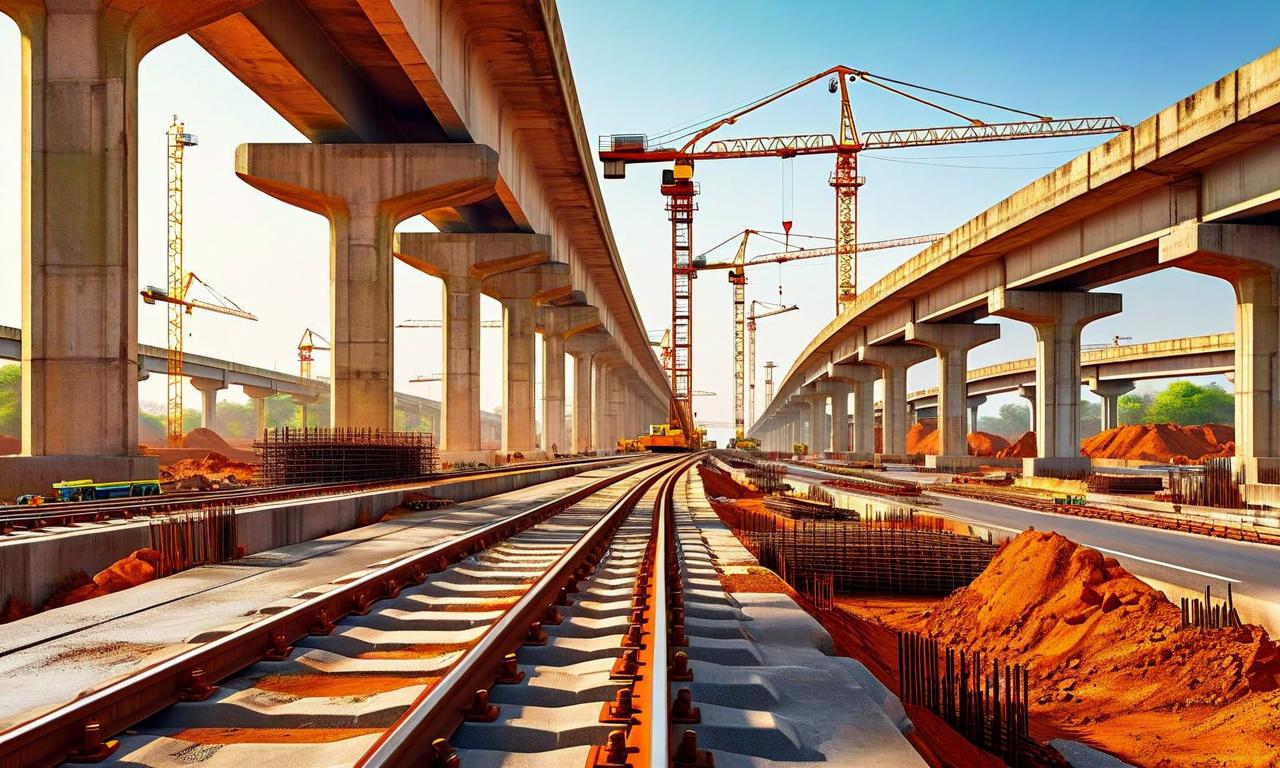
Tamil Nadu has flagged mounting delays in railway infrastructure projects, urging faster financial clearances from the Centre to prevent cost escalation and prolonged disruption across growth corridors. The issue has surfaced amid rising demand for rail capacity in one of India’s most industrialised and export-oriented states, where land acquisition has largely been completed but project execution remains uneven.
According to senior officials in the State administration, multiple railway projects have slowed due to staggered and incomplete release of funds, particularly those linked to land compensation. While statutory approvals and groundwork have been substantially addressed at the State level, the pace of construction has not matched planning timelines, affecting both passenger mobility and freight efficiency.Government data indicates that administrative clearance has been granted for acquiring around 2,500 hectares of land for Union railway projects within Tamil Nadu. Nearly 94 per cent of this land, covering close to 19 major projects, has already been acquired and handed over to railway authorities. However, compensation-related funding for over 900 hectares remains pending, creating bottlenecks that directly affect on-ground progress.
Urban infrastructure experts point out that delays in compensation payments can have cascading effects. Apart from slowing construction, they often generate uncertainty among affected households and complicate future land acquisition efforts. In rail-led development models, such uncertainty can weaken investor confidence along proposed logistics, manufacturing and transit-oriented development zones.One long-pending doubling project in the southern corridor has been cited by officials as a representative case, where incomplete compensation funding has stalled final works despite advanced physical readiness. Similar issues have been reported across other sanctioned routes that are critical for improving regional connectivity between ports, industrial clusters and hinterland districts.
The State has also sought a review of railway lines that were sanctioned earlier but subsequently placed on hold. Transport planners argue that reviving these routes is essential to balance regional development, especially in districts that currently depend heavily on road transport for passenger and goods movement. Improved rail access could reduce logistics costs, ease highway congestion and lower transport-related emissions.From a national perspective, analysts note that Tamil Nadu plays a significant role in manufacturing, automotive exports, electronics and textiles. Rail connectivity is a key enabler for sustaining this economic base while transitioning towards lower-carbon freight movement. Delays in core rail infrastructure risk pushing more cargo onto roads, undermining climate and efficiency goals.
State officials maintain that internal monitoring mechanisms are in place to support faster execution once funding constraints are resolved. They emphasise continued cooperation with central agencies to align project sequencing, cash flows and construction schedules.As India scales up its infrastructure ambitions, the situation underscores a recurring challenge in cooperative federalism: synchronising financial disbursement with ground readiness. For Tamil Nadu’s rail projects, the next phase will depend on whether funding flows can be aligned with completed land acquisition, allowing stalled corridors to move from paper plans to operational assets.
Also Read:Chennai Metro Phase Two Elevated Sections Nearing Completion
Tamil Nadu Rail Projects Face Funding Bottlenecks
