


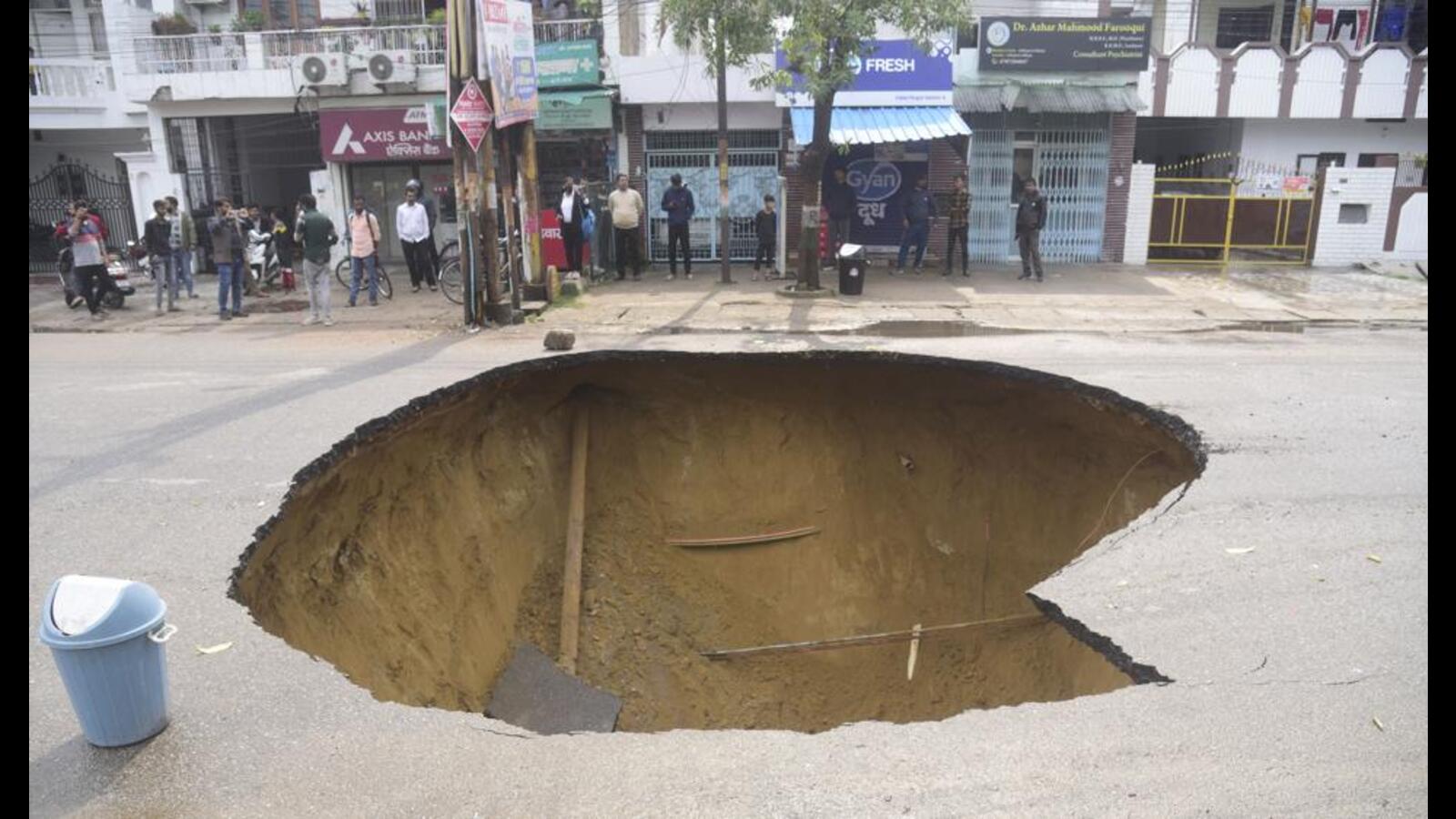
Chennai is preparing for a citywide overhaul of its underground sewer network after recurring road cave-ins exposed the risks posed by ageing infrastructure beneath some of its busiest corridors. The initiative, led by the city’s water and sewerage utility, marks one of the most significant attempts in recent years to stabilise road safety, protect urban assets, and reduce disruption caused by invisible failures below the surface.
Urban officials say a large portion of Chennai’s sewer lines were installed more than two decades ago, at a time when traffic volumes, building density, and groundwater stress were considerably lower. Over time, leaks from deteriorating pipes have weakened surrounding soil, creating voids that eventually trigger sudden surface collapses — often without warning to motorists or pedestrians.Under the proposed restructuring, the sewer system will be reorganised into distinct drainage zones aligned with the city’s major sewage treatment plants. This approach is expected to simplify maintenance, reduce pressure on overstretched lines, and improve system resilience as demand grows across residential and commercial districts.
The first phase of the upgrade will focus on one of the city’s largest sewer catchments, where authorities plan to replace older pipelines with longer-lasting ductile iron and cast iron systems. These materials are widely regarded as more durable in high-load urban environments and better suited to withstand soil movement and external construction activity.Importantly, engineers are redesigning sections of the network to rely more heavily on gravity-based flow rather than mechanical pumping. Urban infrastructure experts note that gravity-driven systems reduce energy consumption, lower long-term operating costs, and remain functional during power outages — a critical consideration for climate-resilient cities.
Several arterial roads and mixed-use neighbourhoods have been repeatedly affected by subsidence over the past few years, including stretches that support IT offices, dense housing, and heritage precincts. In peripheral zones that were once governed by smaller local bodies, sewer lines were often built with concrete pipes that have shorter lifespans and are more vulnerable to cracking under modern traffic loads.While the investment required for the overhaul is substantial, planners argue that deferred maintenance carries a far higher economic cost. Road cave-ins disrupt logistics, increase accident risk, inflate repair expenses, and undermine confidence in urban infrastructure — factors that directly affect real estate values and business continuity.
Execution, however, will be complex. Sewer replacement requires coordination with civic agencies, traffic police, and utility providers, often resulting in prolonged road closures and phased construction. Officials indicate that work will be staggered to minimise disruption, though completion timelines will vary by zone.As Chennai continues to densify, the condition of what lies beneath its streets is becoming as critical as what rises above them. The success of this sewer renewal programme may determine not only road safety, but the city’s capacity to grow sustainably without compounding hidden infrastructure risks.
Also Read:Hyderabad Musi River Crisis Draws Cultural Response
Chennai Plans Sewer Reset After Repeated Road Cave Ins
