


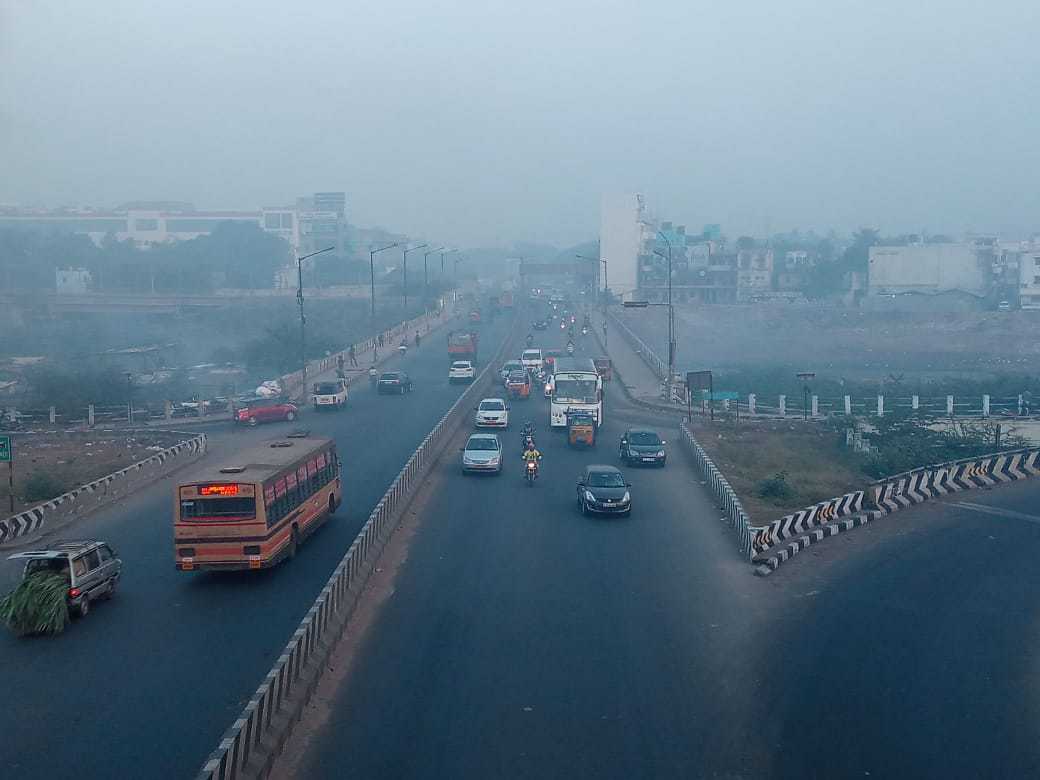
A public exhibition in Chennai has offered a stark, data-driven glimpse into how air pollution exposure varies sharply across neighbourhoods, underscoring long-standing questions about environmental equity in rapidly growing cities. By using a simple but striking method—leaving untreated plates exposed to ambient air for weeks—the project visually documents how particulate pollution accumulates unevenly across the urban landscape.
The initiative, hosted at a city art space, placed identical plates in residential, commercial and industrial areas across Chennai. Over nearly a month, airborne particles settled naturally on these surfaces. When displayed side by side, the contrast was unmistakable: plates from coastal and central neighbourhoods showed minimal deposits, while those from northern and industrial-adjacent zones appeared heavily darkened with dust and residue.Urban planners say the exercise highlights a persistent pattern in Chennai’s development. Industrial infrastructure, waste facilities and power generation assets have historically clustered in the city’s north, while residential expansion and commercial investment have gravitated elsewhere. This spatial imbalance has translated into uneven environmental exposure, with certain communities bearing a disproportionate share of pollution linked to industrial emissions, freight movement and legacy waste sites.
The most heavily marked plates were associated with areas near thermal power facilities, ash storage zones and logistics corridors. Environmental specialists note that fine particulate matter—often invisible in daily life—can travel significant distances before settling, contaminating soil, water bodies and indoor spaces. Long-term exposure has been linked in multiple studies to respiratory illness, cardiovascular stress and reduced life expectancy, particularly among children and older residents.From an urban economics perspective, the findings also intersect with housing and land markets. Localities facing chronic pollution often experience depressed property values and limited private investment, reinforcing cycles of disinvestment. Conversely, cleaner neighbourhoods attract higher-value development, widening socio-economic divides within the same metropolitan region.
Officials familiar with air quality management point out that Chennai has expanded its monitoring network and introduced emission norms for industries and vehicles. However, they acknowledge that compliance and enforcement remain uneven, especially in zones where industrial activity, informal settlements and transport infrastructure overlap. Visual tools such as smog plates, while not substitutes for scientific monitoring, can help bridge the gap between technical data and public understanding.The exhibition also feeds into broader conversations on climate resilience and just transitions. As cities move towards cleaner energy systems and low-carbon transport, experts argue that legacy pollution hotspots must be prioritised for remediation. Without targeted intervention, the benefits of green growth risk bypassing communities already exposed to environmental harm.
As Chennai plans future industrial corridors, port expansion and housing growth, the implications of this visual documentation are difficult to ignore. The challenge ahead lies in translating such evidence into policy action—integrating land-use planning, environmental regulation and public health considerations so that cleaner air becomes a shared urban asset rather than a postcode privilege.
Also Read:Chennai MRTS Transfer Signals Major Mobility Shift
