


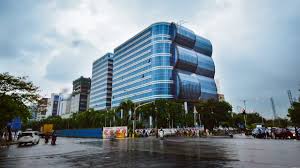
A prime office asset in Mumbai’s Bandra Kurla Complex (BKC) has changed ownership in a transaction that highlights how global financial institutions are reassessing their real estate strategies in India’s most expensive business districts. The sale, registered earlier this month, underscores a broader shift towards capital optimisation even as demand for high-quality office space in core locations remains resilient.
The transaction involves a sizeable office unit within a Grade A commercial tower in BKC, comprising more than 28,000 sq ft of chargeable area along with dedicated parking. The asset was acquired by a domestic real estate investor for nearly Rs 200 crore, translating into pricing consistent with prevailing benchmarks for institutional-grade office stock in the micro-market. Property registration records confirm the deal, placing it among the notable commercial transactions in Mumbai this quarter. BKC continues to occupy a unique position in the city’s office landscape. Planned as a financial and corporate district, it hosts a dense concentration of banks, multinational firms, legal practices, and consulting companies. Despite limited new supply and high entry costs, assets in the district remain liquid, particularly those offering modern specifications, parking availability, and proximity to mass transit corridors. Market analysts note that such transactions are less about weakening occupier demand and more about balance-sheet decisions by large corporates. Financial institutions and multinational firms are increasingly evaluating whether capital locked into owned real estate could be redeployed more efficiently. This has resulted in selective divestment of owned offices, even in prime locations, while continuing operations through leased space within the same or similar buildings.
The trend aligns with evolving workplace strategies shaped by hybrid work models, technology adoption, and flexibility in space utilisation. Rather than owning surplus real estate, many occupiers are favouring long-term leases that offer agility without the burden of asset management. For investors, this creates opportunities to acquire stabilised assets with predictable tenancy potential in supply-constrained districts. From an urban development perspective, sustained transaction activity in BKC reflects the durability of Mumbai’s core office zones despite shifting work patterns. Infrastructure investments, including road upgrades and metro connectivity, have reinforced the district’s role as a central employment hub. However, planners caution that continued commercial intensity must be matched with transport capacity, public spaces, and climate-resilient infrastructure to maintain livability. While office markets in several Indian cities have seen uneven recovery, BKC has remained comparatively insulated due to its strategic location and limited land availability. Industry participants expect further selective deals in the precinct, driven by institutional investors and high-net-worth buyers targeting stable, income-generating commercial assets.
As Mumbai’s commercial real estate matures, such transactions point to a more sophisticated market one where ownership structures evolve, but the primacy of well-located, well-built offices in the city’s economic engine room remains intact.
Also Read: Mumbai Goregaon Sees Major Redevelopment Push
Mumbai BKC Signals Shift in Corporate Realty
