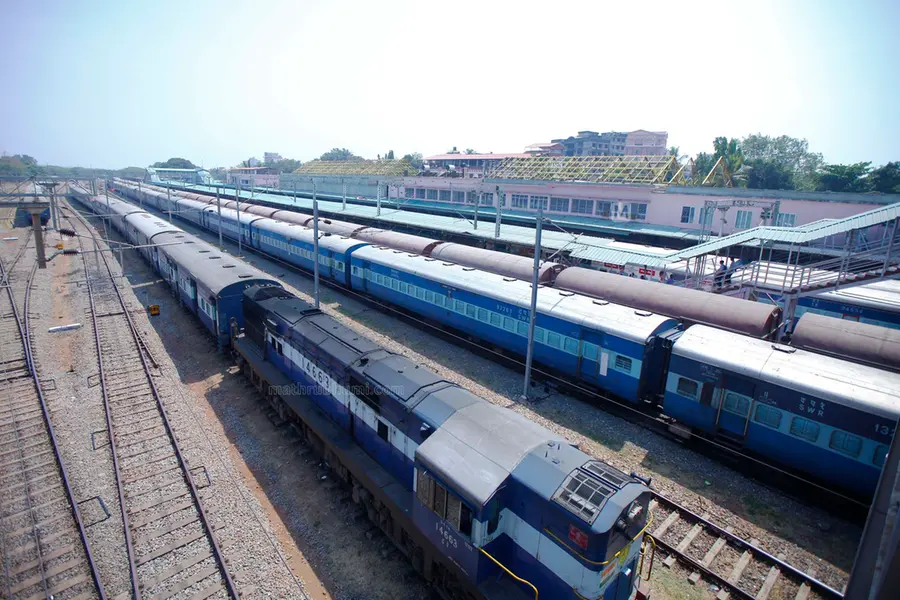
Indian Railways has significantly expanded its festive operations for Holi 2026, planning more than 1,400 additional train services across the network during March, with scope to increase the number further if passenger demand intensifies. The move reflects a deliberate attempt to manage one of India’s largest annual migration waves, linking metropolitan work centres with home states across the north and east.
Festival travel around Holi consistently places pressure on urban transport systems, particularly in cities such as Delhi, Mumbai, Pune and Bengaluru, where large migrant populations live and work. For urban planners and mobility experts, the scale of this year’s deployment signals a recognition that seasonal travel is no longer a marginal issue but a recurring stress test for national infrastructure and city governance. According to officials familiar with the planning process, the additional services represent roughly a quarter more capacity than last year’s Holi operations. Rather than concentrating services only during peak days, Railways has structured the schedule across the full month, dispersing demand and reducing the sharp surges that typically overwhelm platforms, booking systems and last-mile urban transport.
The distribution of Holi special train services has been designed around migration patterns rather than geography alone. Zones serving Bihar, eastern Uttar Pradesh and Jharkhand account for the highest share, followed by western and central corridors anchored around the Mumbai region. Southern and eastern coastal routes have also been reinforced to support long-distance return travel by students and industrial workers. Railway planners say past data showed that crowding during Holi disproportionately affects sleeper and unreserved coaches, increasing safety risks at stations and along platforms. This year’s operational design therefore places greater emphasis on adding general and sleeper capacity, alongside selective augmentation of existing trains where introducing entirely new services may not be feasible.
From an urban management perspective, the intervention has broader implications. Overcrowded stations and last-minute travel spill over into city streets, bus terminals and informal transport networks, heightening congestion and public safety risks. By smoothing travel demand over more trains and dates, authorities aim to reduce these secondary pressures on urban infrastructure during the festival period. Ticketing has been structured as a rolling process rather than a one-time release. Special services are being notified in phases on the official booking platform, allowing planners to respond dynamically to booking patterns. Transport economists note that such adaptive scheduling is increasingly necessary in a country where travel behaviour shifts rapidly in response to fare availability and festival calendars.
The expanded Holi special train programme also carries environmental significance. Shifting large volumes of long-distance travel to rail during peak seasons helps limit the use of private buses and road-based alternatives, which contribute disproportionately to emissions and congestion. In the long run, consistent festival planning is seen as essential to building more climate-resilient and people-centric mobility systems. As March approaches, further adjustments are expected based on real-time demand. For passengers and cities alike, the success of the plan will depend on timely updates, clear communication and coordination across zones factors that increasingly define the quality of India’s urban and intercity travel experience.
Indian Railways Expands Holi Special Train Network