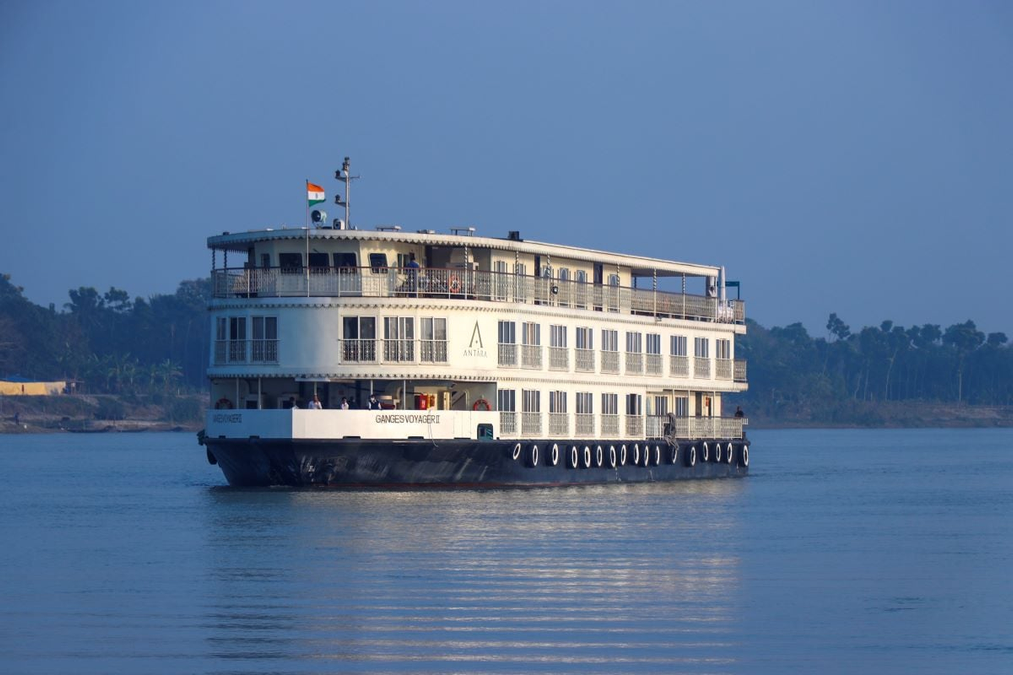
Delhi’s long-discussed river cruise initiative has moved a step closer to public launch, with the first passenger vessel now positioned in the capital and final technical preparations underway. The project marks a notable shift in how the city is beginning to reimagine the Yamuna not only as an ecological challenge, but as an underutilised urban asset with economic and recreational potential.
Government officials overseeing tourism and transport development indicated that the cruise service is expected to begin operations within the month, following system checks and safety clearances. The service will operate on a defined upstream stretch of the river in north-east Delhi, offering short-duration leisure trips designed primarily for residents rather than long-haul tourism. The initiative forms part of a broader riverfront strategy that seeks to integrate recreation, low-impact mobility, and public access along the Yamuna’s banks. Urban planners have long pointed out that Delhi’s relationship with its river has remained largely functional and exclusionary, limited to utilities and flood control, unlike global cities that have successfully layered cultural and leisure uses onto working waterways.
At the operational level, the cruise is designed as a compact, low-capacity service with controlled passenger numbers and onboard amenities. Officials say the limited scale is intentional, allowing authorities to test viability, environmental impact, and public response before expanding activities. Supporting infrastructure, including jetties and boarding points, has been developed to minimise permanent construction along the river edge. Crucially, the project is aligned with national inland waterways planning. The Yamuna stretch identified for the service falls within a notified inland waterway corridor, enabling coordination with central transport agencies on navigation standards, safety systems, and vessel design. Industry experts note that this alignment is essential if river-based transport and tourism are to grow without regulatory friction.
From an economic perspective, the project could create a small but diversified local ecosystem supporting jobs in operations, maintenance, hospitality, and recreational services. Analysts caution, however, that long-term success will depend on consistent water quality management and integration with surrounding neighbourhoods rather than isolated tourism zones. Environmental safeguards remain central to the project’s acceptance. Officials involved in planning indicate that non-polluting or hybrid propulsion systems are being prioritised, along with waste management protocols and restricted operating speeds. Urban climate specialists view such pilots as useful test cases for balancing river activation with ecological sensitivity in densely populated cities.
Looking ahead, policymakers see the cruise as a precursor rather than a standalone attraction. If managed carefully, it could influence how future riverfront developments whether parks, walkways, or mobility corridors are designed along the Yamuna. The challenge will be ensuring that public access, environmental resilience, and affordability remain at the core as Delhi experiments with reclaiming its river as shared urban space.
Delhi Yamuna cruise project nears public launch