Mumbai is on the cusp of a major electricity network upgrade that could reshape how India’s financial capital meets its rising energy needs. A new high-capacity transmission corridor connecting the city to renewable power sources across the national grid is expected to become operational by March, enabling Mumbai to draw up to 1,000 MW of additional clean energy. The development comes at a time when peak electricity demand is rising sharply, driven by rapid urbanisation, transport expansion and data-intensive commercial growth.
The transmission link connects a power hub in Palghar district to a receiving station in suburban Mumbai through a High Voltage Direct Current (HVDC) system. Urban energy planners say the project is critical for an island city with limited land availability and constrained entry points for bulk power. By strengthening Mumbai’s ability to import electricity efficiently, the corridor reduces vulnerability during summer peaks and unplanned outages, while supporting a gradual shift away from carbon-intensive generation. Mumbai’s electricity demand currently hovers around 4,300 MW, while locally embedded generation remains well below half of that requirement. During peak summer months, consumption has already crossed previous records and is projected to move towards 5,000 MW in the coming years. This growth is being fuelled by new housing across the metropolitan region, expansion of metro rail corridors, large transport infrastructure projects and the emergence of energy-hungry data centres.
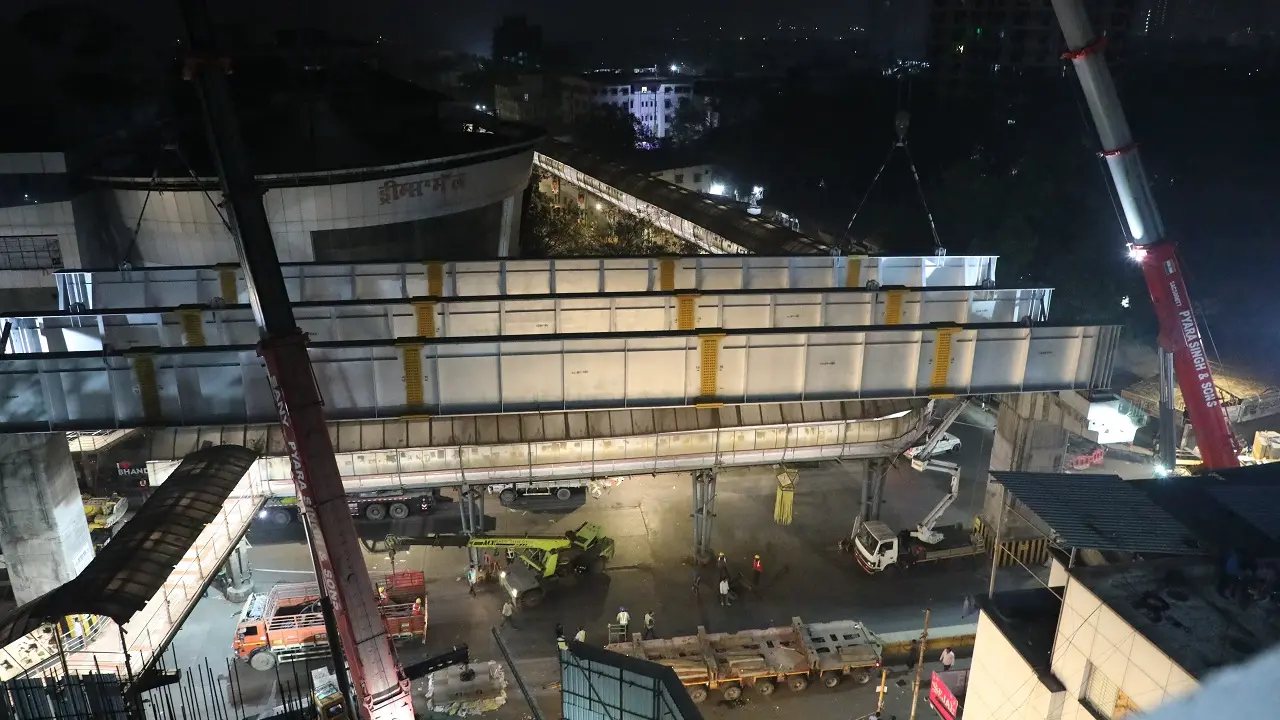
According to senior transmission officials, the new HVDC system allows real-time control of power flow, improving voltage stability during sharp demand fluctuations. Unlike conventional alternating current systems, HVDC technology can respond faster to grid stress, making it particularly suited for dense urban regions where reliability is non-negotiable. Delivering this infrastructure has not been straightforward. The project required a mix of overhead and underground lines across densely built corridors, including arterial highways. One of the most technically demanding segments involved routing cables beneath a tidal creek, a process that took several months of marine engineering and environmental coordination. Urban infrastructure experts note that such execution challenges underline the complexity of retrofitting resilient systems into mature cities.
This project follows an earlier transmission upgrade that added similar capacity to Mumbai’s grid through a northern corridor, together marking one of the most significant power network expansions the city has seen in decades. Collectively, these investments are expected to improve redundancy, reduce congestion and create headroom for cleaner energy integration. As Mumbai continues to grow vertically and digitally, the ability to access stable, low-carbon electricity will increasingly shape its housing affordability, commercial competitiveness and climate resilience. While demand-side efficiency and decentralised renewables remain essential, planners say robust transmission remains the backbone that enables sustainable urban growth at scale.
Mumbai Grid Upgrade Unlocks 1,000MW Green Power Inflow