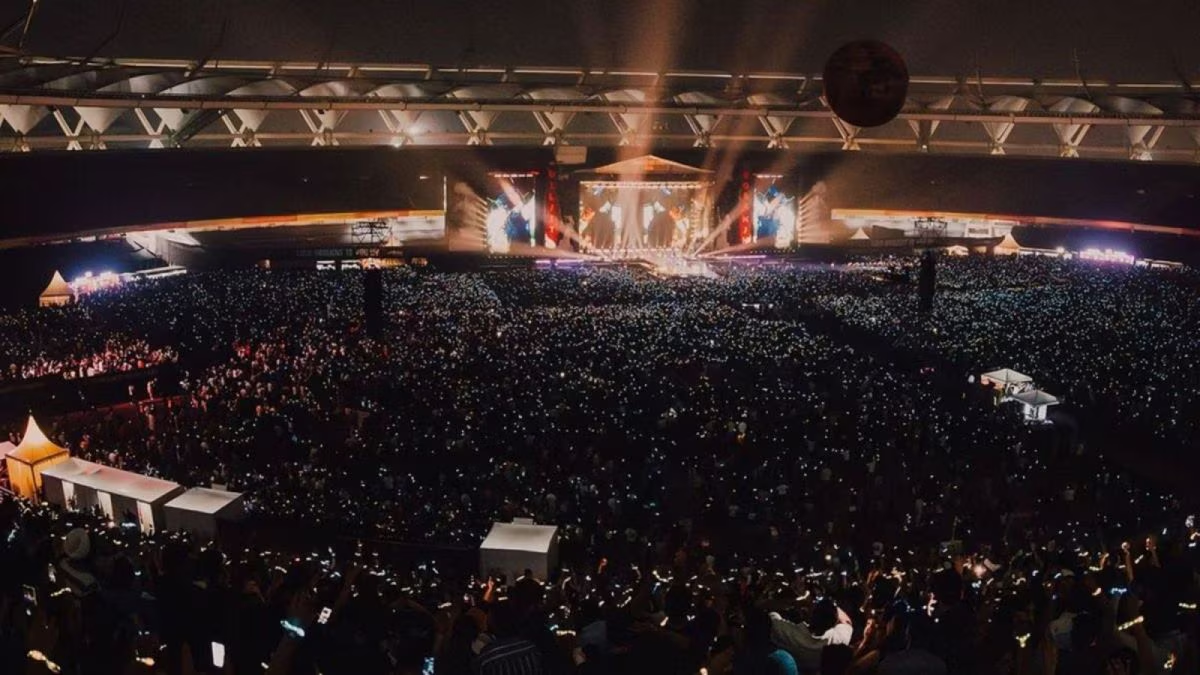
Maharashtra Focuses On Concert Economy And Cultural Growth
The Maharashtra government is preparing a comprehensive action plan to develop the live entertainment and concert economy in the state, aiming to streamline permissions, energise cultural industries and bolster tourism-linked economic activity. The initiative comes in the wake of the Centre’s establishment of a national Live Events Development Cell (LEDC), which seeks structured growth for the concert and live events sector as part of India’s broader cultural and economic strategy.
At the heart of the new strategy will be the Directorate General of Information and Public Relations (DGIPR), named as the nodal agency responsible for shaping and implementing the plan within Maharashtra. The DGIPR will coordinate with government departments to integrate their permit systems with a national portal and launch a single-window clearance mechanism to reduce administrative friction for event organisers.Concerts, music festivals and live cultural events have emerged as significant drivers of urban economic vibrancy, generating jobs, tourism revenue and consumer spending. According to industry estimates, the organised live events market in India was valued at around ₹20,861 crore in 2024 and continues to expand at an annualised rate of approximately 18 per cent, outpacing many traditional media segments.
Urban planners and cultural economists see this government action plan as an opportunity to align local policy with the evolving concert economy, a term that encapsulates the commercial ecosystem around live performances, audience experiences and related services. Enabling smoother regulatory pathways and identifying pre-approved venues across metropolitan and regional centres could make Maharashtra more competitive as a destination for large-scale entertainment events.A key component emphasised in the draft strategy is the review of venue rental rates and regulatory costs, which officials hope will make major concert spaces more financially accessible to promoters and artists while balancing public interest. This is especially relevant in urban districts such as Mumbai and Pune, which host high-footfall events but face steep operational costs that can deter mid-tier cultural producers.
The push also reflects a larger shift in state economic planning, where cultural industries, tourism and creative services are increasingly viewed as integral to urban economic ecosystems. Integrating entertainment permits into a single-window system could reduce cumbersome legal and bureaucratic barriers that often slow down event staging, particularly in zones with overlapping municipal and state regulations.Moreover, the plan is expected to draw on national standards being developed by the LEDC for standard operating procedures and event safety protocols, offering a more predictable regulatory environment for organisers. Streamlining event clearances and compliance frameworks can contribute to employment generation, supporting vendors, technicians, performers and allied service providers who form the backbone of the live events workforce.
City officials and cultural stakeholders acknowledge that robust planning will be crucial if Maharashtra is to sustain its leadership in India’s entertainment landscape. Beyond economic gains, the strategy has implications for urban culture, social inclusion and city identity, as vibrant public events contribute to community engagement and diversified economic prospects.As the DGIPR finalises the action plan, which state authorities are expected to unveil in coming weeks, the focus will be on translating policy frameworks into operational reforms that can scale the concert economy while preserving public safety and equitable access to cultural spaces.