


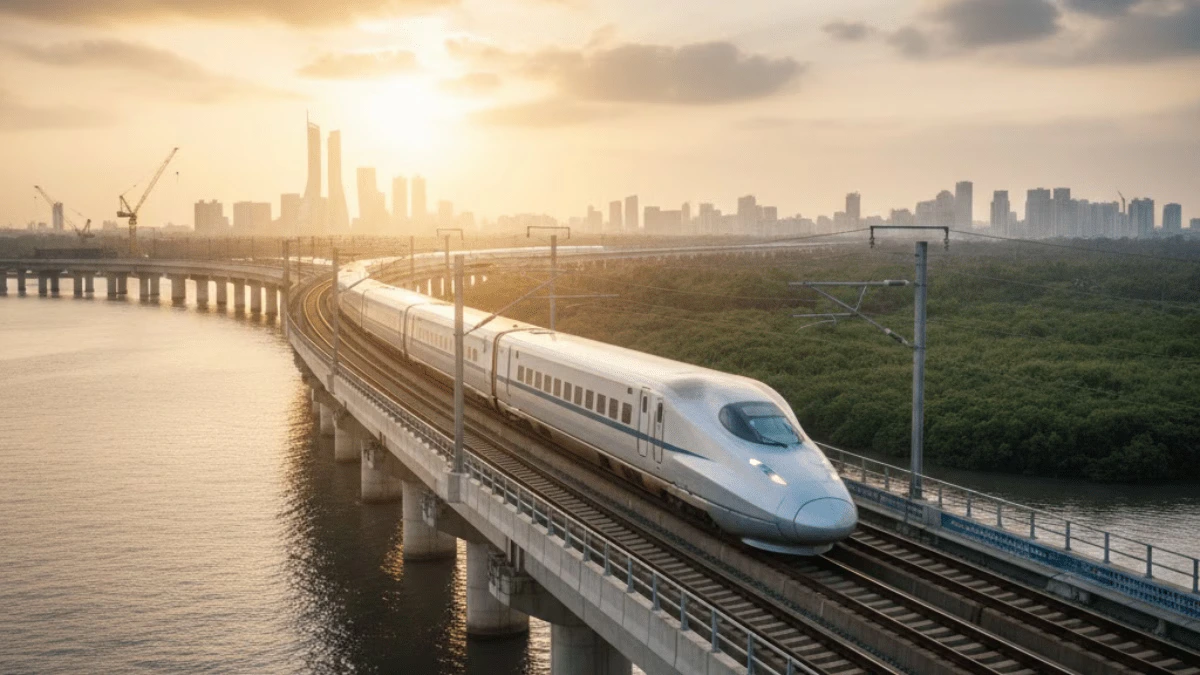
NEW DELHI — India is preparing to launch seven high-speed rail corridors, aiming to reshape intercity connectivity while addressing urban congestion, climate impact, and economic accessibility. The proposed network spans major metropolitan clusters and regional hubs, promising travel times significantly shorter than current conventional rail services and positioning the country to align with global high-speed transport standards.
Industry analysts suggest that the corridors could fundamentally alter the urban-rural mobility dynamic. By connecting peripheral towns with megacities, these projects are expected to decentralise economic activity, reduce pressure on overcrowded urban centres, and stimulate inclusive regional development. A senior transport official emphasised that planning incorporates climate resilience measures, including energy-efficient rolling stock and alignment strategies that minimise disruption to sensitive ecosystems and urban green spaces. The initiative is part of a broader national vision to modernise rail infrastructure while integrating sustainable urban planning principles. Elevated tracks, dedicated corridors, and advanced signalling systems are designed to reduce land use conflicts and prevent bottlenecks that often arise in densely populated zones. Urban planners note that such integration is critical to ensuring high-speed networks complement public transit, cycling infrastructure, and pedestrian accessibility rather than reinforcing private vehicle dependence.
Economic impacts are projected to be substantial. Faster travel between commercial hubs can cut logistics costs, encourage new investment along the corridors, and unlock real estate potential in satellite towns. Real estate analysts indicate that improved connectivity tends to increase property values in proximate areas, potentially spurring mixed-use urban development while expanding affordable housing opportunities if coordinated with municipal planning frameworks. Environmental and social considerations are central to the corridor design. Industry experts highlight that adopting electric high-speed trains reduces greenhouse gas emissions per passenger compared with air or road travel. Additionally, route planning accounts for urban density patterns to minimise displacement, protect heritage sites, and preserve ecological buffers. These measures are expected to strengthen the alignment between India’s infrastructure expansion and its zero-carbon urban development goals.
Challenges remain in implementation, including land acquisition, financing, and integration with local transit networks. Officials note that phased commissioning, public-private partnerships, and ongoing community consultation will be essential to ensuring the corridors deliver broad-based benefits while mitigating social and environmental impacts. If executed successfully, India’s high-speed rail network could serve as a model for climate-conscious, inclusive urban mobility. Beyond faster travel, the corridors are likely to influence land use, economic activity, and urban planning, reinforcing the importance of integrating infrastructure development with sustainable city-building strategies.
Also Read: Ahmedabad Rail Network Expands Holi Travel Capacity
India Plans Seven High Speed Rail Corridors
