


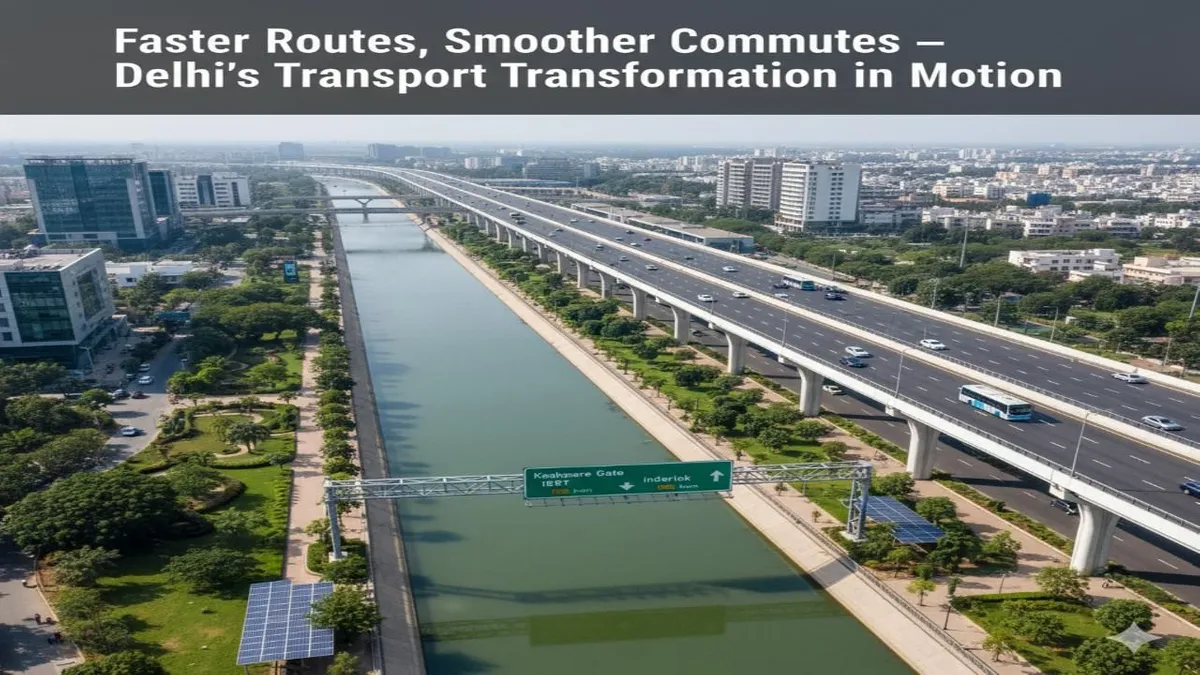
NEW DELHI — The central and state authorities have unveiled a series of infrastructure projects aimed at decongesting Delhi’s increasingly crowded road network, signalling a major push to upgrade urban mobility while balancing economic and environmental concerns. The plans include a mix of tunnels, elevated corridors, and peripheral bypasses designed to streamline traffic flow and reduce travel times across the capital’s busiest sectors.
Urban planners emphasise that Delhi’s transport system is under mounting pressure from population growth, private vehicle dependence, and commercial traffic. A senior city official noted that these projects are intended not just to ease congestion but to integrate sustainable planning principles, ensuring that road expansions do not exacerbate pollution or compromise community spaces. The projects, currently at planning and early implementation stages, will focus on connecting key industrial and residential corridors while diverting through-traffic away from dense inner-city areas. Traffic experts suggest that such measures could significantly reduce bottlenecks during peak hours, benefiting commuters, logistics operators, and emergency services alike. By combining tunnels, elevated roads, and bypasses, authorities aim to distribute vehicular loads more evenly, reduce idling times, and limit air quality degradation caused by slow-moving traffic. Economic implications are substantial. Improved connectivity can enhance efficiency for commercial transport, cut fuel costs, and expand access to peripheral real estate developments. Industry analysts highlight that infrastructure investments of this scale tend to catalyse adjacent economic activity, from retail to industrial hubs, while also shaping urban land values over the long term.
Environmental considerations remain central to the planning process. Urban sustainability specialists argue that multi-level roads and bypasses must be paired with public transit integration, pedestrian pathways, and low-emission zones to avoid reinforcing car dependency. Incorporating climate resilience — such as stormwater management along elevated corridors and energy-efficient lighting — is increasingly viewed as essential to sustainable urban infrastructure. Community impact is also under review. Officials report consultations with local residents and urban planners to minimise displacement and disruption, particularly in high-density neighbourhoods. Temporary traffic diversions and phased construction are expected to reduce the immediate inconvenience, though long-term monitoring of road usage patterns will be necessary to ensure equitable access and avoid congestion shifting to secondary streets.
If successfully implemented, Delhi’s new infrastructure network could serve as a model for climate-conscious, people-first urban development, demonstrating how large-scale road projects can combine efficiency, economic opportunity, and environmental stewardship. Yet, experts caution that complementary policies — including congestion pricing, expanded metro and bus services, and incentives for shared mobility — will be critical to maximise the benefits and limit unintended consequences.
Also Read: Punjab Four Lane Road Plan Advances Mobility
Delhi Projects Include Tunnels Elevated Roads Bypasses
