


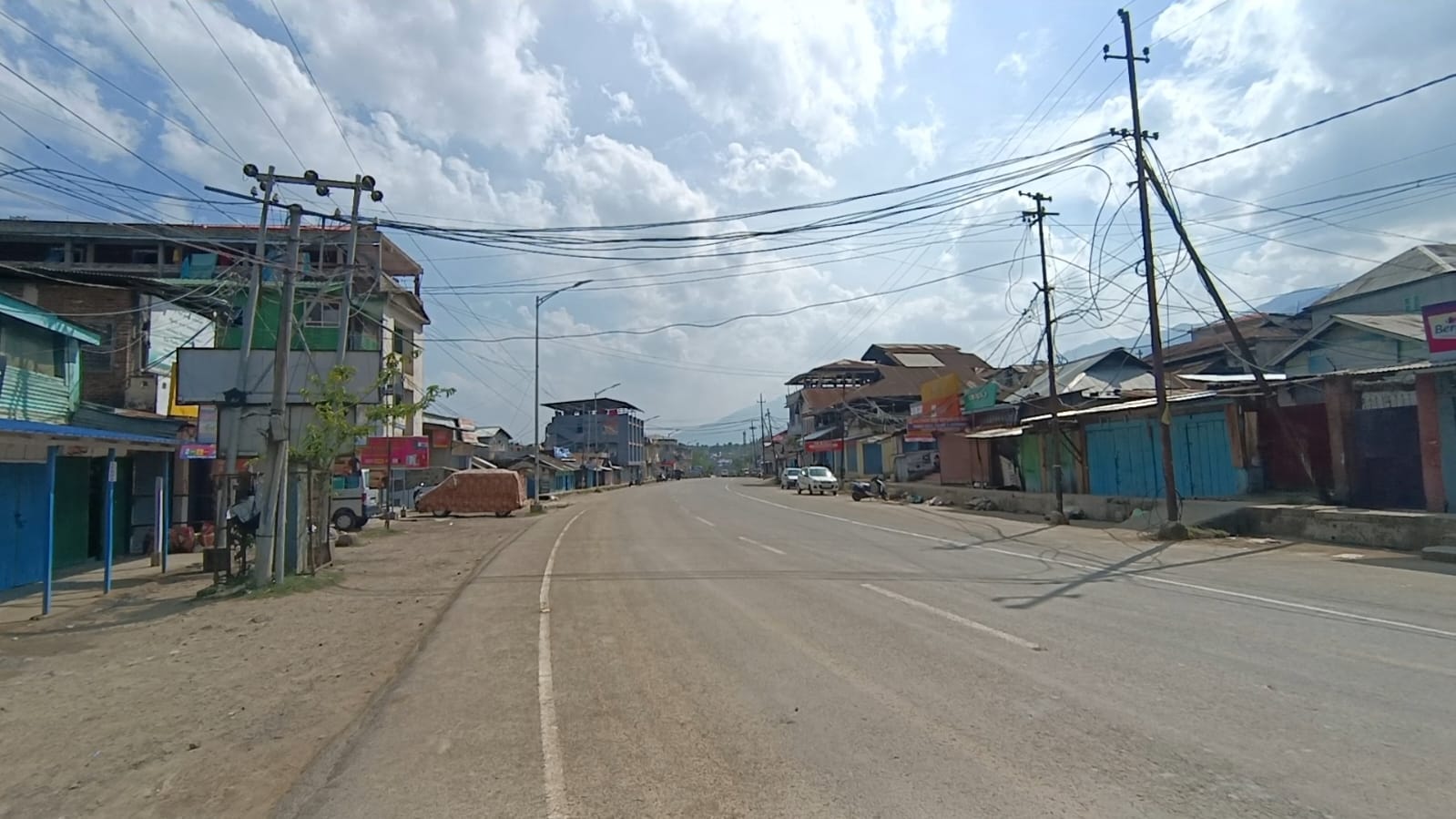
A district-wide shutdown in Manipur’s Churachandpur this week led to the disruption of highway traffic and damage to vehicles, underscoring how prolonged social unrest continues to fracture mobility, supply chains and civic life in the state’s hill regions. The blockade of a key arterial road halted movement for hours, affecting commuters, essential services and freight transport linking interior settlements to regional markets.
Local authorities confirmed that groups enforcing the bandh obstructed sections of the highway passing through the district, preventing vehicular movement and vandalising at least one vehicle attempting to pass through. Security forces were deployed to restore order, while transport services were suspended as a precaution. The incident forms part of a broader pattern of disruptions linked to ongoing tensions that have repeatedly paralysed infrastructure networks across parts of Manipur. For residents, highway closures are more than a temporary inconvenience. Churachandpur relies heavily on road connectivity for access to healthcare, education, fuel and food supplies. Even short-term disruptions can result in shortages and price spikes, disproportionately affecting women, elderly residents and daily-wage workers. Urban development specialists note that in geographically constrained regions, transport infrastructure functions as a social lifeline rather than merely an economic asset. The economic implications extend beyond the district. Highway routes through Churachandpur form part of supply corridors connecting Manipur’s hill areas with the Imphal Valley and neighbouring states. Repeated blockades increase logistics costs, discourage private investment and undermine confidence in emerging market towns that depend on predictable mobility for growth. Industry observers warn that uncertainty around transport access remains a major barrier to sustainable economic development in the region.
From an infrastructure governance perspective, the incident highlights the vulnerability of road networks in conflict-affected areas. While significant public funds have been invested in upgrading highways and urban roads in Manipur, their effectiveness is limited when social and political disruptions persist. Urban planners argue that resilient infrastructure planning must account not only for climate and terrain, but also for social stability, community engagement and local conflict resolution mechanisms. Environmental and climate considerations further complicate the picture. Hill districts such as Churachandpur are prone to landslides and extreme rainfall, making road maintenance challenging even under normal conditions. Damage caused during unrest adds to the maintenance burden, diverting resources away from climate adaptation measures such as slope stabilisation, improved drainage and safer pedestrian infrastructure.
Officials involved in district administration stated that efforts are ongoing to reopen roads and ensure the movement of essential goods under security cover. However, repeated shutdowns have prompted calls for longer-term solutions that combine infrastructure investment with inclusive governance and dialogue at the local level. As Manipur looks to strengthen regional connectivity and urban resilience, the events in Churachandpur underline a critical reality: infrastructure alone cannot deliver development outcomes unless accompanied by social trust, institutional capacity and people-first planning. Restoring reliable mobility will be central to rebuilding economic opportunity and everyday normalcy in the state’s hill districts.
Also Read: West Bengal Urban Development Across 25 Towns
Churachandpur Bandh Disrupts Highway Movement
