


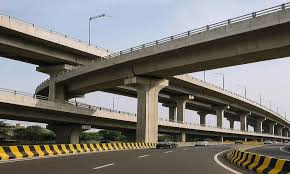
Shamshabad, on Hyderabad’s southern edge, is beginning to feature prominently in national transport planning discussions as policymakers evaluate future high-speed rail corridors linking major Indian metros. While formal alignments are still under assessment, the suburb’s strategic positioning alongside an international airport and major expressways has placed it at the centre of conversations on next-generation intercity mobility.
Urban development experts note that the potential inclusion of Shamshabad as a high-speed rail node could have far-reaching implications beyond transport efficiency. If realised, such connectivity would alter how Hyderabad integrates with cities like Bengaluru, Chennai, Pune and Mumbai, compressing travel times and redefining the geography of work, business travel and residential choice across southern and western India. The planning approach under consideration prioritises elevated rail corridors, a model increasingly favoured to reduce land acquisition conflicts and ecological disruption. For fast-growing peri-urban regions like Shamshabad, this model offers an opportunity to align infrastructure expansion with environmental safeguards while unlocking value around station influence zones. Urban planners caution, however, that transit-led development must be carefully sequenced with water management, drainage, and local road capacity to avoid uneven growth. Real estate activity in the broader southern corridor of Hyderabad has already shown early signs of repositioning. Locations such as Mamidipally, Adibatla, Maheshwaram and Kandukur have seen rising interest from homebuyers and land aggregators, driven less by speculation and more by long-term infrastructure visibility. Market analysts observe that buyers are increasingly responding to transport certainty rather than short-term price momentum, a trend consistent with maturing urban markets.
Commercial development patterns are also evolving. Proximity to the airport, Outer Ring Road and established IT zones has made Shamshabad attractive for logistics, data centres and hospitality-led commercial uses. If high-speed rail infrastructure is eventually anchored in the area, it could strengthen Hyderabad’s role as a multimodal gateway city rather than a single-core employment centre. From a governance perspective, the project underscores a broader shift in India’s urban strategy away from city-centric growth toward corridor-based development. Integrating high-speed rail with regional planning offers opportunities to distribute employment, reduce pressure on core urban districts, and encourage balanced housing supply. However, policy experts stress the importance of affordability safeguards to ensure that infrastructure-led appreciation does not displace existing communities. Timelines for high-speed rail construction remain medium-term, with preparatory work expected to precede any ground activity. Financing structures are likely to combine public investment with institutional participation, reflecting the capital-intensive nature of such systems.
For Hyderabad, the significance lies less in speed alone and more in what coordinated infrastructure can unlock. If executed with planning discipline, Shamshabad’s evolution could demonstrate how transport investment, climate resilience and inclusive urban expansion can move in parallel setting a template for India’s next phase of metropolitan growth.
Also Read: Chennai Residential Demand Follows Practical Living
Shamshabad Infrastructure Push Signals Urban Shift
