


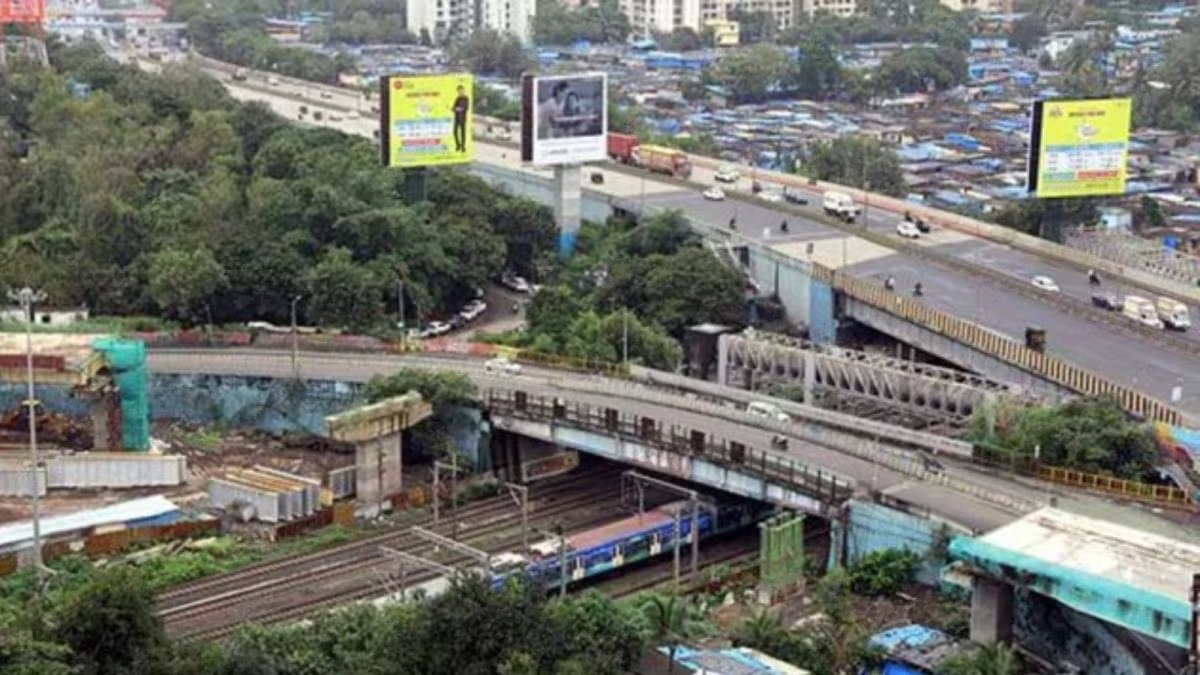
Mumbai’s tightly held land market has delivered another signal of sustained developer confidence, with a leading listed real estate firm emerging as the highest bidder for a long-term lease of a large railway-owned parcel in Bandra East. The Rs 5,400 crore bid for the 11-acre site marks one of the most significant land transactions in the city in recent years, underscoring the continued value attached to well-connected urban land despite broader concerns around housing demand.
The plot, located alongside the Western Express Highway, was offered on a 99-year lease by the Rail Land Development Authority (RLDA) and carries a sizeable development potential of nearly 1.95 million square feet. Industry observers say the transaction highlights how public land monetisation is becoming central to Mumbai’s future growth strategy as land scarcity and infrastructure constraints intensify. Bandra East has steadily evolved from a peripheral commercial zone into a strategic urban district. Proximity to major business hubs, arterial roads, suburban rail, metro corridors and the Bandra-Kurla Complex has made the area increasingly attractive for large-scale mixed-use development. Urban planners note that such locations are among the few remaining opportunities for integrated projects that can combine offices, housing and civic amenities within existing transport networks. The aggressive bid reflects a calculated long-term view rather than near-term sales considerations. While residential absorption in Mumbai has shown signs of moderation in certain premium segments, developers with strong balance sheets appear willing to commit capital to land parcels that offer scale, visibility and regulatory clarity.
Analysts point out that long-duration leases allow developers to spread risk while aligning projects with future infrastructure upgrades. For Indian Railways, the transaction is part of a broader effort to unlock value from underutilised land assets. The RLDA is targeting substantial non-fare revenue generation by leasing parcels across multiple prime locations in the city. Officials familiar with the strategy say such monetisation helps fund rail modernisation while also integrating railway land into the urban fabric more efficiently. However, urban development specialists caution that large projects on public land must be carefully aligned with civic capacity. Issues such as traffic management, water supply, energy demand and climate resilience will need to be addressed at the planning stage to avoid adding pressure to already stretched infrastructure. The Bandra East corridor, in particular, faces recurring flooding risks during intense monsoon events, making sustainable design and drainage planning critical.
Looking ahead, the deal reinforces Mumbai’s status as a market where land remains a strategic asset rather than a speculative one. As public agencies increasingly partner with private developers through long-term leases, the success of such projects will depend not only on financial returns, but on how well they contribute to inclusive growth, mobility efficiency and environmental resilience in India’s most densely built metropolis.
Mumbai Bandra East Set For Major Development
