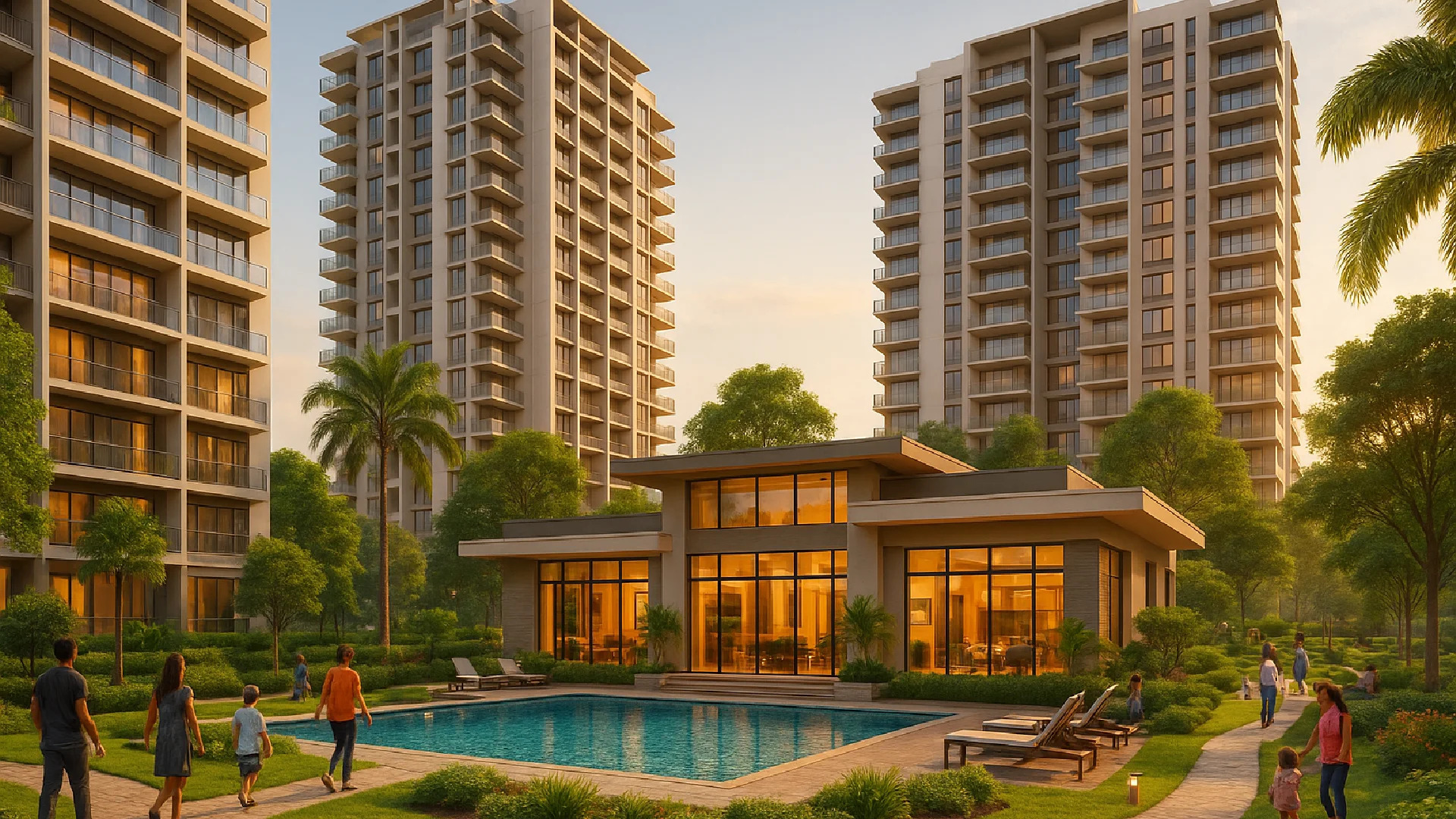
In north Bengaluru’s rapidly densifying Hebbal corridor, a newly completed residential project is drawing attention for reasons that go beyond aesthetics. A 2,400 sq ft private apartment, recently redesigned by a local architecture studio, is being cited by urban planners and real estate analysts as an example of how home design in Indian cities is quietly responding to stress, density, and climate pressures. Located within a builder-grade high-rise in one of the city’s busiest growth zones, the apartment was reimagined to prioritise spatial calm, material efficiency, and adaptability. While the home serves a single family, its planning choices mirror a wider shift underway in Bengaluru’s residential market where buyers increasingly value wellness-oriented, low-maintenance interiors over visual excess.
The layout relies on open circulation, minimal partitions, and restrained finishes. Natural stone, wood, lime-based surfaces and metal accents are used sparingly, reducing the need for chemical-heavy treatments. Industry experts note that such material strategies not only lower long-term maintenance costs but also reduce embodied carbon when compared to conventional fit-outs dominated by synthetic laminates and plastics. Urban design professionals point out that this approach aligns with emerging sustainability norms in high-density housing. Bengaluru’s northern suburbs, including Hebbal, have seen a sharp rise in mid-to-high income residential development over the past decade, often without proportional investment in public open spaces. As a result, private homes are increasingly expected to compensate by offering psychological and environmental comfort.
The apartment’s design integrates layered lighting, passive ventilation paths, and modular furniture features that reduce reliance on artificial cooling and frequent refits. According to real estate consultants, this reflects a growing preference among urban professionals for homes that can evolve with changing family needs, rather than requiring energy-intensive renovations every few years. From a market perspective, developers are watching such projects closely. Homes that demonstrate longevity, adaptability and lower operating costs are beginning to influence buyer expectations, particularly among healthcare professionals, technology workers, and hybrid employees who spend extended hours indoors. Analysts say this could gradually reshape specifications offered in future residential launches.
Importantly, the design refrains from overt luxury signalling. Instead, it adopts a neutral palette and locally sourced décor elements, reinforcing a people-first approach rather than status-driven consumption. Urban policy observers suggest this understated model could support more inclusive housing narratives, especially as cities grapple with affordability and liveability challenges. As Bengaluru continues to expand vertically, such residential experiments offer insights into how private spaces can contribute to broader goals of climate resilience and urban well-being. While individual homes cannot solve systemic planning gaps, they do indicate how citizen choices and design practices are converging toward more responsible urban living a trend likely to shape the city’s housing future in the years ahead.