


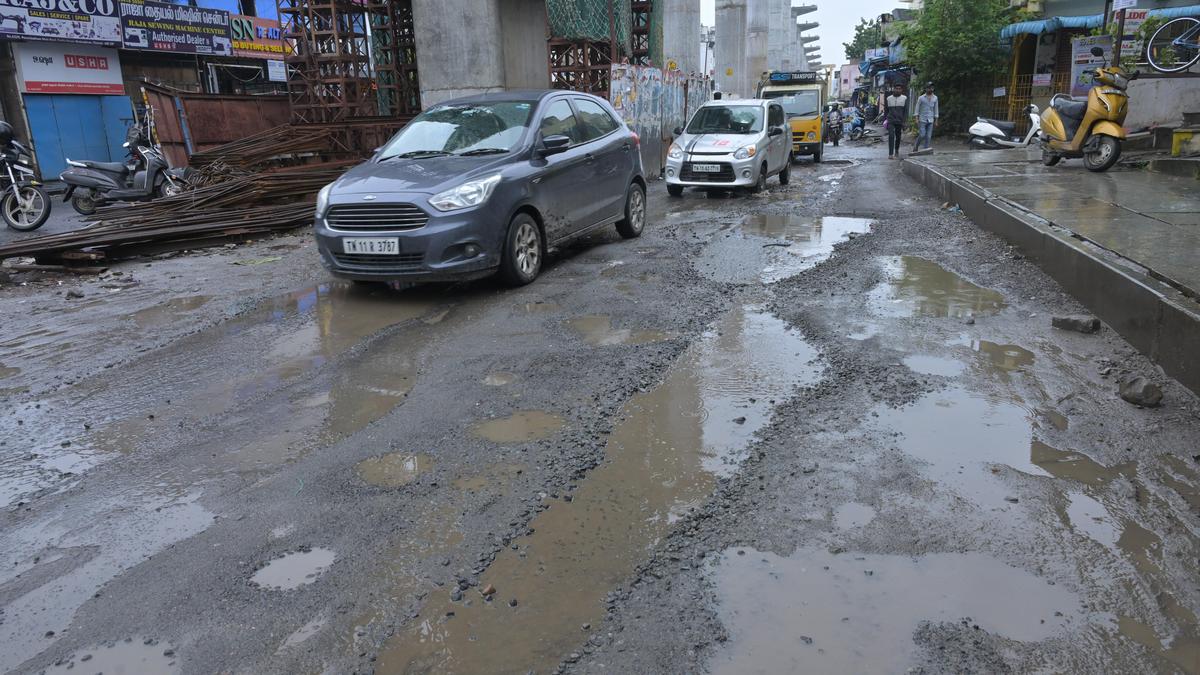
A fresh road subsidence near Madhya Kailash junction has reignited concerns over the structural safety of one of Chennai’s most heavily trafficked urban corridors. The incident, which occurred close to a major flyover approach along the Rajiv Gandhi IT Expressway, has once again drawn attention to the condition of ageing underground sewer infrastructure running beneath critical transport assets.
The cave-in was traced to a failure in a large-diameter sewage pipeline laid more than two decades ago. Emergency repair work was taken up to stabilise the carriageway and restore traffic movement. However, residents and daily commuters say the episode is part of a recurring pattern rather than an isolated failure, raising deeper questions about infrastructure resilience in fast-growing parts of the city.Community groups tracking the corridor point out that multiple cave-ins have been reported at or around the Madhya Kailash junction over the past decade. Most have been linked to leaks or bursts in water and sewer lines that were installed when traffic volumes, building density and sewage loads were far lower than today. With elevated roads, flyovers and metro-linked developments now adding vertical and dynamic loads, the margin for failure has narrowed significantly.
Urban engineers note that repeated subsurface collapses are often symptomatic of systemic stress rather than poor surface construction. Continuous leakage from ageing pipelines can erode soil over time, weakening the subgrade until it suddenly gives way under traffic. In corridors such as Madhya Kailash–Taramani, which handle heavy freight, buses and office-hour peaks, even small voids can escalate into serious safety hazards.Residents have expressed particular concern about the proximity of such failures to bridge foundations and flyover pillars. While utility authorities maintain that pipelines do not run directly beneath structural supports, transport planners argue that the surrounding soil conditions are equally critical. Any long-term saturation or erosion near load-bearing elements can compromise overall stability if left unaddressed.
Officials overseeing water and sewer networks have indicated that a technical assessment of the affected stretch is under way to determine whether targeted repairs or more comprehensive rehabilitation is required. There are also plans under consideration to redistribute sewage loads by adding new pumping infrastructure, reducing pressure on existing trunk lines that serve large parts of the IT corridor and adjoining residential zones.For Chennai, the situation underscores a broader urban challenge. As the city invests heavily in elevated roads, metro rail and commercial densification, much of the underground utility network remains largely unchanged. Infrastructure experts stress that without coordinated asset mapping, regular condition audits and phased replacement of high-risk pipelines, surface-level investments may continue to be undermined from below.The repeated incidents at Madhya Kailash have also sparked debate among planners about lifecycle-based infrastructure funding. Short-term repairs may restore traffic flow, but they do little to address long-term risk in corridors that are economically vital to the city. For commuters and residents, confidence will depend not on assurances, but on visible, preventive action.
Also Read:Indian Rail Passengers Benefit from Emergency Quota
Chennai Road Cave Ins Expose Urban Risks
