


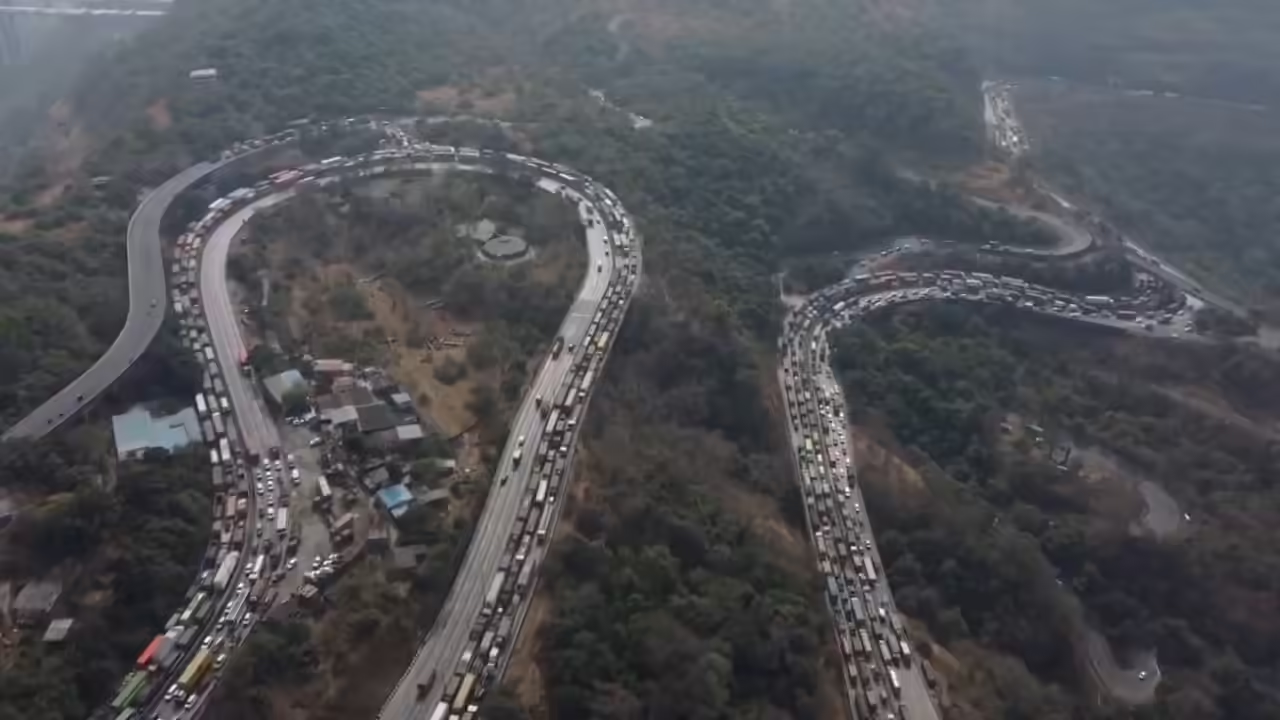
A 32-hour traffic gridlock on the Mumbai–Pune Expressway has highlighted a critical gap in Maharashtra’s road network: a 13-kilometre incomplete segment that connects key urban and peri-urban corridors. The disruption, affecting freight and commuter traffic, underscores the strategic importance of completing urban infrastructure to reduce economic losses, improve supply chain efficiency, and enhance commuter safety.
Industry experts note that the missing link is not merely a local inconvenience. It constrains the flow of goods between two major economic hubs, intensifying vehicle emissions and energy use due to prolonged idling. Urban planners highlight that in rapidly urbanising regions, even relatively short gaps in transport infrastructure can cascade into significant operational and environmental costs. A senior transport official indicated that completing such links could prevent bottlenecks, improve logistics efficiency, and contribute to climate-resilient mobility by reducing unnecessary fuel consumption. The gridlock also exposed broader challenges in regional infrastructure planning. Analysts argue that while expressways facilitate high-speed connectivity, incomplete segments often concentrate traffic on older arterial roads, amplifying congestion and accident risks. From a real estate perspective, persistent connectivity gaps can affect land valuations along these corridors, as investors and developers prioritise areas with reliable access for commercial and residential projects.
Financially, the congestion has immediate implications for supply chains. Delays in transporting perishable goods, industrial materials, and e-commerce freight can ripple through local and regional economies. Transport economists suggest that targeted infrastructure investments, including completing missing expressway segments and integrating intelligent traffic management systems, are crucial to sustaining economic growth while maintaining low-carbon, efficient mobility. Environmental considerations are equally pressing. Extended traffic jams contribute to air pollution and higher greenhouse gas emissions in densely populated corridors. Urban sustainability experts emphasise that closing infrastructure gaps, combined with demand management strategies, can enhance urban resilience and reduce cities’ carbon footprints. Effective planning of expressway extensions also ensures safer travel conditions, reducing the likelihood of accidents that often compound congestion.
Looking ahead, Maharashtra’s transport authorities face a dual imperative: finalise critical missing links and implement adaptive traffic solutions that account for rapid urbanisation and freight growth. Strengthening the Mumbai–Pune corridor through integrated planning would improve both commuter experience and economic throughput, aligning with long-term goals of resilient, inclusive, and sustainable urban mobility.
Also Read: Ahmedabad Region Plans Eight Lane Highway Upgrade
Maharashtra Missing Expressway Link Triggers Jam
