


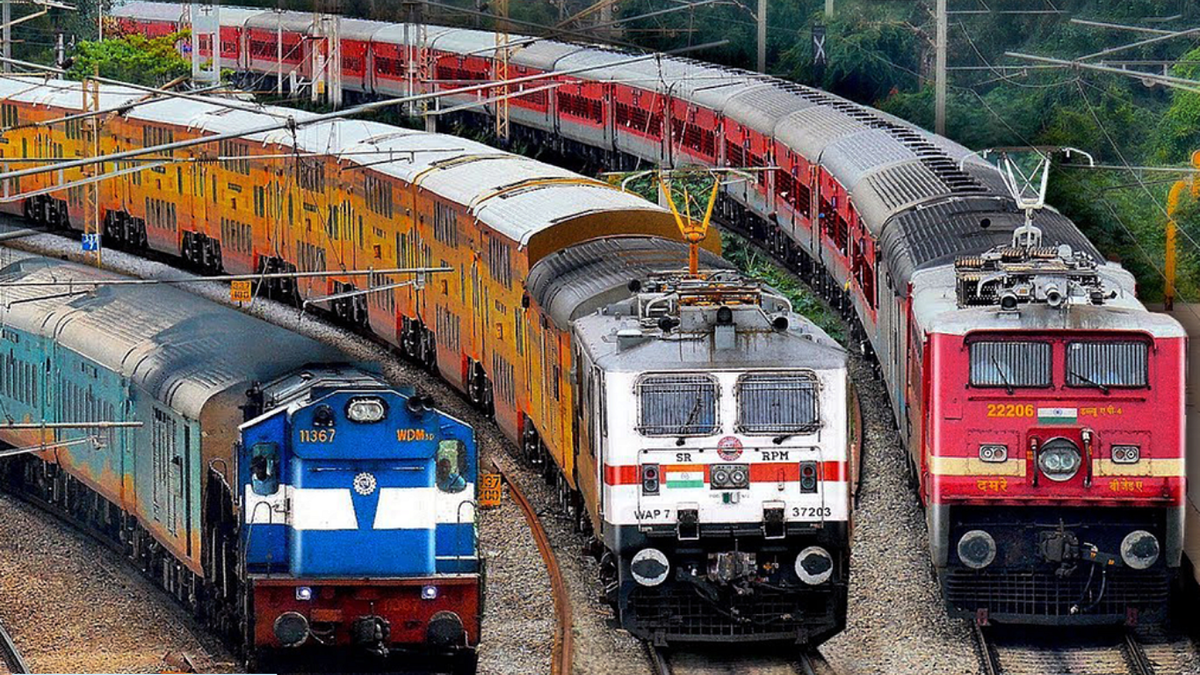
India’s rail network is grappling with a measurable decline in train punctuality, prompting parliamentary scrutiny and raising broader questions about operational efficiency in one of the country’s most critical public transport systems. Recent reviews indicate that long-distance and mail express services are increasingly missing scheduled arrival times, a trend that carries implications for urban mobility, logistics reliability, and economic productivity across regions.
According to officials familiar with the assessment placed before a parliamentary panel, average train speeds have shown incremental improvement over recent years, yet this has not translated into better on-time performance. The gap, transport analysts suggest, reflects structural pressures on the network rather than isolated operational lapses. High track utilisation, rising passenger volumes, and prioritisation of premium services have collectively strained timetable discipline. For daily commuters and intercity travellers, punctuality is more than a convenience metric. Missed connections disrupt work schedules, increase indirect travel costs, and disproportionately affect lower-income passengers who rely on affordable rail services. Urban planners note that unreliable rail timings can push commuters towards private vehicles, undermining efforts to promote low-carbon, mass transit-led mobility in cities already battling congestion and air pollution. Freight movement is also impacted. Delays in passenger services often cascade into logistics bottlenecks, affecting supply chains that depend on predictable rail slots. Industry experts point out that while dedicated freight corridors are easing pressure on select routes, mixed-use lines continue to carry both passenger and goods traffic, limiting operational flexibility. For industrial clusters and ports, inconsistent rail schedules translate into higher inventory costs and reduced competitiveness.
Officials overseeing rail operations have attributed part of the punctuality challenge to external factors such as extreme weather events, maintenance blocks, and safety-related speed restrictions. Climate resilience experts add that rising heatwaves, flooding, and track deformation linked to climate change are increasingly disrupting rail operations, particularly in densely populated urban corridors. These conditions demand adaptive infrastructure planning rather than short-term fixes. Another factor under examination is the recalibration of performance metrics. Rail administrators have reportedly adjusted the definition of “on-time” arrivals by extending permissible delay thresholds for long-distance trains. While this may present a more favourable statistical picture, governance specialists caution that such recalibration risks obscuring service quality issues rather than resolving them. Transparent metrics, they argue, are essential for accountability in publicly funded infrastructure. From an investment perspective, the punctuality debate intersects with large-scale capital spending on station redevelopment, signalling upgrades, and rolling stock modernisation. Transport economists stress that asset expansion must be matched with systems optimisation, including better timetable planning, decentralised traffic control, and predictive maintenance powered by data analytics.
As parliamentary oversight continues, the focus is expected to shift towards operational reforms that balance speed, safety, and reliability. For India’s cities and regions, dependable rail services remain central to inclusive growth, workforce mobility, and climate-aligned transport strategies. Restoring punctuality will require coordinated action across infrastructure, operations, and governance — ensuring that railways function not only as fast-moving networks, but as reliable public utilities that support everyday economic life.
Also Read: India Railway Stations Redeveloped Under National Plan
Indian Railways Faces Declining Train Punctuality
