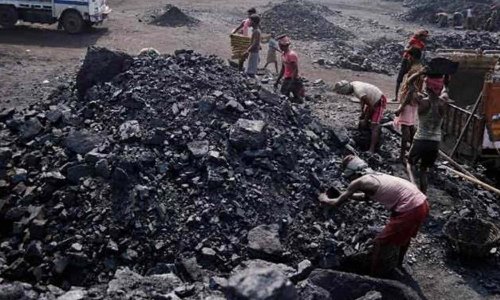
India Coal Auction Prices Surge Amid Global Volatility
Coal India Ltd has approved a major expansion of its industrial and energy footprint, signalling a strategic shift toward integrated power generation and coal-based chemical production as India reconfigures its infrastructure priorities. The public sector miner has cleared capital commitments exceeding ₹6,300 crore across two projects aimed at strengthening domestic energy supply chains and downstream industrial capacity.
At a recent board meeting, the company authorised a ₹3,189.54 crore investment in Bharat Coal Gasification and Chemicals Ltd, a wholly owned subsidiary tasked with developing a coal-to-ammonium nitrate manufacturing facility in Odisha. The project, designed with an annual capacity of 0.66 million tonnes, is expected to support sectors such as mining, construction, and large-scale infrastructure that depend on industrial explosives and fertiliser inputs.Officials familiar with the project say the facility is intended to reduce reliance on imported ammonium nitrate and stabilise supply for domestic infrastructure development. Coal gasification — while carbon-intensive — is being positioned as a transitional industrial process, with planners emphasising efficiency improvements and controlled emissions management during operations. The project is expected to be implemented over a four-year timeline.
In parallel, Coal India has granted in-principle approval for an equity infusion of ₹3,132.96 crore into a 50:50 joint venture with Damodar Valley Corporation. The partnership will focus on developing a mix of thermal and renewable power assets, with a broader planned investment of over ₹20,800 crore across multiple phases.Energy planners say the joint venture reflects a growing emphasis on integrated power systems that combine conventional baseload generation with renewable capacity and storage solutions. Such hybrid infrastructure is increasingly viewed as critical for meeting urban and industrial electricity demand while managing grid stability during India’s energy transition.
For cities and regional economies, these decisions carry wider implications. The expansion of domestic chemical production could support large public works programmes, reduce logistical vulnerabilities, and generate industrial employment clusters. Meanwhile, new power capacity in eastern India may help ease supply constraints for fast-growing urban regions and manufacturing corridors.Urban policy experts caution that execution quality will be critical. Large-scale thermal projects must comply with tightening environmental norms, while chemical plants require robust safeguards for water use, waste handling, and worker safety. Community engagement and land-use planning will also be essential to prevent long-term environmental and social costs.
Coal India’s move reflects a broader recalibration among state-owned energy enterprises, which are increasingly seeking relevance beyond raw extraction. By investing in downstream processing and diversified power generation, the company is positioning itself within India’s evolving infrastructure landscape, where resilience, domestic capacity, and transition readiness are becoming central planning priorities.The effectiveness of these initiatives will ultimately depend on how well industrial expansion is balanced with environmental management and regional development goals.