


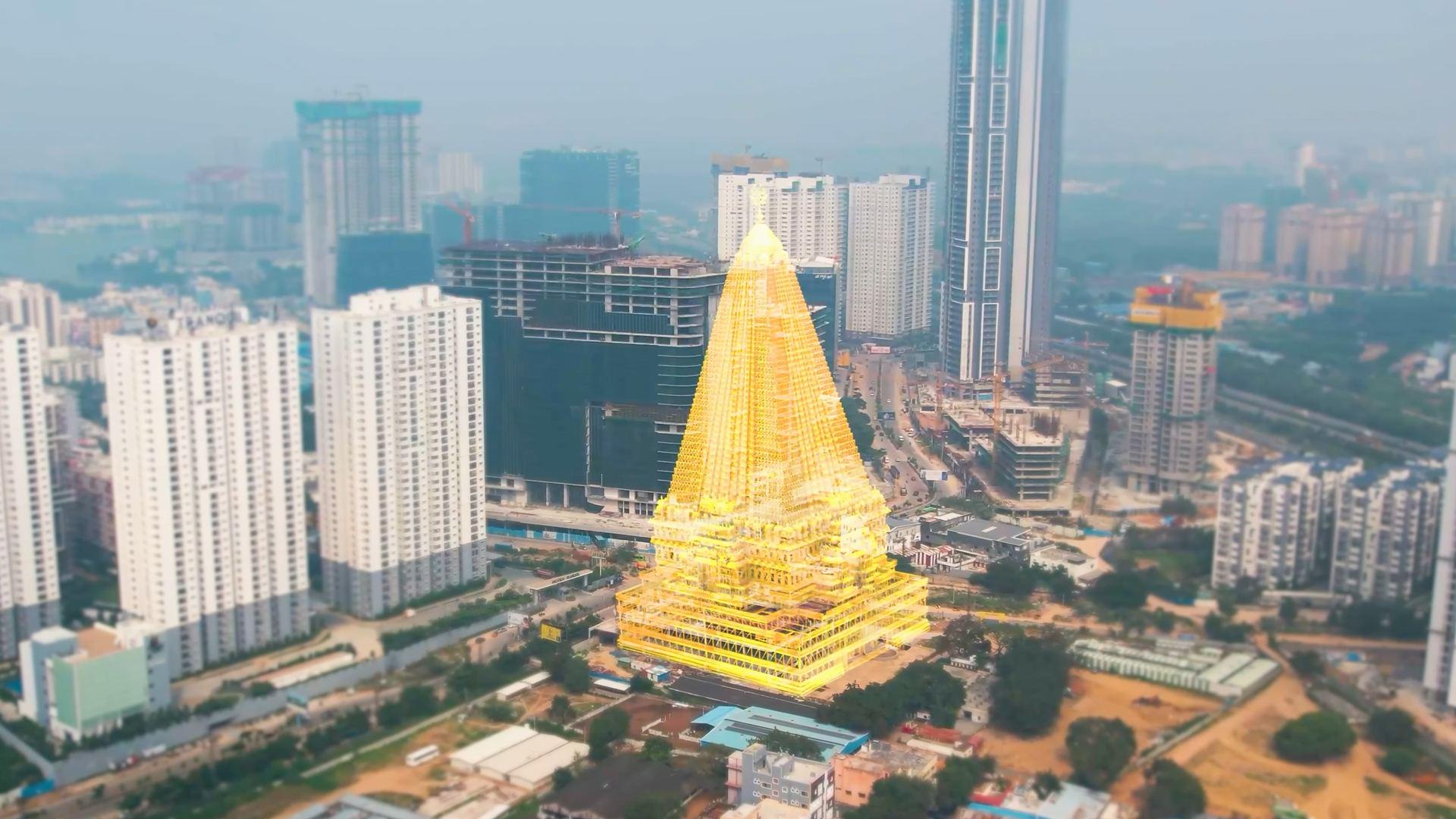
In Hyderabad’s Kokapet, one of the city’s fastest-growing high-rise corridors, an ageing stepwell has emerged as an unexpected focal point in debates around urban growth, water security and heritage-sensitive planning. Surrounded by heavy construction and dense traffic, the nearly two-century-old structure has remained intact even as the neighbourhood has transformed into a premium real estate zone.
The stepwell sits along a key road within a planned layout developed by metropolitan authorities, where rapid commercial and residential development has altered land use patterns over the last decade. While most historic water structures across Hyderabad have disappeared under roads and buildings, this one has survived, prompting authorities to reconsider how infrastructure can adapt around existing ecological and cultural assets rather than erase them.Urban planners point out that Kokapet’s growth illustrates a wider challenge facing Indian cities: balancing vertical expansion with sustainable water management. With dozens of 50- and 60-storey towers under construction, groundwater extraction has intensified, leading to falling water tables and growing dependence on tanker supply. In this context, older rainwater harvesting systems such as stepwells are being reassessed not merely as heritage artefacts but as functional elements of urban resilience.
Local conservation groups and rainwater practitioners have taken responsibility for maintaining four historic wells in the area, including the one located directly within the carriageway. Rainwater is diverted into the well through designed channels, and the stored water continues to be used for non-potable purposes, particularly livestock needs in nearby facilities. Experts say this demonstrates how decentralised water structures can still play a supporting role in modern cities if protected and integrated.The presence of the stepwell has had tangible planning implications. A road initially designed as a four-lane corridor effectively narrowed as traffic volumes increased around the protected structure. Rather than removing the well, planning agencies have opted to redesign the corridor. Current plans involve constructing an elevated road section over the well, allowing traffic to flow while ensuring the structure remains accessible and undisturbed.
Officials involved in the project indicate that funds have been earmarked specifically to safeguard the well during construction. The approach reflects a shift in infrastructure thinking, where engineering solutions are being used to accommodate heritage and environmental considerations rather than treating them as obstacles.From a real estate perspective, Kokapet’s experience is increasingly relevant. As land values rise and infrastructure densifies, developers and civic agencies face mounting pressure to address water stress and environmental risks. Industry analysts note that integrating existing water systems—old and new—can reduce long-term costs associated with water sourcing and flood mitigation.
Looking ahead, urban experts argue that Kokapet could serve as a precedent for other fast-developing zones across Indian cities. Preserving legacy water structures while adapting transport and real estate infrastructure around them may offer a practical model for climate-resilient growth—one where history, hydrology and high-density development are planned together rather than in isolation.
Also Read:Hyderabad Power Rules Cut Entry Costs
