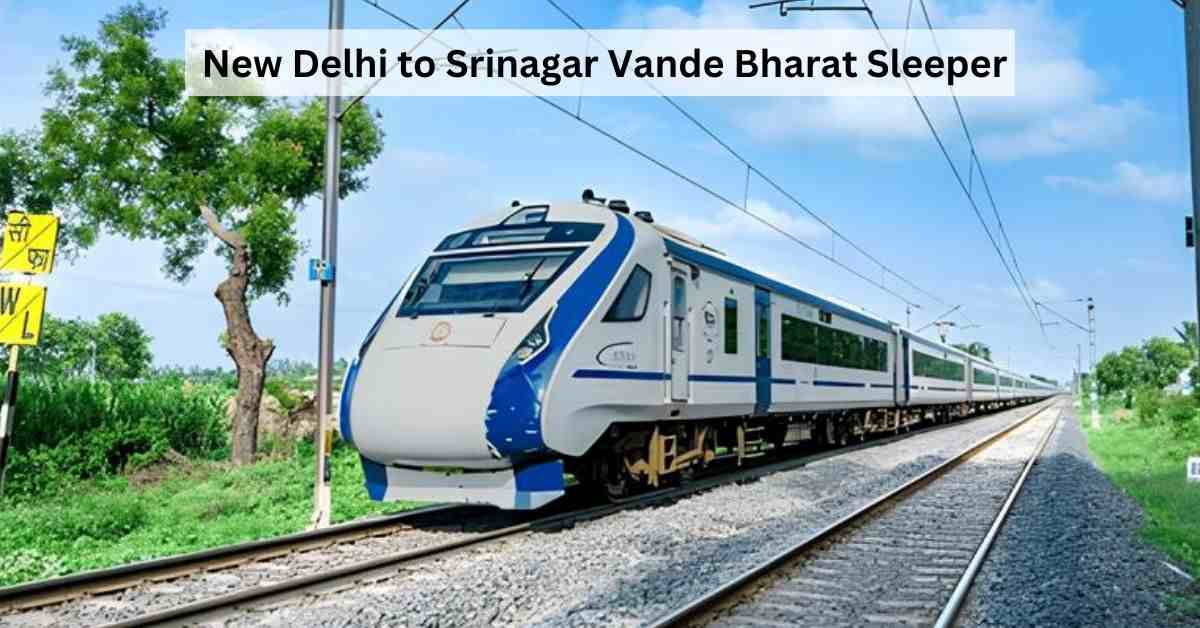
The long-anticipated idea of a direct Delhi Srinagar Vande Bharat service has been tempered by fresh clarity from Indian Railways, signalling that engineering realities not demand will decide the future of rail connectivity to Kashmir. While the Kashmir Valley is now connected to the national rail network, officials indicate that a seamless high-speed service from the capital remains unlikely in the near term, with implications for tourism, regional mobility and climate-resilient infrastructure planning.
The commissioning of rail services across the Pir Panjal range marked a historic moment for northern India’s transport map. For the first time, passenger trains are operating within the Kashmir Valley on newly built mountain infrastructure that includes globally significant bridges over deep gorges and seismic zones. These links have already improved access for residents, tourists and religious travellers moving between Jammu and Srinagar, reducing dependence on weather-sensitive road and air travel. However, senior railway officials have emphasised that the trainsets deployed in the Valley differ fundamentally from those designed for India’s plains. Rolling stock currently operating in Kashmir has been re-engineered to function in sub-zero temperatures, with specialised heating systems to prevent freezing of onboard water and sanitation systems. These trains also incorporate enhanced insulation and safety mechanisms tailored for steep gradients and cold-weather operations.
The challenge lies in integrating two different operating environments into a single uninterrupted service. Trains optimised for flat terrain and higher cruising speeds cannot safely transition into mountainous sections without design compromises. Rail planners note that even in advanced European rail networks, passengers often change trains when moving between plains and alpine regions, reflecting similar technical constraints. From an urban and regional development perspective, the phased approach to connectivity carries broader significance. Kashmir’s rail access is expected to support more balanced tourism flows, ease logistics for essential goods, and provide a lower-carbon alternative to road transport within the fragile Himalayan ecosystem. By prioritising reliability and safety over speed, rail authorities aim to reduce environmental stress while ensuring year-round connectivity.
Transport economists argue that the focus should now shift from symbolic through-services to seamless interchanges, integrated ticketing and reliable scheduling between Delhi, Jammu and Srinagar. Such an approach could deliver many of the same economic benefits without forcing premature engineering solutions. Improved station-area development in Jammu and Valley cities could also catalyse local employment and more inclusive urban growth. As India continues to expand its semi-high-speed rail ambitions, the Kashmir corridor serves as a reminder that infrastructure in climate-sensitive regions demands bespoke solutions. For now, passengers may still need to change trains en route to the Valley but the rail connection itself marks a structural shift in how one of India’s most geographically complex regions connects with the rest of the country. The next phase will depend on whether technology can bridge terrain without compromising safety or sustainability.
Indian Railways weighs Delhi Srinagar Vande Bharat